






Definition & Meaning
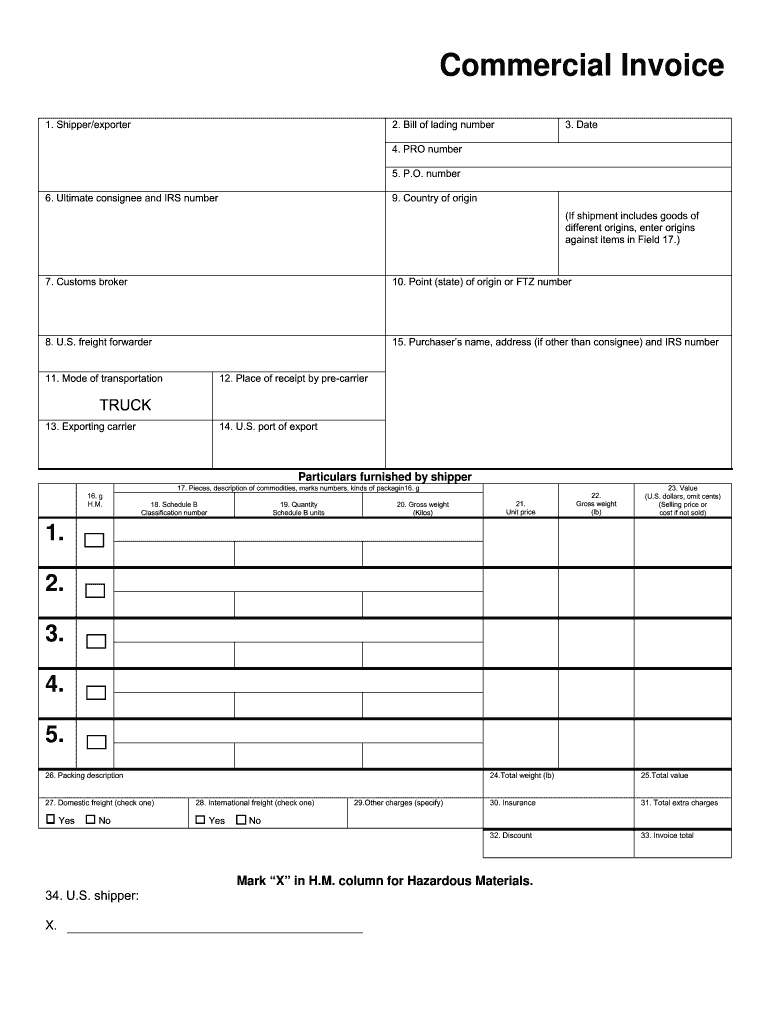
The "Commercial Invoice FTZ Form" is a specialized document essential for businesses involved in international trade and Customs compliance within Free Trade Zones (FTZs). This form serves as a pivotal record that outlines crucial shipping details necessary for the movement of goods across borders. It provides comprehensive information about the shipper, consignee, and the goods being transported. Understanding this form is vital for businesses engaged in cross-border logistics, ensuring they meet international trade regulations and avoid any potential legal complications.
Key Elements of the Commercial Invoice FTZ Form
A well-prepared commercial invoice FTZ form includes several critical elements. Each section of the form has its unique purpose and ensures that the trading process aligns with legal standards. Key components include:
- Shipper Information: Details such as name, address, and contact information of the party sending the goods.
- Consignee Details: Information about the receiver, including their full name and address.
- Bill of Lading Number: A unique reference number for tracking and identification.
- Goods Description: Detailed specifications of the items being shipped, including quantity, weight, and value.
- Country of Origin: Information about where the goods were manufactured or produced.
- Customs Broker Details: Information about the intermediary assisting in navigating customs procedures.
- Mode of Transportation: Identifying how the goods will be transported, whether by air, sea, or land.
- Additional Charges/Discounts: Any extra fees or promotions related to the shipment.
Steps to Complete the Commercial Invoice FTZ Form
Completing the commercial invoice FTZ form accurately is crucial for smooth international transactions. The process involves various steps:
- Obtain Necessary Documents: Collect all relevant shipping documents, such as purchase orders and contracts.
- Fill Shipper and Consignee Information: Enter detailed information about both the sender and receiver.
- Include Shipping Details: Add the bill of lading number, mode of transport, and expected delivery date.
- List Goods Specifications: Detail each item's description, including quantity and unit price.
- Calculate Total Value: Sum up the values to reflect the total invoice amount.
- Add Additional Information: Include any special instructions, additional charges, or discounts applicable.
- Review and Sign: Ensure all fields are accurately completed, and signatures are in place to authenticate the document.
Legal Use of the Commercial Invoice FTZ Form
The commercial invoice FTZ form is legally binding and necessary for customs clearance and compliance in international trade. It acts as a contract between the seller and buyer, detailing the transaction terms and conditions. Legally, this document is pivotal in determining tariff classification and calculating duties. It also serves as evidence in case of disputes or audits and is often required by banks when financing imports and exports. Legal compliance with this form ensures businesses avoid penalties and delays in shipment processes.
Important Terms Related to Commercial Invoice FTZ Form
Understanding terminologies used in the commercial invoice FTZ form is essential for accurate completion. Some of the critical terms include:
- Free Trade Zone (FTZ): A designated area where goods can be imported, handled, and re-exported without undergoing strict customs regulations.
- Bill of Lading: A legal document issued by a carrier to acknowledge receipt of cargo for shipment.
- Consignee: The person or company to whom goods are shipped.
- Tariff: A tax or duty to be paid on a particular class of imports or exports.
- Customs Broker: An intermediary who helps in navigating customs regulations and ensuring compliance.
Software Compatibility with the Commercial Invoice FTZ Form
Various software platforms can facilitate the completion and management of the commercial invoice FTZ form. Modern digital solutions allow seamless integration for efficient document processing:
- DocHub: This platform offers comprehensive tools for editing, signing, and sending documents online, supporting commercial invoice FTZ forms.
- QuickBooks & TurboTax: Popular for accounting and tax purposes, these systems can also be used to maintain transaction records and assist in form completion.
- ERP Systems: Enterprise resource planning software can automate and streamline the information flow required to populate the form accurately.
Examples of Using the Commercial Invoice FTZ Form
Practical examples of using the commercial invoice FTZ form offer insight into its real-world application:
- Automotive Industry: Companies importing car parts into an FTZ for assembly use this form to ensure compliance with Customs regulations.
- Tech Sector: Firms importing electronic components rely on this form to facilitate smooth customs clearance and avoid tariff issues.
- Textile Manufacturing: Apparel companies utilize the commercial invoice FTZ form to navigate duty-free import processes efficiently.
Who Typically Uses the Commercial Invoice FTZ Form
This form is widely used by businesses engaged in international trade, particularly those that operate within Free Trade Zones. The primary users include:
- Importers and Exporters: These entities rely on the form to document cross-border transactions.
- Logistics Providers: Companies providing shipping and freight services use the form to fulfill customs requirements.
- Customs Brokers: Professionals who assist businesses in managing import and export documentation.
- Manufacturers in FTZs: Enterprises utilizing FTZs to manage costs and optimize production logistics.