







Definition and Purpose of Form 8854
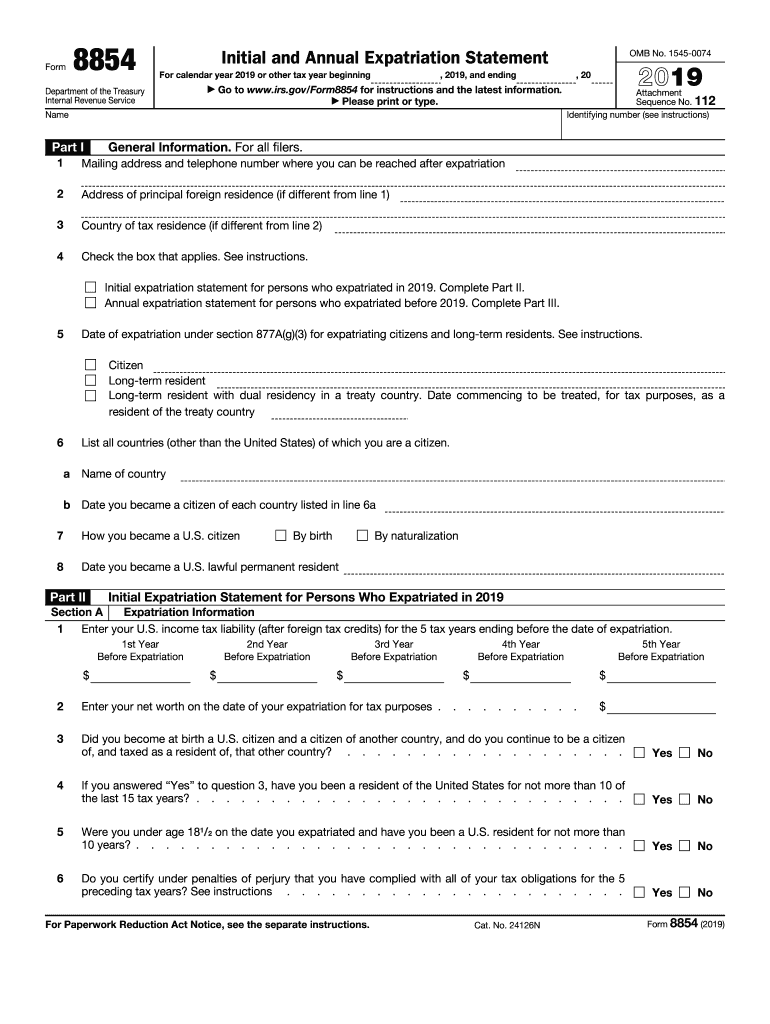
Form 8854, the Initial and Annual Expatriation Statement, is a critical document for individuals who have expatriated from the United States. The form is used to disclose detailed information about the expatriation event, including tax obligations and financial status at the time of expatriation. It helps ensure compliance with U.S. tax laws and captures essential data for managing tax responsibilities tied to expatriation. The form collects personal information, details regarding an individual's net worth, assets, and tax liabilities to determine if the expatriate is a "covered expatriate," subject to particular tax implications.
How to Use Form 8854
Effective use of Form 8854 requires careful attention to the information being reported. Users should complete and submit this form if they meet the criteria for required filing, typically based on expatriation occurring in 2019 or earlier. The form contains specific sections for reporting personal identifying information, financial data, and details about the expatriation. The main use involves ensuring compliance with relevant tax regulations by providing the U.S. Internal Revenue Service (IRS) with comprehensive data.
Obtaining Form 8854
Individuals can obtain Form 8854 from several sources:
- The IRS website offers digital downloads of the form in PDF format.
- Tax preparation software platforms typically include Form 8854 within their list of available forms, providing guided assistance in completing it.
- Tax professionals, such as certified public accountants (CPAs) or tax advisors, can also supply the form and insight into its completion.
Being aware of the most recent version of the form is crucial, as tax regulations and requirements can change annually.
Steps to Complete Form 8854
Accurate completion of Form 8854 involves several steps:
- Personal Information: Enter your full name, Social Security Number (SSN), or taxpayer identification number.
- Expatriation Information: Specify the date of expatriation and summary details about your U.S. status before expatriation.
- Financial Details: Disclose total net worth, assets, and liabilities. Include cash, real estate, and investments.
- Tax Obligations: Provide information on tax compliance for previous years, including filed returns and any outstanding obligations.
- Certification: Sign the form to certify the accuracy and integrity of reported data.
Each section requires complete and accurate information to avoid penalties.
IRS Guidelines for Form 8854
The IRS provides specific guidelines for completing and filing Form 8854:
- Ensure that previous year tax returns are filed before submitting Form 8854.
- Maintain detailed records supporting the financial information disclosed.
- Double-check to see if you qualify as a "covered expatriate" with potential exit tax implications.
- Submit the form by the specified deadlines to avoid penalties.
- Consider seeking professional advice if there's any ambiguity in meeting IRS requirements.
Important Terms Related to Form 8854
Understanding key terms associated with Form 8854 can improve the completion process:
- Covered Expatriate: A taxpayer with significant assets or tax payment history, subject to exit tax.
- Net Worth: The sum of personal assets minus liabilities, critical for determining expatriation status.
- Expatriation: The act of renouncing U.S. citizenship or permanent resident status, triggering potential tax obligations.
- Exit Tax: A tax assessed on expatriates with considerable assets, as defined by IRS thresholds.
These terms play vital roles in understanding tax implications of expatriation.
Penalties for Non-Compliance
Failing to comply with requirements for Form 8854 can result in:
- Financial Penalties: Non-filing penalties can be severe, impacting financial standings.
- Legal Consequences: The omission of required details may lead to legal actions or increased scrutiny.
- Travel Restrictions: In some cases, the individual may face restrictions related to U.S. entry or visa status due to tax-related non-compliance.
Remaining vigilant and ensuring timely and accurate submission of the form can avert these outcomes.
Filing Deadlines and Important Dates
Meeting deadlines for filing Form 8854 is crucial for compliance:
- The initial deadline for submission generally aligns with the annual tax filing date, typically April 15th each year.
- Any extensions, such as an automatic six-month extension, align with individual income tax filing extensions.
- Failure to file by these dates could accrue penalties or interest, compounding the expatriate's tax situation.
Understanding and adhering to these timelines is imperative for maintaining compliance with U.S. tax regulations.




