




01. Edit your 1120 instructions 2019 online
Type text, add images, blackout confidential details, add comments, highlights and more.

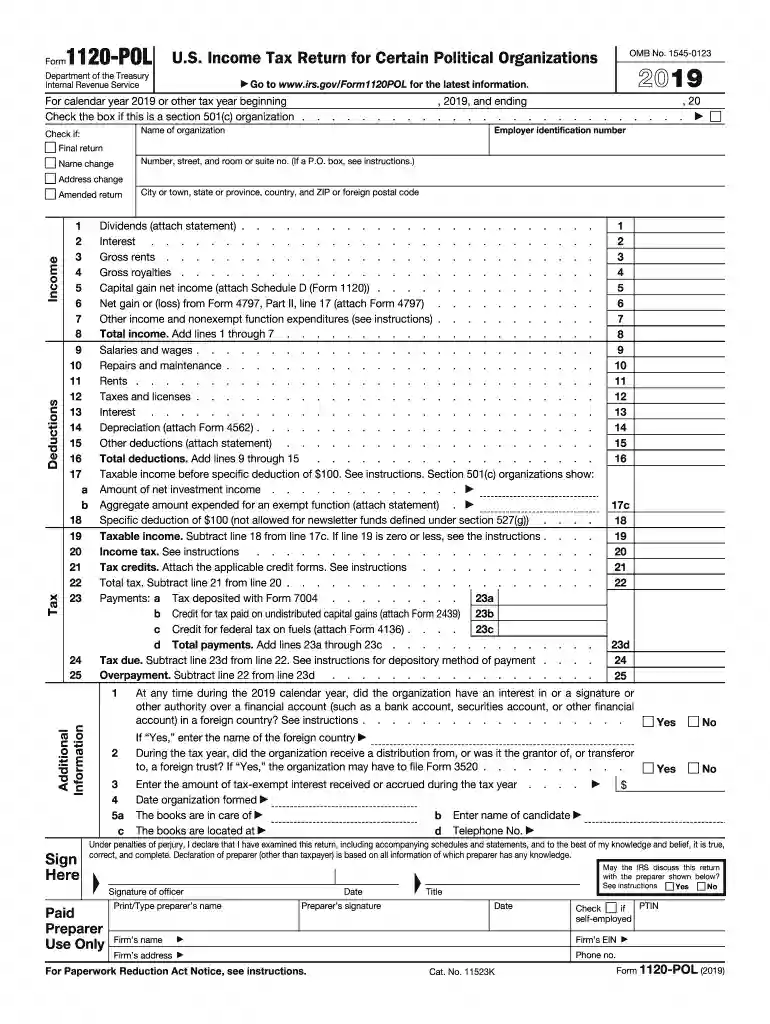
Type text, add images, blackout confidential details, add comments, highlights and more.

Draw your signature, type it, upload its image, or use your mobile device as a signature pad.

Send it via email, link, or fax. You can also download it, export it or print it out.
Form 1120, officially known as the U.S. Corporation Income Tax Return, is used by domestic corporations to report their income, gains, losses, deductions, and credits. This form is integral for calculating the corporate income tax that must be paid to the Internal Revenue Service (IRS). Filing Form 1120 is mandatory for most corporations operating in the United States, making it a fundamental component of corporate tax compliance.
Completing Form 1120 requires careful attention to detail and a comprehensive understanding of corporate finances. The form includes various schedules and attachments that must be completed based on the corporation's activities and financial circumstances.
Form 1120 can be obtained directly from the IRS website, where it is available for download in PDF format. Additionally, corporations can access the form through tax preparation software like TurboTax or professional tax advisors.
Corporations are generally required to file Form 1120 by the 15th day of the fourth month following the end of their fiscal year. For calendar-year corporations, the filing deadline is typically April 15. Extensions may be requested using Form 7004, providing an additional six months to file.
Form 1120 is primarily used by C corporations, which are separate tax entities where income is taxed at the corporate level. Other entities that might use Form 1120 include:
The IRS provides specific instructions for completing Form 1120, which includes guidelines on what constitutes gross income, which deductions are allowable, and how to handle special situations like consolidations or affiliations.
Failing to file Form 1120 or incorrectly reporting income and expenses can result in significant penalties. The IRS may impose fines based on the amount of unpaid tax and the duration of the delay. Interest on unpaid taxes will also accrue from the original deadline.
Corporations may choose to file Form 1120 electronically or by mail. Electronic filing is often encouraged as it provides faster processing times and confirmation upon receipt. Paper submissions can still be used by mailing the completed form to the appropriate IRS address based on the corporation's principal business location.
Consider a C corporation in New York with gross receipts of $500,000, allowable business deductions totaling $300,000, and applicable tax credits amounting to $10,000. This corporation would use Form 1120 to report its net income of $200,000 and calculate its tax, applying the $10,000 credits to reduce its liability. Each reported figure must be substantiated with supporting documentation attached to the form.
We've got more versions of the 1120 instructions 2019 form. Select the right 1120 instructions 2019 version from the list and start editing it straight away!
| Versions | Form popularity | Fillable & printable |
|---|---|---|
| 2025 | 4.4 Satisfied (53 Votes) | |
| 2024 | 4.7 Satisfied (31 Votes) | |
| 2023 | 4.7 Satisfied (33 Votes) | |
| 2022 | 4.1 Satisfied (52 Votes) | |
| 2021 | 4.8 Satisfied (65 Votes) | |
| 2020 | 4.2 Satisfied (134 Votes) | |
| 2019 | 4.3 Satisfied (294 Votes) | |
| 2018 | 4.3 Satisfied (146 Votes) | |
| 2017 | 4.3 Satisfied (145 Votes) | |
| 2016 | 4.2 Satisfied (77 Votes) | |
| 2015 | 4 Satisfied (29 Votes) | |
| 2014 | 4 Satisfied (41 Votes) | |
| 2013 | 4 Satisfied (25 Votes) | |
| 2012 | 4.3 Satisfied (49 Votes) | |
| 2011 | 3.8 Satisfied (28 Votes) |
At DocHub, your data security is our priority. We follow HIPAA, SOC2, GDPR, and other standards, so you can work on your documents with confidence.
May 18, 2022 Form 1120 (2020). Page 3. Check if the corporation is a member of a controlled group (attach Schedule O (Form 1120)). See instructions. IncomeRead more
Enter the amount from Form 1120, Schedule J, Part I, line 2; or the applicable ) Report this amount on Form 1040, line 54 or Form 1040NR, line 51; Form 1120,.Read more
Sep 26, 2025 5. At the end of the tax year, did the corporation: a Own directly 20% or more, or own, directly or indirectly, 50% or more of the total votingRead more


