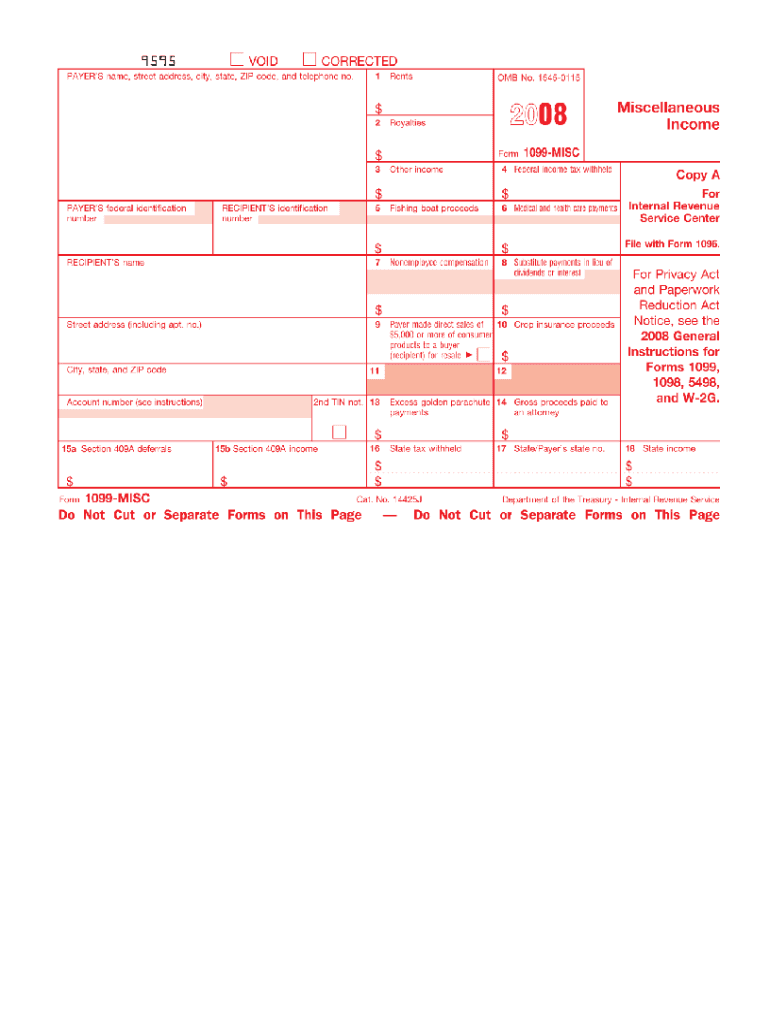







Definition and Purpose of the 2 Form
The 2 form is an informational tax document used in the United States to report various types of income earned by individuals and entities other than wages, salaries, and tips. It is primarily used by businesses to report payments made to freelancers, independent contractors, and other non-employee entities, ensuring that the Internal Revenue Service (IRS) has accurate records of the recipient's income for tax compliance purposes. Different 1099 forms exist for varying income types, but the most common variant for independent contractors is the 1099-MISC, now largely replaced by 1099-NEC for non-employee compensation.
Types of Payments Reported
- Non-Employee Compensation: Payments made to independent contractors for services rendered.
- Rent Income: Income from commercial and residential property rentals.
- Dividends and Interest: Earnings from investments, such as stocks and savings accounts.
- Miscellaneous Income: Includes prizes, awards, or other forms of non-wage income.
Understanding the specific type of 1099 form applicable to each income type is crucial for accurate reporting and compliance.
How to Use the 2 Form
Completing the Form
- Obtain the Form: The 2 form can be sourced from the IRS website or purchased from office supply stores.
- Fill Out Payer and Recipient Information: Include the payer's name and address, as well as the recipient’s details, such as name, address, and taxpayer identification number (TIN).
- Enter Payment Details: Report applicable payments in the correct boxes, matching the type of income with the corresponding section on the form.
- Submit to Recipient and IRS: Provide a copy of the form to the recipient and file another copy with the IRS. Also, keep a copy for your records.
Form Variations
- 1099-MISC vs. 1099-NEC: For reporting non-employee compensation, it is crucial to understand that the 1099-NEC became the primary form starting in 2020. However, in 2008, compensation was reported under the 1099-MISC.
How to Obtain the 2 Form
Individuals and businesses can obtain the 2 form through the following methods:
- IRS Website: Download or order forms directly from IRS.gov.
- Local IRS Office: Pick up forms at a nearby IRS office.
- Office Supply Stores: Purchase forms which are specifically IRS-approved for submission.
- Tax Preparation Software: Generate and fill out electronic versions through popular software platforms.
Steps to Complete the 2 Form
Gathering Required Information
- Payer Details: Ensure the payer's business information and TINs are accurate.
- Recipient Details: Verify the accuracy of recipient names, addresses, and TINs.
Filling the Form
- Identify the Correct Form Type: Confirm whether 1099-MISC is appropriate for the payment type.
- Add Payer Information: Enter business details and TIN.
- Enter Payment Amounts: Use the box relevant to the type of income.
- Double-check Entries: Ensure there are no typographical or arithmetic errors.
- Submit Copies: File with the IRS and provide copies to recipients by the deadline.
Who Uses the 2 Form
Common Users
- Businesses: Report payments made to freelancers and independent contractors.
- Self-Employed Individuals: Receive 1099 forms as recipients to file their personal taxes.
- Financial Institutions: For reporting interest payments and dividends to account holders.
- Rental Agents: Use it for reporting rent collected on behalf of property owners.
Understanding the role of the 1099 in both businesses and individual tax reporting is essential for accurate income declaration.


Key Elements of the 2 Form
Sections to Focus On
- Boxes 1-18: Each box pertains to different types of income or adjustments; detailed understanding aids in accurate reporting.
- Payer's Information: Critical for recipient verification and IRS tracking.
- Recipient's TIN: Ensures accurate matching of income with the correct taxpayer.
Compliance with proper filling of these sections prevents reporting errors or IRS queries.
IRS Guidelines for the 2 Form
Important Considerations
- Filing Deadlines: Typically due by the end of February for mail submissions or late March for electronic filings.
- Penalties: Accurate and timely submission is important to avoid penalties, which can accumulate based on duration and filing accuracy.
- Copy B: Ensure recipients receive their copies to facilitate their own tax reporting.
Knowledge of IRS timelines and requirements prevents costly mistakes and ensures compliance.
Penalties for Non-Compliance
Penalties may apply in cases of:
- Late Filing: Charges increase based on how late the filing is.
- Incomplete Information: Missing or wrong TINs can lead to a fine.
- Failure to File Electronically: If required, failing to file electronically is also penalized.
Timely, accurate submission according to IRS requirements avoids these potential penalties and ensures proper compliance with tax laws.