
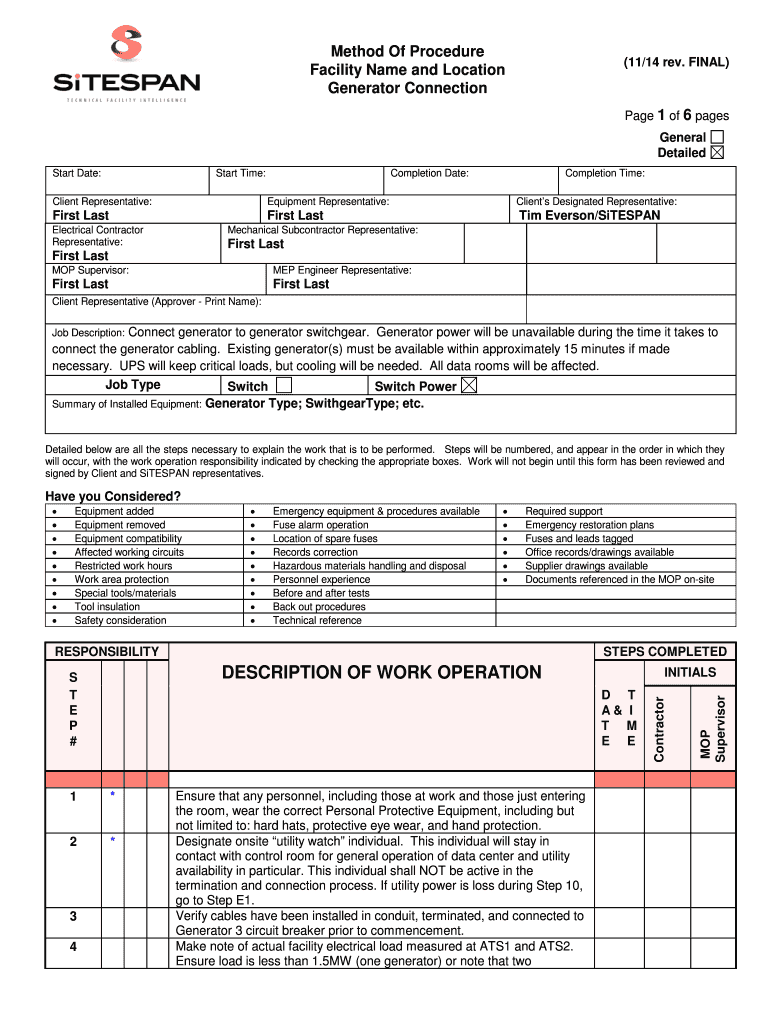







Definition & Meaning of the Mop Method of Procedure
The mop method of procedure (MOP) is a structured approach used primarily in technical, construction, and operational settings to outline the steps necessary for completing a specific task safely and effectively. It serves as a written document that delineates the processes, responsibilities, and safety protocols involved in executing operations, particularly when they pose potential hazards. The MOP ensures that all personnel involved understand the requirements and expectations, minimizing risks and enhancing efficiency.
Key components of the mop method of procedure include:
- Scope of Work: Clearly defined parameters of the operation.
- Resources Required: An inventory of tools, materials, and personnel needed for the task.
- Steps to Completion: A detailed checklist or step-by-step guide that outlines the process from start to finish.
- Safety Considerations: Specific protocols designedto protect workers and equipment.
Understanding the appropriate use of a mop method of procedure is vital for fostering a safe working environment and ensuring operational consistency across teams.
How to Use the Mop Method of Procedure Example
Using a mop method of procedure example involves more than just filling in a template; it requires adapting the document to suit your organization's specific needs. To effectively apply a MOP, follow these steps:
- Identify the Task: Determine the specific task or operation that needs outlining.
- Review Existing Examples: Look for existing MOPs related to similar tasks within your industry. Note the structure and key elements involved.
- Draft the Document: Utilize a method of procedure template to organize your information. Ensure clarity and a logical flow of steps.
- Incorporate Best Practices: Integrate industry standards and safety measures based on the task’s risk profile.
- Validate with Stakeholders: Circulate the draft amongst key personnel for review and input to ensure all perspectives are considered.
Following this structured approach allows for effective communication and execution of operational tasks while maintaining safety and compliance standards.
Steps to Complete the Mop Method of Procedure Example
Implementing the mop method of procedure example requires careful consideration of various factors and structured execution. Here is a comprehensive set of steps:
- Preparation: Gather all necessary resources, including personnel, equipment, and materials required for the task.
- Conduct a Risk Assessment: Identify potential hazards associated with the operation and determine the appropriate safety protocols and measures.
- Draft the MOP:
- Write an overview that details the purpose and scope of the procedure.
- Specify responsible individuals or teams for each step in the process.
- Define Step-by-Step Procedures: Clearly delineate each step involved in the operation, ensuring that each action is measurable and clear.
- Review and Approval: Submit the drafted procedure to management or safety officers for approval. Ensure feedback is captured and incorporated.
- Training: Facilitate training sessions for personnel involved in executing the MOP to guarantee understanding and compliance.
- Implementation: Carry out the operation with the approved MOP as a guide, ensuring adherence to the outlined processes and safety measures.
- Feedback and Revision: Post-operation, gather feedback to evaluate the efficiency of the MOP and make necessary updates for future use.
These steps create a comprehensive roadmap that guides professionals in responsible operation while safeguarding personnel and resources.
Who Typically Uses the Mop Method of Procedure Example
The mop method of procedure is widely employed across various industries, particularly where operations involve intricate processes and safety concerns. Key users include:
- Construction Managers: Use MOPs to ensure compliance with building regulations and safety standards.
- Facility Operations Teams: Implement MOPs for maintenance operations and equipment handling.
- Utilities Companies: Apply MOPs for connecting infrastructure and safety-sensitive operations, such as electrical work.
- Manufacturing Supervisors: Utilize MOPs to structure production processes while minimizing downtime and risks.
- Health and Safety Officers: Assess MOPs to guarantee adequate safety measures are in place for all operations.
These users benefit from the clarity and structure provided by the mop method of procedure, fostering improved operational effectiveness and safety.


Key Elements of the Mop Method of Procedure Example
Understanding the core components of a mop method of procedure is crucial for its effective application. Here are the key elements that should be included:
- Objective: Clearly define the aims of the procedure to align team members on the desired outcome.
- Scope: Specific boundaries of the tasks, including what is covered and what is not.
- Roles and Responsibilities: Explicitly outline who is responsible for each component of the process to avoid confusion during execution.
- Detailed Steps: Include a sequential list of instructions required to complete the task, often formatted numerically for clarity.
- Safety Protocols: Comprehensive safety measures to be taken during the operation, including information on personal protective equipment (PPE).
- Emergency Procedures: Steps to follow in case of an incident or deviation from the expected process to minimize harm.
- Documentation Requirements: Specify any necessary tracking or recording that must be done throughout the procedure for compliance and quality assurance.
Incorporating these elements into the MOP ensures that all necessary considerations are accounted for, improving efficiency and safety across operations.
Examples of Using the Mop Method of Procedure
Practical applications of the mop method of procedure can significantly enhance understanding and execution of tasks across various scenarios. Here are a few illustrative examples:
- Electrical Shutdown Procedure: A MOP may be developed for safely shutting down electrical systems. It would detail steps such as notifying affected personnel, ensuring all necessary PPE is worn, and following lockout/tagout protocols.
- Installation of New Equipment: For a new machinery installation, a MOP would encompass equipment checks, assembly steps, and testing requirements to ensure that the installation is carried out efficiently and safely.
- Confined Space Entry: In scenarios that involve entering confined spaces, the MOP would include safety briefings, checks for atmospheric conditions, and emergency response preparations to mitigate risks.
These examples demonstrate the versatility of the mop method of procedure, providing structured guidance in diverse scenarios to optimize safety and operational effectiveness.




