




01. Edit your final construction control document word online
Type text, add images, blackout confidential details, add comments, highlights and more.

Type text, add images, blackout confidential details, add comments, highlights and more.

Draw your signature, type it, upload its image, or use your mobile device as a signature pad.

Send final construction control document via email, link, or fax. You can also download it, export it or print it out.
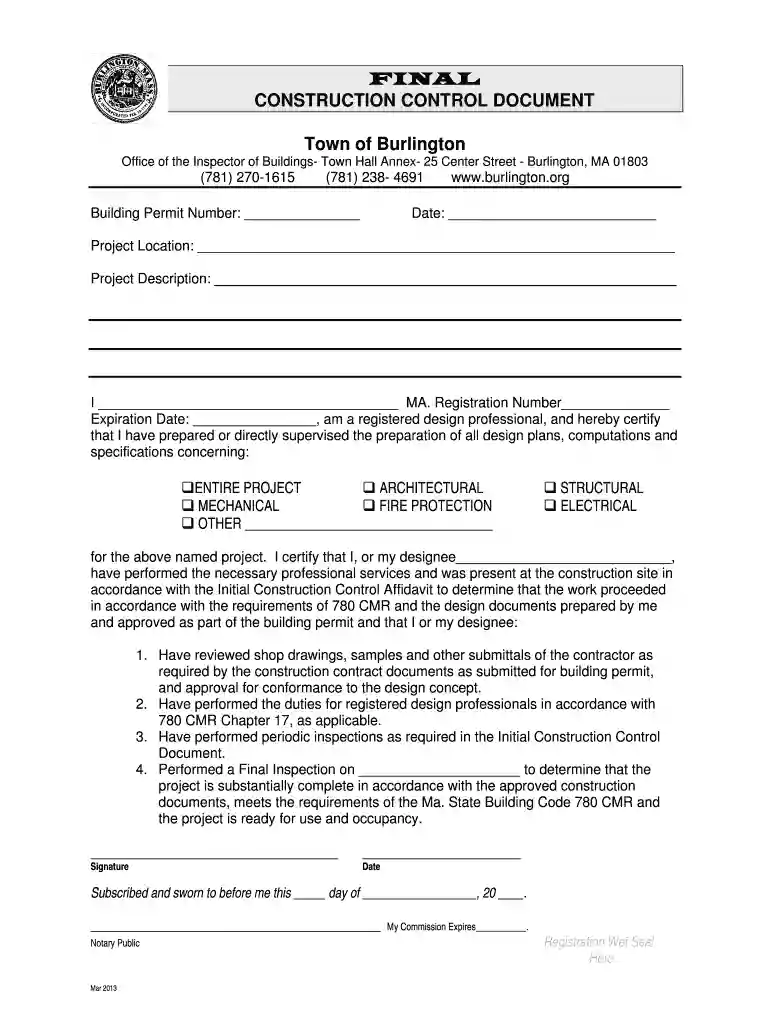
The final construction control document is an official certification issued by a registered design professional, attesting that a construction project has been designed and is being overseen in compliance with relevant building codes. This document plays a crucial role in the construction process, ensuring that all aspects of the build are examined and adhere to legal and safety standards before a project is deemed complete. At its core, it serves to safeguard public safety by validating that construction activities have been carried out according to approved plans.
To use the final construction control document effectively, stakeholders involved in the construction project must be familiar with its components. This document should be filled out thoroughly during and after the completion of a construction project to ensure all inspections and assessments have been documented. Key uses include:
Understanding and utilizing this document can streamline communication between construction professionals and regulatory bodies, ensuring projects move forward efficiently and legally.
Completing the final construction control document involves several detailed steps, each of which requires precision and accuracy to ensure full compliance:
This process ensures comprehensive documentation and validation of construction quality and adherence to legal standards.
The final construction control document typically includes several key elements that are pivotal for validating the construction process:
Each element works cohesively to provide a comprehensive overview of the project’s compliance and readiness for final approval.
Legally, the final construction control document serves as evidence of a project’s compliance with relevant building codes and safety regulations. It is a required submission to local authorities to obtain a Certificate of Occupancy—the authorization needed before the premises can be used for its intended purpose. Failure to secure this document can result in legal repercussions, including fines and halts on project completion. It is therefore imperative for construction companies to prioritize its timely and accurate completion.
While the final construction control document is used nationwide, state-specific regulations can affect how it is prepared and submitted. Some states might require additional documentation or supplementary inspections, while others might have unique certification standards. Contractors and registered professionals should familiarize themselves with guidelines specific to their state of operation to ensure compliance and avoid delays in project approvals.
The final construction control document is used primarily by registered design professionals, such as architects and engineers, who are responsible for overseeing and certifying construction projects. Additionally, construction managers and contractors may utilize this document to organize and track project progress and compliance. Regulatory bodies also rely on these documents to issue necessary approvals and permits.


In practice, a construction company working on a new residential building would maintain a final construction control document throughout the project lifecycle. For example, after each phase, such as foundation laying or roofing, an inspection is conducted, findings are documented, and any necessary corrections are logged. Once all phases are complete, the final compilation of this document ensures a streamlined process for gaining final project approval from municipal authorities, exemplifying its critical role in project management and regulatory compliance.
We've got more versions of the final construction control document word form. Select the right final construction control document word version from the list and start editing it straight away!
At DocHub, your data security is our priority. We follow HIPAA, SOC2, GDPR, and other standards, so you can work on your documents with confidence.
Upon completion of the work, the registered design professional shall file a final document to the building official indicating that, to the best of his or herRead more
Tenth Edition Final Construction Control Document (English, PDF 89.83 KB) 9th Edition construction control documents Open PDF file,


