






Definition and Purpose of the B Notice Form
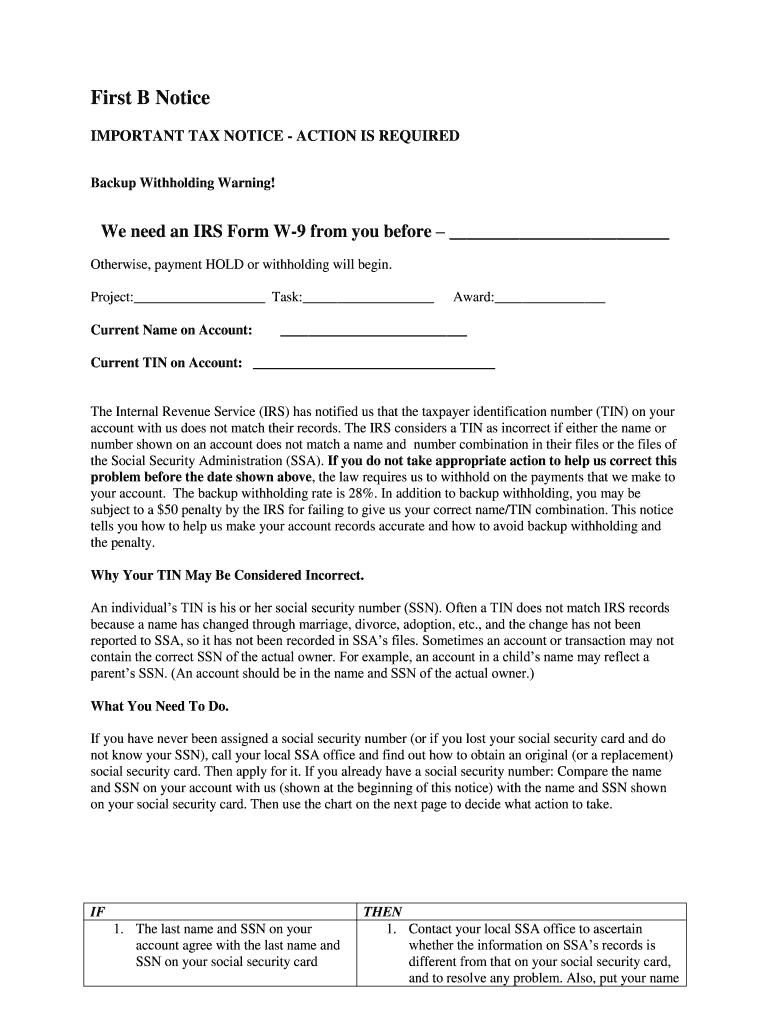
The B Notice Form, commonly referred to as a "b notice," is a document issued by the Internal Revenue Service (IRS) in the United States that notifies taxpayers about discrepancies related to their taxpayer identification number (TIN) or name associated with forms like the 1099. The primary purpose of the b notice is to alert recipients that their information does not match IRS records, which may lead to backup withholding on payments if not resolved.
This notice usually arises when a financial institution, employer, or other payor reports to the IRS that the name associated with a TIN does not match IRS documentation. This discrepancy can occur for several reasons, such as clerical errors, changes in marital status, or inaccuracies in personal information. It’s essential for recipients to address these notifications promptly to prevent unwanted tax consequences and ensure compliance with IRS regulations.
Understanding the significance of the b notice is crucial for taxpayers, as it emphasizes the importance of accurate information in tax reporting. By promptly addressing the notice, individuals can avoid penalties or backup withholding of twenty-eight percent on payments they receive.
How to Complete the B Notice Form PDF
Completing the b notice form requires attention to detail and an understanding of the specific information requested. The following steps outline the process of filling out the b notice form:
-
Download the Form: Locate the official b notice form in PDF format and download it to your device.
-
Provide User Information: Enter your name, address, and other identifying information. Ensure that all details match what the IRS has on record.
-
Indicate the Reason for the Notice: Select the appropriate box indicating whether the notice is due to a mismatch in name or TIN.
-
Include TIN and Documentation: Input your TIN and attach any relevant documentation that supports your status or corrects the mismatch, such as a copy of a Social Security card or tax return.
-
Sign and Date the Form: Ensure you sign the document where required, as an unsigned form may be returned or considered invalid.
-
Submit the Form: Follow the submission guidelines indicated on the form to ensure it reaches the IRS in a timely manner.
Completing the b notice form accurately can prevent further discrepancies and ensure that your tax reporting aligns with IRS requirements.
Important Guidelines for Using the B Notice Form
Understanding the key guidelines surrounding the use of the b notice form is vital for compliance with IRS standards. Here are several important considerations:
-
Timeliness: Fill out and return the b notice form as soon as possible upon receipt. The IRS has specific timelines for when discrepancies must be resolved to avoid backup withholding.
-
Correctness: Ensure all information is accurate and matches IRS official records. Double-check spelling, dates, and numbers before submission to avoid further issues.
-
Documentation: Keep copies of submitted documents for your records. This assists in clarifying any future discrepancies and maintains evidence of compliance.
-
Legal Compliance: The submission of the b notice form is legally binding. Providing false information can result in penalties.
Adhering to these important guidelines ensures that the handling of the b notice maintains compliance with IRS regulations, minimizing the risk of tax liabilities.
Who Typically Uses the B Notice Form PDF
The b notice form is extensively employed by various parties, which may include:
-
Taxpayers: Individuals who receive forms such as 1099 for independent contractor work or other income reporting that differ from their recorded TIN.
-
Employers: Businesses that need to correct discrepancies related to their employees' TINs to ensure accurate tax withholding and reporting.
-
Financial Institutions: Banks and investment companies that report income to the IRS and whose records may not align with client details.
-
Accountants and Tax Professionals: Individuals managing client accounts who must handle discrepancies reported by the IRS while filing tax returns.
By recognizing the parties involved with the b notice form, it becomes clear how broadly applicable and essential this document is in tax compliance.


Consequences of Non-Compliance with the B Notice Form
Failing to address a b notice can have significant repercussions:
-
Backup Withholding: If discrepancies remain uncorrected, the IRS requires payors to withhold twenty-eight percent upfront from payments made to the taxpayer until the issue is resolved.
-
Penalties: Continued non-compliance can result in additional penalties, including those associated with inaccurate reporting or failure to file correct tax information.
-
Increased Scrutiny: Persistent issues may lead to closer scrutiny from the IRS, putting taxpayers at risk for audits or further investigations into their financial records.
Addressing the b notice form promptly and accurately helps mitigate these risks, providing peace of mind and preventing adverse financial consequences.
Key Elements of the B Notice Form PDF
The b notice form includes several crucial components integral to its function:
-
Sender Information: Identifies the organization or entity sending the notice, including contact information.
-
Recipient Details: Contains the taxpayer's identifying information, ensuring the correct party receives the notice.
-
Discrepancy Information: Clearly outlines the specific TIN or name issues that triggered the notice.
-
Response Instructions: Provides detailed steps for resolving the discrepancy, including deadlines for submission and where to send the completed form.
-
Legal Disclaimers: Usually includes necessary legal language regarding compliance and the implications of ignoring the notice.
Understanding these elements is essential for a smooth experience when handling a b notice, as it sets the framework for resolution.