
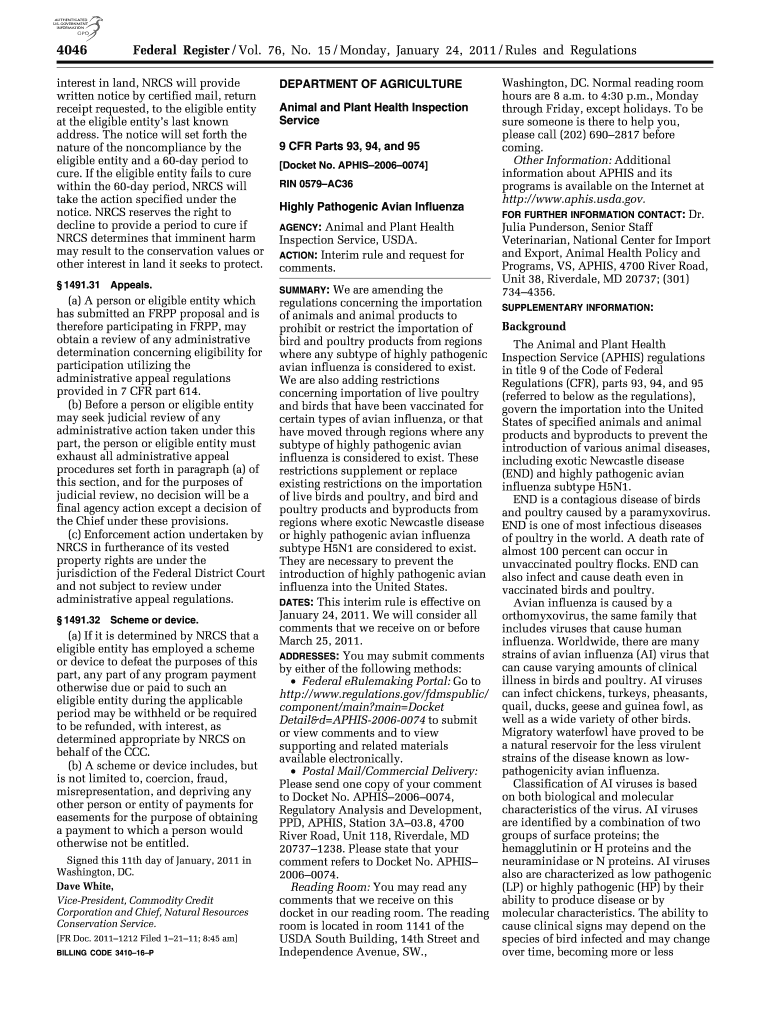







Definition & Meaning
The "Federal Register Vol 76, No 15 Monday, January 24, 2011 Rules - gpo" refers to a specific volume and number of the Federal Register, which serves as the official journal of the U.S. federal government. Published by the Government Publishing Office (GPO), this document includes rules, proposed rules, and public notices from federal agencies. The specific edition mentioned encompasses legal frameworks, regulatory changes, and guidance significant to federal administration and public policy.
- Federal Register: A daily publication containing a wide range of content, including agency regulations, proposed rules, and notices, which ensures government transparency and public participation.
- Volume and Number: The designation "Vol 76, No 15" specifies the series and sequence of the edition, crucial for referencing and legal compliance.
Understanding the Federal Register's purpose and classification is essential for government officials, legal professionals, and those impacted by regulatory practices.
Key Elements of the Federal Register Vol 76, No 15
This specific issue of the Federal Register includes various vital components:
- New Regulations: Introducing new rules, typically detailed and specific to certain sectors or aspects of public policy.
- Amendments to Existing Regulations: Modifications made to improve, update, or repeal parts of existing regulations.
- Administrative Notices: Information about public hearings, grant applications, or policy guidance.
- Proposed Rules: Announcements of newly suggested rules open to public comment or review.
Each element serves a distinctive role, contributing to the comprehensive regulatory framework maintained by U.S. federal agencies.
Steps to Use the Federal Register Vol 76, No 15
To effectively navigate and utilize this document, follow these steps:
- Identify Relevant Sections: Examine the table of contents for topics pertinent to your interests or obligations.
- Review Regulatory Context: Understand the regulatory environment’s context by reading the preamble of rules and notice sections.
- Seek Legal Advice if Needed: For complex regulations, consulting with a legal expert may be prudent.
- Submit Feedback: If engaging with proposed rules, you can submit public comments during open periods.
- Implement Necessary Changes: Ensure compliance by integrating the needed adaptations into your practices or policies.
This structured approach ensures that stakeholders engage effectively with the Federal Register's contents.
How to Obtain the Federal Register Vol 76, No 15
Accessing this document can be done via several methods:
- Digital Access: Available online through the Federal Register's official website or the Government Publishing Office.
- Libraries: Some public and university libraries maintain archival copies.
- Subscription Services: Specialized legal and governmental services offer subscriptions for regular updates.
Opting for digital access provides convenient and immediate retrieval, while physical copies are valuable for in-depth researches.
Legal Use of the Federal Register
The Federal Register's documents, including this volume, are used legally for:
- Regulation Enforcement: Agencies enforce rules published within the Federal Register.
- Court References: Legal cases may cite Federal Register entries as authoritative sources.
- Compliance Guides: Businesses rely on these documents for ensuring regulatory compliance.
These uses underscore the Federal Register's importance in maintaining legal transparency and accountability within governmental operations.
Important Terms Related to Federal Register Use
Familiarity with key terminologies enhances comprehension and utilization:
- Preamble: An introductory statement outlining the reasons and basis for a rule.
- Agency Docket: A collection of documents related to a rulemaking process.
- Notice-and-Comment Rulemaking: A process that seeks public opinion on proposed regulations.
Understanding these terms is vital for anyone interpreting the regulations and proposals contained within this volume.
Who Typically Uses the Federal Register Vol 76, No 15
Various professionals and entities often refer to this document:
- Legal Professionals: Engage with rules and regulatory updates for client advisories or litigation.
- Business Executives: Monitor industry-related regulations impacting operations.
- Government Officials: Use it to implement and enforce public policy effectively.
These users rely on the Federal Register to remain informed and compliant with the latest regulations and federal guidance.


Examples of Using the Federal Register
Consider practical scenarios where the Federal Register impacts regulation:
- Animal Health Regulations: Business stakeholders in poultry import/export review APHIS regulations for compliance.
- Environmental Policies: Environmental NGOs use updates in the Register to advocate for policy changes post-publication.
These examples illustrate the Federal Register’s diverse applications across multiple sectors.
Eligibility Criteria for Regulatory Compliance
Businesses must meet specific qualifications to ensure adherence:
- Sector-Specific Criteria: Follow tailored regulations by industry type.
- Size and Scope: Company size may dictate specific regulatory obligations.
- Geographical Considerations: Regional variances may exist for federal regulations.
Such criteria help businesses align their operations with current legal standards.

Penalties for Non-Compliance
Failing to adhere to regulations documented within the Federal Register can lead to:
- Fines and Sanctions: Significant financial penalties for non-observance.
- Operational Restrictions: Limitations or revocation of licenses and permits.
- Legal Challenges: Potential lawsuits or government actions.
Awareness of potential consequences reinforces the importance of regular reviews of updates and adherence to published regulations.




