







Definition & Meaning
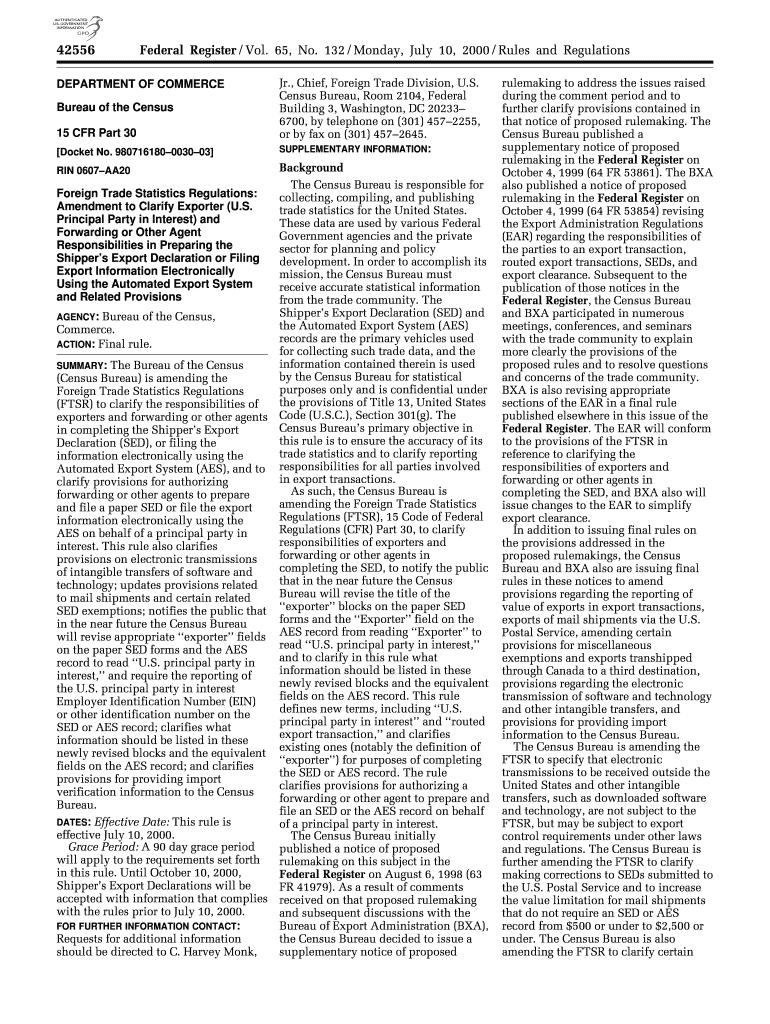
The Foreign Trade Statistics Regulations, as issued by the U.S. Government Printing Office (GPO), delineate the rules and guidelines governing the collection and reporting of trade statistics by the United States Census Bureau. These regulations serve to ensure that both exporters and forwarding agents understand their responsibilities in preparing and submitting documentation such as the Shipper's Export Declarations (SED) and using the Automated Export System (AES) to facilitate electronic filing. The primary objective of these regulations is to enhance the accuracy and integrity of U.S. trade data, which is crucial for government policy making, economic analysis, and international trade negotiations.
Key Elements of the Foreign Trade Statistics Regulations
The main components of the Foreign Trade Statistics Regulations include precise definitions of terms like 'U.S. principal party in interest' and detailed reporting requirements necessary for compliance. The regulations also specify the documentation responsibilities that each party involved in an export transaction must fulfill. By standardizing these elements, the regulations aim to ensure all parties involved in foreign trade are well-informed of their obligations, minimizing errors and non-compliance incidents.
Steps to Complete the Foreign Trade Statistics Regulations
- Determine Responsibilities: Identify if you are an exporter or a forwarding agent, as each role has specific obligations under the regulations.
- Prepare Documentation: Ensure the accurate preparation of necessary documents such as the Shipper's Export Declarations.
- File Electronically: Use the Automated Export System to submit export information electronically, ensuring timely and precise data reporting.
- Verify Compliance: Double-check all submitted information for accuracy and adhere strictly to the prescribed timelines and requirements.
- Follow Up: Maintain records and follow up with the U.S. Census Bureau for any inquiries or further instructions.
Who Typically Uses the Foreign Trade Statistics Regulations
Primarily, these regulations are utilized by exporters, freight forwarders, and other entities engaged in international trade. Government agencies and policymakers also rely on these regulations to ensure the availability of reliable trade statistics essential for economic planning and policy formation.


Legal Use of the Foreign Trade Statistics Regulations
Compliance with the Foreign Trade Statistics Regulations is legally mandatory for any entity involved in exporting goods from the United States. Adhering to these guidelines ensures lawful participation in international trade and helps avoid penalties or legal action due to non-compliance. Legal use also involves safeguarding sensitive export data and fulfilling the reporting duties as stipulated by the regulations.
Important Terms Related to Foreign Trade Statistics Regulations
- U.S. Principal Party in Interest (USPPI): The person or entity in the United States that receives the primary benefit, monetary or otherwise, from the export transaction.
- Shipper's Export Declaration (SED): A form required for collecting data on exports from the United States.
- Automated Export System (AES): The primary method for electronic filing of export shipment information to U.S. Customs and Border Protection.
Penalties for Non-Compliance
Failure to comply with the Foreign Trade Statistics Regulations can lead to severe penalties, including fines and sanctions. Non-compliance may result from submitting inaccurate data, failing to file required documentation, or missing deadlines. It is critical for exporters and their agents to be vigilant in following these regulations to avoid costly penalties.
Software Compatibility
The use of electronic platforms, such as DocHub, simplifies compliance with the Foreign Trade Statistics Regulations by enabling seamless document editing and submission. This platform allows integration with software commonly used in business operations, such as QuickBooks and TurboTax, to ensure that necessary data can be efficiently compiled and reported. Furthermore, such software compatibility ensures that files are maintained in a digital format, streamlining export reporting processes.
Digital vs. Paper Version
The Foreign Trade Statistics Regulations recognize digital filing through systems like the Automated Export System as the standard practice. While paper submissions were commonplace before, the shift to electronic methods provides a more efficient, secure, and reliable means of ensuring compliance with U.S. trade reporting requirements. Digital submissions reduce the chances of error and expedite the overall export documentation process.
Filing Deadlines / Important Dates
Adhering to filing deadlines is crucial for compliance with Foreign Trade Statistics Regulations. Export information must be filed at specific times, often prior to or upon the arrival of goods at the port of export. Missing these important dates can result in penalties, making it essential to keep track of deadlines for all export transactions.
Who Issues the Form
The U.S. Census Bureau, as part of its mandate to gather and report accurate trade data, is responsible for issuing the forms related to the Foreign Trade Statistics Regulations. This ensures continuity and equitable enforcement of the regulations across all exporting entities involved in U.S. international trade activities.




