
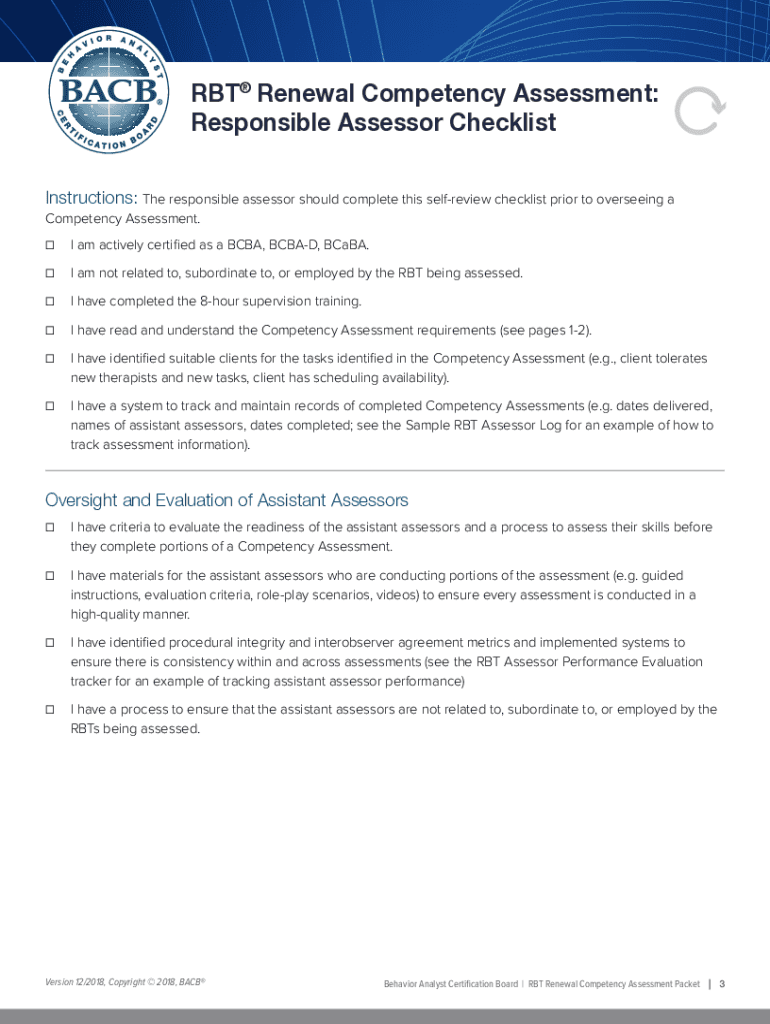







Definition & Purpose of RBT Competency Renewal
The RBT competency renewal is fundamental for maintaining the certification of Registered Behavior Technicians (RBTs). This assessment confirms that RBTs remain competent in their skills and adhere to ethical guidelines. The renewal process ensures RBTs are up-to-date with current practices and regulations in the field of applied behavior analysis.
To achieve certification renewal, RBTs must complete a competency assessment through a qualified assessor. This assessment typically involves direct interaction with clients, role-playing scenarios, or interviews, where RBTs demonstrate their proficiency in essential skills. The assessment is designed to ensure that practitioners continue to meet the standards set by the Behavior Analyst Certification Board (BACB) and maintain effective and ethical service delivery.
Steps to Complete the RBT Competency Renewal
Completing the RBT competency renewal involves several key steps to ensure that practitioners meet the established requirements.
-
Review Certification Requirements: RBTs should familiarize themselves with the BACB guidelines concerning renewal, including any specific competencies and ethical considerations.
-
Schedule an Assessment: RBTs must arrange to undergo a competency assessment. This usually necessitates connecting with a qualified assessor who has been approved by the BACB.
-
Prepare for the Assessment: It is advisable to review relevant materials, including the RBT Handbook and any resource materials provided by the BACB. This preparation helps RBTs to perform better during the assessment.
-
Undergo the Assessment: The actual assessment will test RBTs on various competencies. This may involve practical demonstrations, role-playing, and theoretical questions designed to evaluate their knowledge and skills.
-
Obtain Documentation: After successfully completing the assessment, RBTs should receive documentation to verify their competency renewal. This document is essential for maintaining their certification in good standing.
-
Submit Renewal Application: RBTs must submit their renewal application along with the assessment documentation to maintain their certification.
-
Stay Informed: RBTs should keep abreast of changes in the competency renewal process or any amendments to the ethical guidelines set forth by the BACB, ensuring ongoing compliance and competency.
Important Terms Related to RBT Competency Renewal
Understanding specific terminology is vital for navigating the RBT competency renewal process effectively.
-
Competency Assessment: This is a formal evaluation measuring an RBT’s ability to perform the required skills competently. It is a crucial step in renewing RBT certification.
-
Qualified Assessor: An individual who has been sanctioned by the BACB to conduct competency assessments. These assessors must meet specific experience and training criteria to ensure they provide valid evaluations.
-
Ethical Guidelines: These are standards established by the BACB that govern RBT conduct and decision-making. RBTs are required to adhere to these guidelines throughout their practice.
-
Renewal Application: The official document that RBTs file to maintain their certification status. This application must include evidence of successful competency assessments.
-
BACB: The Behavior Analyst Certification Board, the governing body responsible for certifying and maintaining standards for behavior analysts and RBTs.
Understanding these terms aids RBTs in their renewal process and ensures they comply with required standards and practices.
Legal Use of the RBT Competency Renewal
The RBT competency renewal is legally essential in ensuring that certified professionals operate within ethical and legal boundaries. In the United States, RBTs are often required to renew their certification to comply with state and federal regulations regarding the practice of applied behavior analysis.
Compliance with the BACB ethical guidelines and state laws typically involves:
-
Maintaining Documentation: RBTs must keep detailed records of their competency assessments and training hours, as this documentation can be subject to audit by the BACB or state licensing boards.
-
Adhering to Confidentiality: RBTs are required by law to maintain the confidentiality of client information, which is a critical aspect covered during the competency assessment.
-
Upholding Professional Conduct: RBTs must practice within the legal frameworks set by state regulatory bodies and adhere to the established ethical standards in their assessments.
Failure to comply with these legal requirements can result in disciplinary actions, including fines, suspension, or revocation of certification.
Key Elements of the RBT Competency Renewal
The RBT competency renewal encompasses several key elements integral to ensuring RBTs maintain their proficiency and ethical standards. These elements include:
-
Competency Domains: The assessment evaluates various domains such as assessment, intervention, data collection, and the implementation of ethical practices. RBTs must show proficiency across all domains to ensure comprehensive service delivery.
-
Assessment Methods: RBTs are assessed through different methods, including direct client interaction, role-playing scenarios, and oral interviews. These methods are designed to simulate real-world situations that practitioners may encounter.
-
Documentation and Record-Keeping: RBTs must accurately document their competency assessment outcomes. This includes details on assessment methods, competencies demonstrated, and any areas needing improvement.
-
Continuing Education: RBTs are encouraged to engage in ongoing professional development to ensure they remain familiar with evolving practices and regulations in behavior analysis.
-
Ethical Oversight: The renewal process emphasizes adherence to ethical guidelines. RBTs must consistently demonstrate integrity and ethical considerations in their practice.
Understanding these key elements reinforces the importance of the competency renewal process in shaping effective and ethical service delivery in the field of behavior analysis.




