






Definition & Meaning
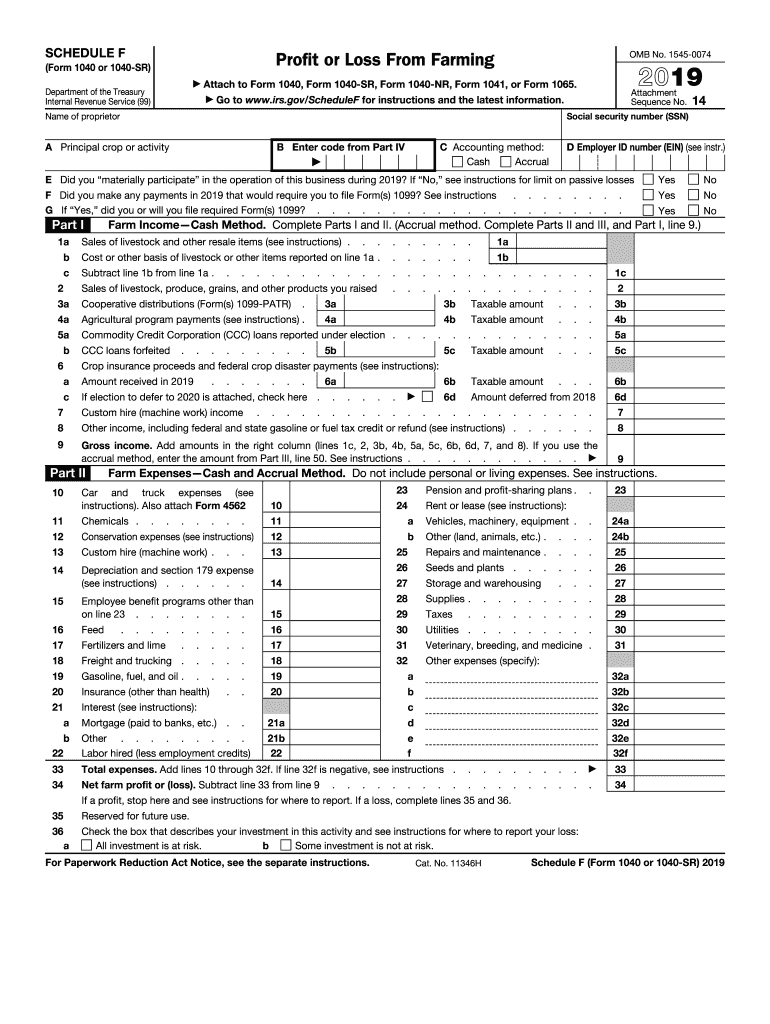
Schedule F is a crucial component of the U.S. tax filing process for individuals engaged in farming activities. It is used to report income and expenses related to agricultural production, allowing farmers to calculate their net profit or loss from these operations for inclusion in their annual tax return. The form is part of the Form 1040 series and is designed to capture financial information specific to farming, including livestock sales, crop production, and other related revenues and costs. By using Schedule F, farmers can ensure that their income and expenses are properly documented and reported in compliance with IRS regulations.
Key Elements of the Schedule F
Schedule F is structured to cover a wide array of financial details pertinent to farming activities. Key elements include:
- Income Reporting: Farmers must list all sources of income from their farming operations, including sales of livestock, produce, and other agricultural products.
- Expense Tracking: This section captures costs incurred in the operation of a farm, such as feed, fertilizers, labor, and equipment repairs.
- Profit or Loss Calculation: Based on reported income and expenses, the form helps determine the overall profitability of farming activities for the tax year.
- Accounting Method Declaration: Farmers must indicate whether they use cash or accrual accounting to track their financial performance.
- Participation Status: Information about the taxpayer’s active participation in the farming business is required to determine eligibility for certain deductions and credits.
How to Use the Schedule F
Completing Schedule F involves several important steps:
- Collect Financial Records: Gather all relevant documentation detailing your farming income and expenses for the tax year.
- Determine Income Sources: Identify and total various forms of income from farming activities, including any subsidies or government payments received.
- Calculate Expenses: Itemize and sum up all deductible expenses related to farming operations.
- Compute Net Profit or Loss: Subtract total expenses from total income to arrive at the net result.
- Attach to Form 1040: Include Schedule F with your individual tax return to report the financial outcomes of your farming activities.
Steps to Complete the Schedule F
Filing Schedule F requires attention to detail and accuracy:
- Begin with Part I — Income: List all sources of income, using supporting documentation like sales receipts and bank statements.
- Move to Part II — Expenses: Enter allowable expenses categorized under specific headings provided in the form, ensuring you substantiate each claim with evidence.
- Review Alignment with 1040: Double-check that the profit or loss figure aligns with other entries on your Form 1040.
- Verification: Ensure that all figures are accurately transcribed and double-check calculations for errors.
- Consult Guidelines: Refer to IRS instructions for Schedule F to clarify eligible expenses and reporting requirements.
IRS Guidelines
The IRS provides detailed instructions for completing Schedule F, which are essential for ensuring proper compliance:
- Form Instructions: The official Schedule F instructions provide step-by-step guidance on completing each section of the form.
- Qualifying Expenses: Clarification is given on what constitutes a deductible farming expense under current tax laws.
- Special Situations: Guidance on handling income from unique farming activities, like agri-tourism or conservation programs, is included.
- Recordkeeping: Recommendations on maintaining accurate records and supporting documentation for audit purposes.
Required Documents
To accurately complete Schedule F, several documents are typically needed:
- Sales Records: Documentation of sales and revenue from farm products.
- Expense Receipts: Bills, invoices, and receipts demonstrating payment of business expenses.
- Tax Forms: Previous year’s tax returns, if applicable, for carryover calculation.
- Bank Statements: Financial statements supporting cash flow activities and transactions.
Who Typically Uses the Schedule F
Schedule F is primarily used by individuals who:
- Operate a Farm: Owners or managers of farms producing crops, livestock, or other agricultural products.
- Participate in Farming Partnerships: Members of farm partnerships needing to report their share of income and expenses.
- Engage in Farming as a Family Business: Families who run a farm enterprise as their primary or secondary income source.


Penalties for Non-Compliance
Failing to file Schedule F or providing inaccurate information can result in significant penalties:
- Accuracy Penalties: Fines apply for substantial understatements of income or inaccurate reporting.
- Late Filing Fees: Penalties are enforced for failing to submit tax returns, including Schedule F, by the due date.
- Interest on Unpaid Taxes: Accrued interest on any tax due resulting from omitted income or unreported profits.