




01. Edit your form online
Type text, add images, blackout confidential details, add comments, highlights and more.

Type text, add images, blackout confidential details, add comments, highlights and more.

Draw your signature, type it, upload its image, or use your mobile device as a signature pad.

Send it via email, link, or fax. You can also download it, export it or print it out.
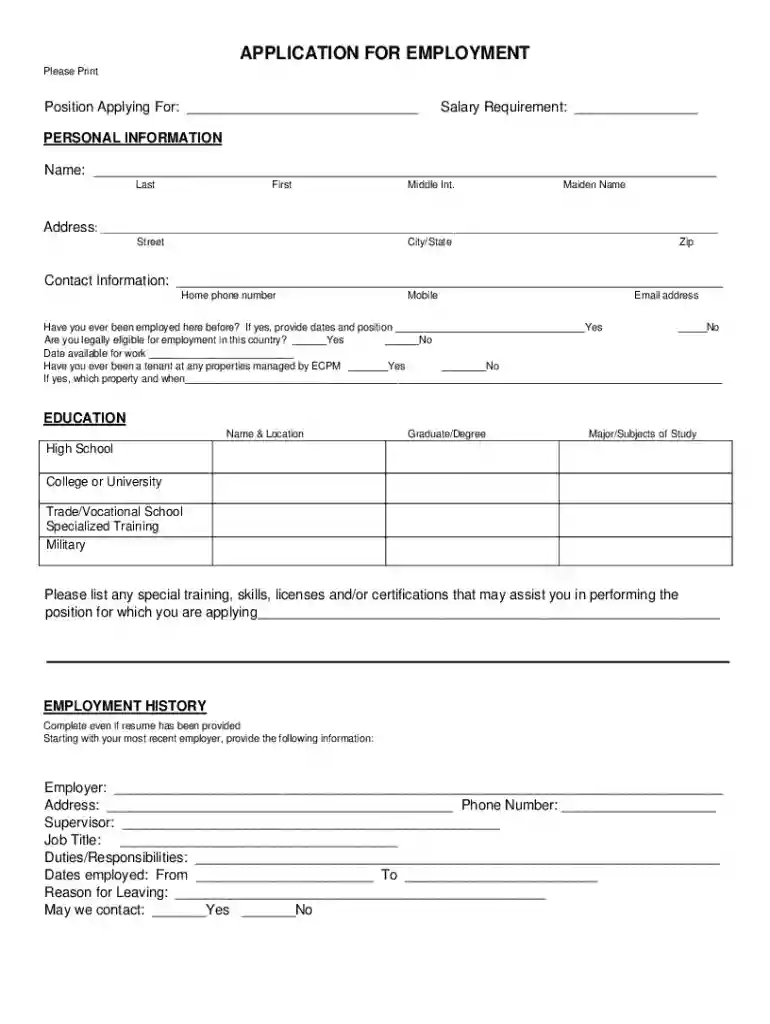
The phrase "If yes, provide dates and position Yes" typically appears in employment application forms. This section prompts applicants to provide detailed information about specific previous employment or experiences that may be relevant to the position they are applying for. Applicants are required to specify the dates of employment and the position held. This assists employers in verifying work history and understanding the candidate's professional background.
Filling out this section requires precision and honesty. Here are the steps to ensure you complete it correctly:
This section is frequently utilized by:
Consider a scenario where a candidate held a managerial position from January 2018 to December 2020. They would enter this information precisely to aid the employer in understanding their experience level.
Understanding the terms used in this section can help ensure clarity and accuracy:
Avoid errors by keeping these points in mind:
Employers use this section to:
Completely and accurately filling in the "If yes, provide dates and position Yes" section can significantly influence the hiring decision, providing critical verification of a candidate's work history and suitability for the role applied for.
We've got more versions of the If yes, provide dates and position Yes form. Select the right If yes, provide dates and position Yes version from the list and start editing it straight away!
At DocHub, your data security is our priority. We follow HIPAA, SOC2, GDPR, and other standards, so you can work on your documents with confidence.

Frequently asked questions and answers about virtual currency transactions.
Answer: Yes (generally). This question will typically be answered yes by international students since you will need sponsorship to continue working after yourRead more


