




01. Edit your form online
Type text, add images, blackout confidential details, add comments, highlights and more.

Type text, add images, blackout confidential details, add comments, highlights and more.

Draw your signature, type it, upload its image, or use your mobile device as a signature pad.

Send it via email, link, or fax. You can also download it, export it or print it out.
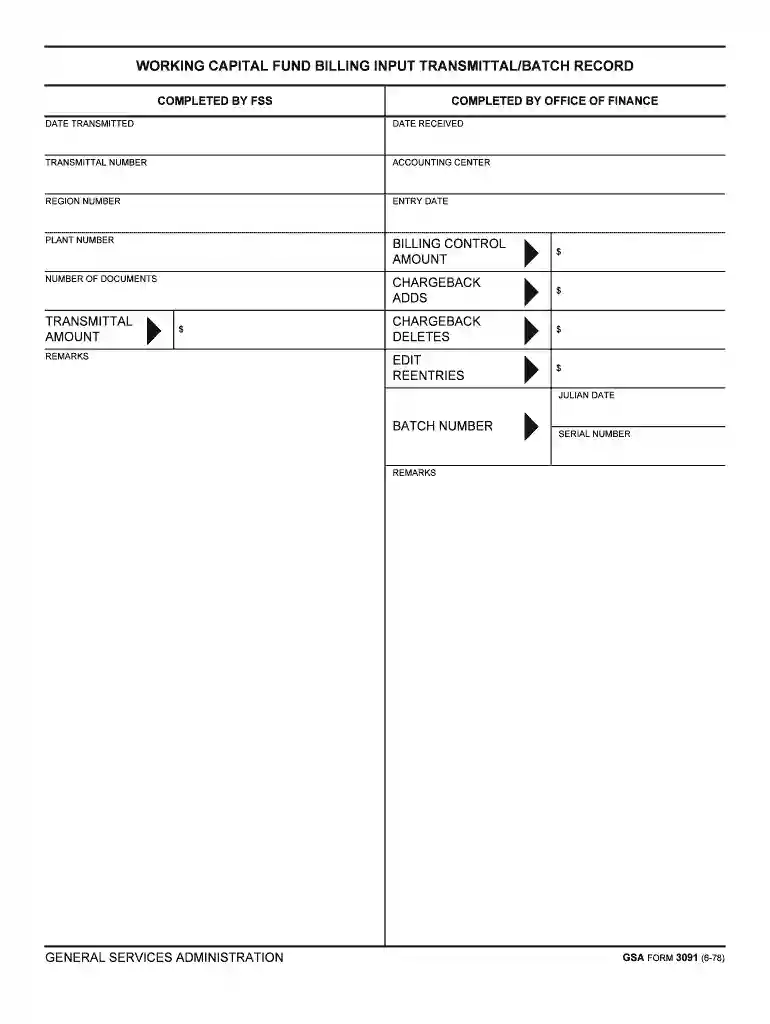
The Working Capital Fund Billing Input Transmittal Batch Record - GSA is a specialized document used within the General Services Administration. It plays a crucial role in the billing process, specifically for managing transactions under the Working Capital Fund (WCF). This form is used by the Financial Services Sector and the Office of Finance to input and transmit billing data accurately and efficiently. Its primary function is to facilitate the tracking of billing transactions by including detailed financial data such as dates, amounts, and remarks.
The Working Capital Fund Billing Input Transmittal Batch Record - GSA is essential for maintaining financial order within government operations. It ensures that all billing transactions are recorded methodically, reducing the risk of errors. This documentation supports financial transparency and accountability, crucial for government agencies managing public funds.
Understanding the step-by-step process for completing the Working Capital Fund Billing Input Transmittal Batch Record - GSA ensures that users can leverage its full potential in managing billing inputs efficiently.
The Working Capital Fund Billing Input Transmittal Batch Record - GSA can be accessed:
Using the Working Capital Fund Billing Input Transmittal Batch Record - GSA requires adherence to legal standards set by government accounting regulations. Compliance ensures legality and enhances trust in financial processes.
Failure to properly utilize the form can result in:
The transition to digital documentation is essential for efficiency and compliance.
Ensure compatibility with accounting and document management software:
Overall, the Working Capital Fund Billing Input Transmittal Batch Record - GSA serves as an invaluable tool for structured, compliant, and efficient financial transaction management within the framework of the U.S. government's financial operations.
We've got more versions of the working capital fund billing input transmittal batch record - GSA form. Select the right working capital fund billing input transmittal batch record - GSA version from the list and start editing it straight away!
| Versions | Form popularity | Fillable & printable |
|---|---|---|
| 1978 | 4.8 Satisfied (67 Votes) |
At DocHub, your data security is our priority. We follow HIPAA, SOC2, GDPR, and other standards, so you can work on your documents with confidence.
Nov 8, 2007 This form provides information concerning budget, year-to-date expenditures, and commitments by fiscal year, org, fund, program code, and
Working Capital Fund Billing Input Transmittal/Batch Record. Information. Form Number: GSA3091; Current Revision Date: 06/1978; Authority or Regulation:.Read more


