01. Edit your form online
Type text, add images, blackout confidential details, add comments, highlights and more.

Type text, add images, blackout confidential details, add comments, highlights and more.

Draw your signature, type it, upload its image, or use your mobile device as a signature pad.

Send it via email, link, or fax. You can also download it, export it or print it out.
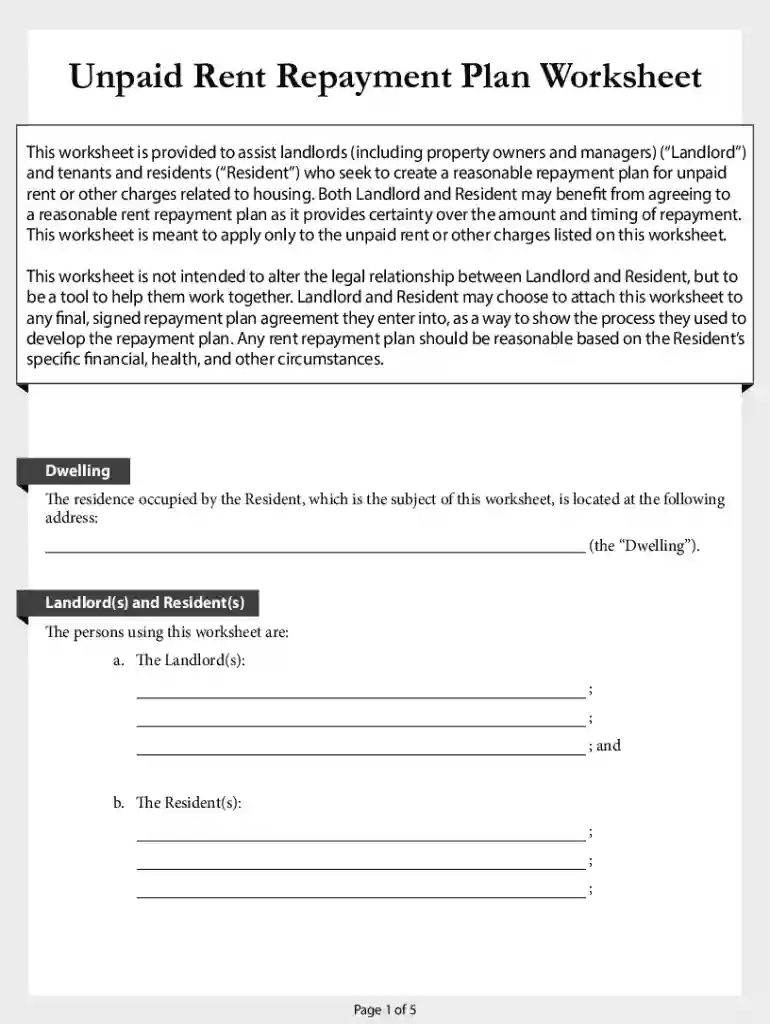
A Past-Due Rent Payment Plan Agreement is a formal document created to help landlords and tenants address unpaid rent by defining a clear repayment schedule. This agreement facilitates an understanding between the parties involved, ensuring that the tenant can continue their residency while gradually paying off back rent. The primary aim is to create a fair and sustainable plan that respects both the tenant's ability to pay and the landlord's need to receive owed rent.
The Free Rent Payment Tracker Spreadsheet simplifies tracking rental payments, enabling landlords and tenants to monitor payment schedules effectively. Users can input details such as payment amounts, due dates, and actual payment dates, providing a clear overview of the rent status. This structured approach allows for easy identification of discrepancies and helps both parties remain on track with the agreed repayment plan.
Completing a Past-Due Rent Payment Plan Agreement involves several critical steps to ensure clarity and agreement compliance:
The creation of a Past-Due Rent Payment Plan Agreement must align with local laws governing landlord-tenant relationships. It is essential for both parties to ensure the terms comply with state rental laws to prevent future legal disputes. The agreement should be drafted transparently to uphold the tenant's rights and the landlord's obligations, providing a legally binding resolution to past due payments.
Several essential elements must be present in an effective Past-Due Rent Payment Plan Agreement:
Typically, this agreement is used by landlords and property managers who need to formalize a repayment strategy with tenants struggling to meet their rent obligations. It is also beneficial for tenants experiencing temporary financial setbacks, allowing them to avoid eviction by adhering to a manageable payment plan.


Each U.S. state may have slightly different rules and regulations regarding rent payment agreements:
Landlords and tenants should familiarize themselves with applicable state regulations to ensure compliance when drafting the agreement.
Real estate investment firms and property management companies find significant utility in the Free Rent Payment Tracker Spreadsheet and Past-Due Rent Payment Plan Agreement. These tools assist in managing multiple properties and tenants, which is essential for keeping accurate records and ensuring consistent cash flow.
At DocHub, your data security is our priority. We follow HIPAA, SOC2, GDPR, and other standards, so you can work on your documents with confidence.