
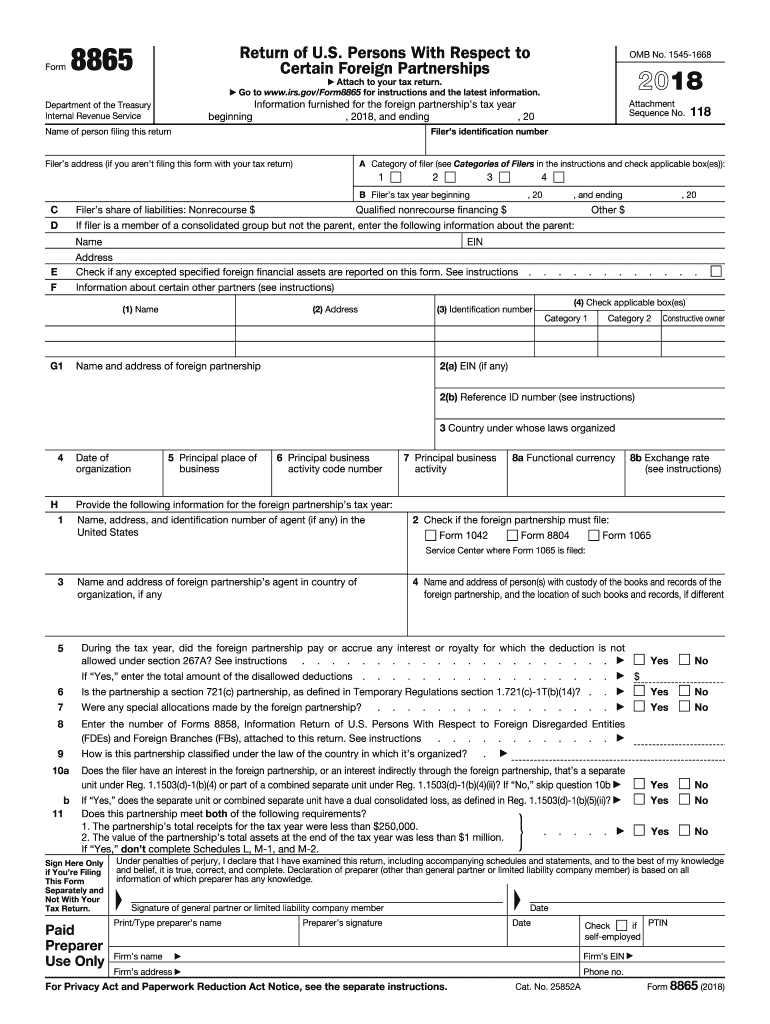







Definition & Meaning
Form 8865, known formally as the "Return of U.S. Persons With Respect to Certain Foreign Partnerships," is used by U.S. taxpayers to report information regarding their interests in foreign partnerships. This form is mandated by the Internal Revenue Service (IRS) to ensure transparency and compliance with U.S. tax laws for individuals and entities with foreign partnership interests. It is crucial for reporting the income, deductions, and financial activities of these partnerships for tax year 2017. By requiring this disclosure, the IRS aims to prevent tax avoidance through overseas entities and ensure that all international financial activities are properly taxed under U.S. law.
Who Typically Uses the 8
Form 8865 is primarily utilized by U.S. individuals, corporations, or trusts that own at least a 10% interest in a foreign partnership. This includes U.S. persons who contribute property to a foreign partnership or have control over the partnership's operations and financial activities. Partnerships entirely owned by U.S. persons may also need to file if certain thresholds are met. Additionally, those who are considered constructive owners—meaning they have indirect ownership through other entities or family members—might be required to submit this form. Understanding who is obligated to file is essential to maintain compliance and avoid significant penalties.


Steps to Complete the 8
Completing Form 8865 requires diligent attention to detail and a comprehensive understanding of both the form and the financial details of the foreign partnership.
-
Gather Documentation: Collect all necessary information concerning the foreign partnership's financial activities, including income statements, balance sheets, and any transactions with related parties.
-
Complete Part I: General Information: Enter basic information such as the name of the partnership, tax year, and partnership's mailing address.
-
Part II: Information About the Partners: Detail the identity and ownership interest of each partner involved.
-
Part III: Income and Expenses: Report the partnership’s income, expenses, and any special items recognized according to U.S. tax rules.
-
Part IV: Balance Sheets: Reflect the partnership’s assets, liabilities, and capital accounts at the beginning and end of the tax year.
-
Submit Required Schedules: Attach necessary schedules such as Schedule K, which details the partners' shares of income and deductions.
-
Review and Mail: Ensure all entries are accurate before signing and submitting the form by the specified deadline via mail or other specified methods.
IRS Guidelines
The IRS has established strict guidelines and regulations for those filing Form 8865. These guidelines dictate who must file, what information must be included, and how the form should be submitted. It’s essential for filers to adhere to these rules to ensure compliance. The IRS provides detailed instructions and examples in their official publications, indicating how to report complex transactions and allocate partnership income and expenses accurately.
Filing Deadlines / Important Dates
Filing deadlines for Form 8865 generally align with the tax return due date of the U.S. person required to file the form. For individuals, this is typically April 15th of the year following the tax year being reported, with extensions available if requested in a timely manner. It’s vital to adhere to these deadlines to avoid penalties. Late filing of Form 8865 can result in significant fines, and the IRS may initiate audits or further review the tax affairs of the individual or entity involved.
Key Elements of the 8
Form 8865 is composed of several parts, each requiring detailed information about different aspects of the foreign partnership and its U.S. partners.
- Partners' Information: Detailed breakdown of each partner’s contributions and share of income.
- Financial Statement Requirements: Complete, accurate financial statements for the foreign partnership, reflecting all transactions in the tax year.
- Compliance and Filing Requirements: Any additional schedules or documents that certify no reportable transactions have been omitted.
Understanding these elements is crucial to accurately completing the form.
Penalties for Non-Compliance
The IRS imposes severe penalties for failing to file Form 8865 or for inaccuracies within the form. Penalties can be as high as $10,000 per instance of non-compliance, with additional fines accruing for continued failures. This financial liability highlights the importance of accuracy and timely submission. In some cases, willful non-compliance could also lead to criminal charges, emphasizing the need for due diligence and professional support if necessary.
Software Compatibility (TurboTax, QuickBooks, etc.)
Many tax preparation software programs like TurboTax offer features that support the completion of Form 8865. Using these programs can help ensure accuracy due to integrated IRS guidelines and automatic error-checking processes. Additionally, platforms such as QuickBooks can facilitate the collection and organization of necessary financial data, streamlining the process of completing the form. These software applications are particularly beneficial for partnerships with complex financial arrangements, as they provide detailed support and simplified workflow management.
Digital vs. Paper Version
Form 8865 can be completed either digitally or as a paper submission. Digital submissions typically streamline the filing process, offering error-checking capabilities and faster processing times. On the other hand, paper submissions may be suitable for those preferring traditional methods or when digital access is limited. Understanding the pros and cons of each submission type can assist in making an informed decision that aligns with the preparer’s comfort level and technological access.
Each section above provides comprehensive coverage of various aspects related to Form 8865 for the 2017 tax year, ensuring readers have a thorough understanding of the form's requirements, compliance steps, and implications.




