




01. Edit your 2015 form 1120 online
Type text, add images, blackout confidential details, add comments, highlights and more.

Type text, add images, blackout confidential details, add comments, highlights and more.

Draw your signature, type it, upload its image, or use your mobile device as a signature pad.

Send it via email, link, or fax. You can also download it, export it or print it out.
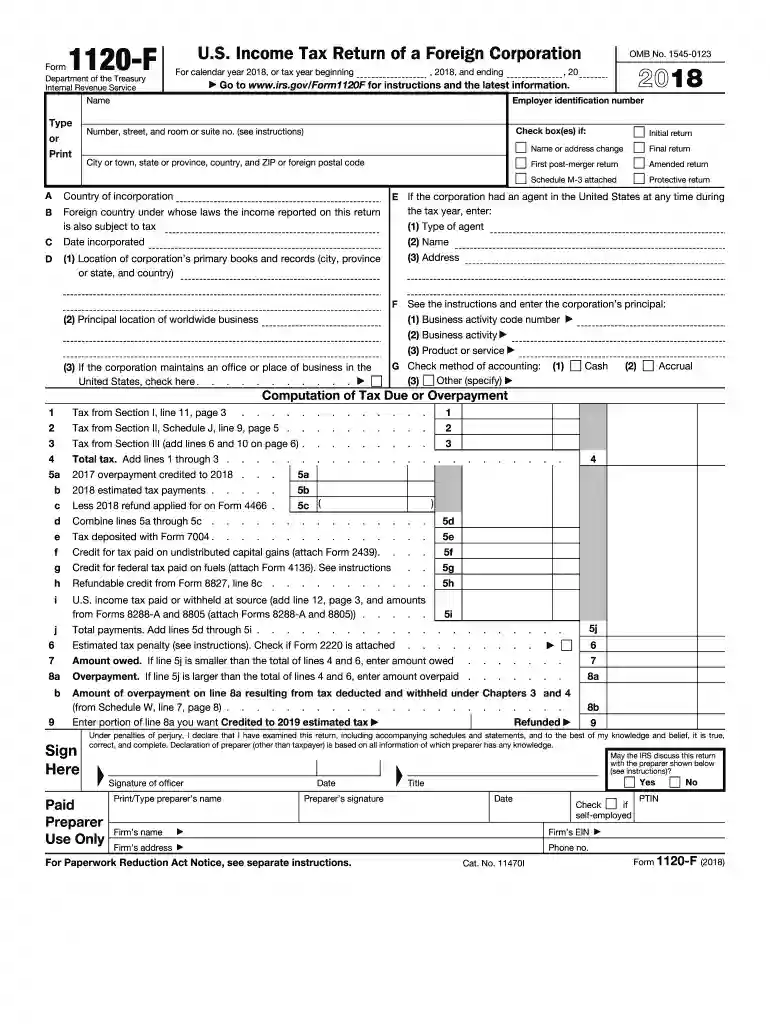
The 2015 IRS Form 1120 is the U.S. Corporation Income Tax Return, which corporations use to report their income, deductions, and tax liabilities. This form is crucial for both domestic and foreign corporations engaged in business activities in the United States. By filing Form 1120, corporations fulfill legal obligations, ensuring compliance with the U.S. tax code. The document details various elements such as gross revenue, cost of goods sold, and any specific tax credits applicable to the corporation's situation.
Form 1120 comprises several essential components that are critical for accurate tax reporting:
Filing Form 1120 involves a systematic completion process:
Understanding specific terminology is critical when completing Form 1120:
The deadline for submitting Form 1120 is the 15th day of the fourth month following the close of the corporation's fiscal year. For calendar-year corporations, this typically falls on April 15. Extensions are available upon filing Form 7004, which grants a six-month extension to file the tax return.
Corporations failing to file Form 1120 on time may face significant penalties:
Form 1120 can be filed electronically or through a paper submission. Electronic filing is encouraged by the IRS for its efficiency and faster processing times. Corporations with assets of $10 million or more or that file 250 returns or more yearly are required to e-file, promoting accuracy and compliance.
Various business entities are required to use Form 1120 under specific conditions:
Several tax software applications are compatible with filing Form 1120, including:
These applications help ensure compliance while easing processes, making it more manageable for corporations to meet IRS requirements.
We've got more versions of the 2015 form 1120 form. Select the right 2015 form 1120 version from the list and start editing it straight away!
| Versions | Form popularity | Fillable & printable |
|---|---|---|
| 2024 | 4.6 Satisfied (35 Votes) | |
| 2023 | 4.9 Satisfied (24 Votes) | |
| 2022 | 4.6 Satisfied (46 Votes) | |
| 2021 | 4.8 Satisfied (45 Votes) | |
| 2020 | 4.4 Satisfied (256 Votes) | |
| 2019 | 4.4 Satisfied (167 Votes) | |
| 2018 | 4.1 Satisfied (67 Votes) | |
| 2017 | 4.4 Satisfied (260 Votes) | |
| 2016 | 4.4 Satisfied (317 Votes) | |
| 2015 | 4.2 Satisfied (62 Votes) | |
| 2014 | 4 Satisfied (20 Votes) | |
| 2013 | 4 Satisfied (41 Votes) | |
| 2012 | 4.4 Satisfied (51 Votes) | |
| 2011 | 4.2 Satisfied (64 Votes) | |
| 2010 | 4 Satisfied (35 Votes) |
At DocHub, your data security is our priority. We follow HIPAA, SOC2, GDPR, and other standards, so you can work on your documents with confidence.
Jan 21, 2016 Use Form 1120, U.S. Corporation Income. Tax Return, to report the income, gains, losses, deductions, credits, and to figure the income taxRead more
check the box on line 1a, 2a, 3a, 4a, or 5a, below, and the amount on that line for the return being filed with this form was blank, then.
During the first three quarters of 2019, the Company incurred charges totaling $131, $101 net of tax, due to obligations related to withdrawal liabilities forRead more


