
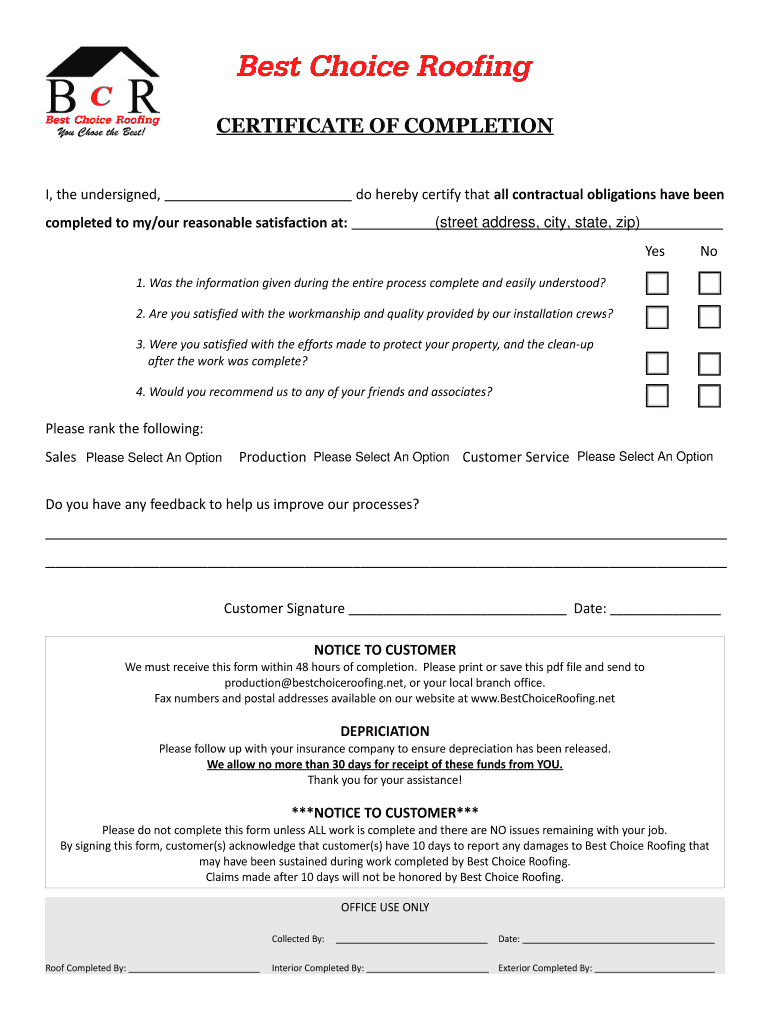







Understanding the Roof Completion Certificate
A roof completion certificate, also known as a certificate of completion for roofing, is a crucial document that indicates that the roofing work on a structure has been finished according to the agreed specifications. This certificate serves multiple purposes, including fulfilling legal requirements, confirming compliance with local building codes, and providing evidence for warranty claims.
Importance of the Roof Completion Certificate
-
Legal Compliance: Many jurisdictions require a roof completion certificate to document that the roofing work meets local building codes and regulations. This helps homeowners avoid potential legal issues related to non-compliance.
-
Warranty Protection: Most roofing warranties require proof of completion to validate coverage. The roof completion certificate acts as evidence that the installation was conducted by a licensed contractor, ensuring that the warranty remains intact.
-
Insurance Documentation: Homeowners may need to submit this certificate to their insurance company when filing claims related to roof damage or when purchasing a homeowner’s insurance policy. It serves as proof that the roof installation has been properly completed.
Key Elements of a Roof Completion Certificate
A roof completion certificate typically contains specific information that confirms the completion and quality of the roofing project. Important elements include:
-
Contractor Information: The name, address, and license number of the roofing contractor who performed the work.
-
Customer Details: The homeowner's name and address where the roofing work was completed.
-
Project Specifications: A description of the work completed, including materials used and inspection details.
-
Completion Date: The date when the roofing work was finalized.
-
Signatures: The signatures of both the contractor and the homeowner or authorized representative confirming the acceptance of the completed work.
Steps for Obtaining a Roof Completion Certificate
The process to obtain a roof completion certificate can vary depending on local requirements. Generally, the following steps are involved:
-
Hire a Licensed Contractor: Ensure that you hire a contractor who is licensed and insured to perform roofing work in your area.
-
Request Certificate from Contractor: Upon completion of the roofing job, request the roof completion certificate from your contractor.
-
Ensure Compliance with Local Codes: Confirm that the work performed complies with local building codes, which may involve obtaining necessary inspections.
-
Review the Certificate: Carefully review the roof completion certificate for accuracy, including all key elements.
-
File with Relevant Parties: Keep a copy for your records and, if required, submit it to your insurance company or local building department.
Common Uses of the Roof Completion Certificate
The roof completion certificate serves several essential purposes for both homeowners and builders:
-
For Homeowners: It acts as proof of completion and quality assurance, which is vital when selling a home or when dealing with insurance claims.
-
For Contractors: It helps in maintaining records of completed jobs, showcasing their level of professionalism and ensuring compliance with legal and contractual obligations.
Variants and Templates of Roof Completion Certificates
Several templates and variants of the roof completion certificate exist, catering to different regions and needs:
-
Standard Templates: Many contractors utilize standardized forms that include all the essential elements, ensuring completeness and compliance.
-
State-Specific Variants: Certain states may require specific wording or additional certifications on the roof completion certificate, such as energy efficiency compliance.
-
Printable Options: Free printable roofing certificate of completion templates can be found online, making it easier for contractors and homeowners to document completed work without extensive costs.
Conclusion
The roof completion certificate is a vital document that plays a critical role in ensuring that roofing work is completed according to regulations and standards. By understanding its key elements and importance, homeowners can better navigate their roofing projects and protect their investments.







