01. Edit your form online
Type text, add images, blackout confidential details, add comments, highlights and more.

Type text, add images, blackout confidential details, add comments, highlights and more.

Draw your signature, type it, upload its image, or use your mobile device as a signature pad.

Send it via email, link, or fax. You can also download it, export it or print it out.
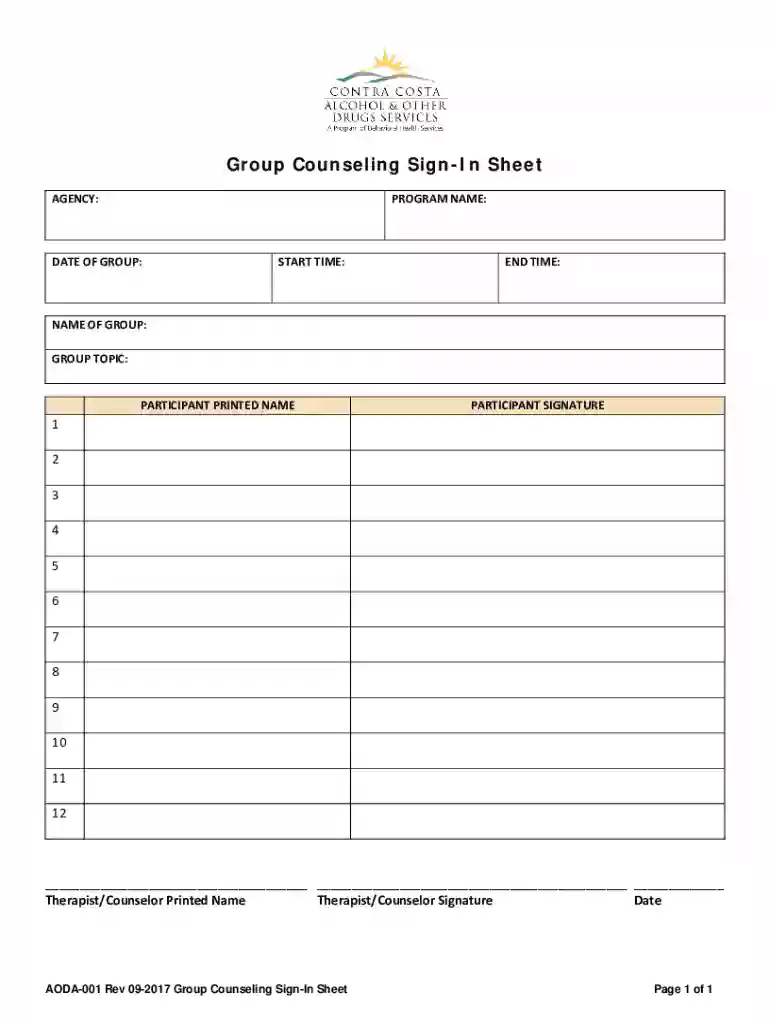
A Group Sign-In Sheet is an organizational tool used to document attendance at various group sessions, like counseling, workshops, or meetings. These sheets provide a structured method for recording participant details, including names, contact information, and signatures, indicating their presence. This documentation is crucial for agencies and organizations that need to track participation for accountability, follow-up, or compliance with legal and regulatory requirements.
To effectively utilize a Group Sign-In Sheet, start by clearly labeling key sections such as participant name, session date, and group name. Ensure each participant fills out their information accurately upon arrival. Highlight any sections requiring particular attention, such as special instructions or fields for sensitive data, to improve data precision. Collect completed sheets after each session, and securely store or digitize them for future access or reporting purposes.
Group Sign-In Sheets can be custom-created using word processing software or sourced from templating platforms offering customizable options. These templates are often downloadable in different formats, allowing easy printing or digital distribution. You can also design digital forms through platforms like DocHub, offering interactive and fillable elements, streamlining digital record-keeping.
In the United States, Group Sign-In Sheets serve as legal documents verifying attendance and participation in sanctioned sessions. They support organizations in meeting compliance standards and maintaining accurate records for audits or evaluations. Ensure participants understand privacy policies when collecting sensitive information, adhering to laws like HIPAA, especially in settings involving health information.
Group Sign-In Sheets can integrate seamlessly with digital document management systems like DocHub. This allows for enhanced functionality such as electronic signatures and automated storage. Compatibility with various operating systems and cloud services like Google Drive ensures accessibility across different devices, facilitating collaboration and efficient workflow management. Digital formats offer ease of sharing and editing, reducing the reliance on physical paper copies.
We've got more versions of the Group Sign-In Sheet form. Select the right Group Sign-In Sheet version from the list and start editing it straight away!
| Versions | Form popularity | Fillable & printable |
|---|---|---|
| 2017 | 4.9 Satisfied (21 Votes) |
At DocHub, your data security is our priority. We follow HIPAA, SOC2, GDPR, and other standards, so you can work on your documents with confidence.