Definition and Overview of the 1099-H Form
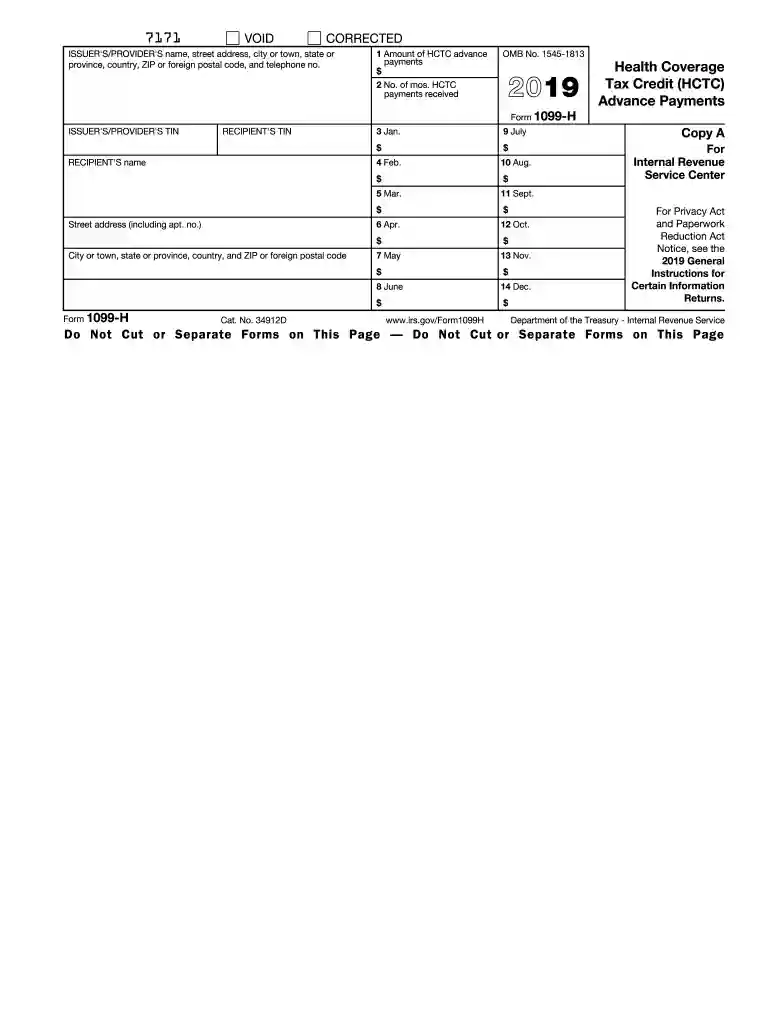
The 1099-H form is a tax document used in the United States to report Health Coverage Tax Credit (HCTC) advance payments made on behalf of eligible recipients. This form is essential for individuals who receive these payments, as it details the amount received throughout the year, providing the necessary information for accurate tax filing. Recipients include individuals who meet specific eligibility criteria, typically those adversely affected by certain trade agreements, who are either displaced workers or their dependents.
Key details on the 1099-H form include the issuer’s information, recipient's information, total HCTC payments, and monthly breakdowns. Each aspect of the form plays a vital role in ensuring that both the taxpayer and the Internal Revenue Service (IRS) have a clear understanding of the payments made.
- Issuer Information: This section contains details about the organization or agency providing the HCTC payments.
- Recipient Information: It includes personal details such as name, address, and taxpayer identification number.
- Payment Breakdown: The monthly breakdown allows for tracking of exactly when payments were made.
Understanding the 1099-H form is crucial for recipients to accurately report their income and claim any applicable tax credits.
How to Use the 1099-H Form
Utilizing the 1099-H form involves a few straightforward steps to ensure compliance with IRS regulations. Recipients of the 1099-H must accurately report the amounts listed on their tax returns. The form provides the necessary details for tax filing purposes. Below are essential steps to effectively use the 1099-H:
- Review the Form: Check for accuracy in the personal and payment information. Ensure that all figures correspond correctly to what you received.
- Intended Filing: The information on the 1099-H should be reported on your IRS Form 1040 or relevant tax form. Use the total HCTC payments received to calculate your tax liability or eligibility for credits.
- Retention: Keep the form for your records, typically for at least three years, as the IRS may request documentation during an audit.
Once you’ve effectively utilized the form for your tax filing, you help ensure compliance with federal tax regulations while maximizing potential benefits.
Steps to Complete the 1099-H Form
Completing the 1099-H form requires careful attention to detail to ensure all information is accurately submitted. Follow these steps:
- Gather Necessary Information: Collect personal identification details, including the taxpayer identification number (TIN) or Social Security number and the issuer's details.
- Fill in Recipient Information: Complete your name, address, and TIN in the corresponding sections of the form.
- Report Advance Payments: Enter the total HCTC payments received in the designated area. If there were fluctuations throughout the year, ensure that you break them down month by month as instructed.
- Check for Accuracy: Review all entries for any clerical errors or omissions that could potentially lead to misunderstandings during tax filing.
- Submit the Form: File your completed tax return including the 1099-H by the appropriate deadline, whether electronically or via mail.
This methodical approach helps ensure accuracy and compliance with IRS requirements, making tax preparation smoother.
Important Terms Related to the 1099-H Form
Familiarity with key terms associated with the 1099-H form enhances understanding for both users and preparers. Here are important terms to know:
- Health Coverage Tax Credit (HCTC): A federal tax credit for eligible recipients that pays a significant portion of health insurance premiums.
- Eligible Recipient: Individuals who qualify to receive HCTC payments, typically related to certain job displacements due to trade.
- Taxpayer Identification Number (TIN): A unique number assigned to individuals for tax purposes, necessary for accurately reporting income.
- Advance Payment: Payments made directly to qualified individuals to assist with their health insurance costs, reported in aggregate on the 1099-H.
Understanding these terms is essential for accurately navigating tax processes associated with the 1099-H form.
Filing Deadlines and Important Dates for the 1099-H Form
Timely filing of the 1099-H form is crucial to avoid penalties. Important deadlines to be aware of include:
- Form Issuance Deadline: The issuer must provide 1099-H forms to recipients by January 31 of the year following the calendar year for which the form is issued.
- Filing Deadline with the IRS: The deadline for the issuer to submit copies of the 1099-H to the IRS is typically February 28 for paper filings and March 31 for electronic submissions.
- Tax Filing Deadline for Recipients: Recipients must file their tax returns, including the 1099-H details, by April 15, unless an extension is filed.
Awareness of these dates ensures compliance with IRS regulations and can help avoid potential penalties for late submission.
Examples of Using the 1099-H Form in Practical Scenarios
Practical application of the 1099-H form can clarify how recipients benefit from this document. Here are a few scenarios:
-
Displaced Worker: A factory employee, affected by layoffs due to a trade shift, receives HCTC payments for their health insurance premiums. They would utilize the 1099-H form to report these payments on their tax return, reducing overall tax liability.
-
Retired Individual: A retired individual whose health care premiums are covered partially through HCTC can use the 1099-H to document the amount received, ensuring they claim the correct tax benefits when filing their income tax.
-
Dependent Claiming: A child or dependent receiving advance payments could also utilize the 1099-H to report this income when filing their taxes if they are required to do so.
These examples illustrate the importance of accurately utilizing the 1099-H form to understand tax implications and ensure compliance.