Definition & Meaning
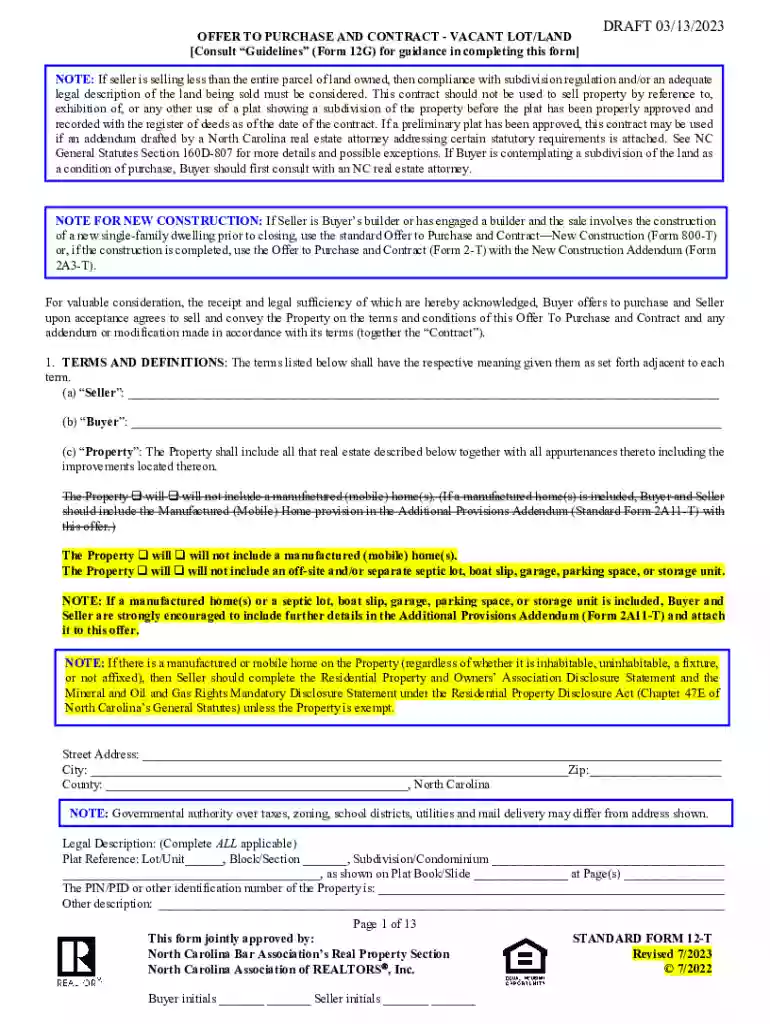
Form 2G Guidelines for Completing Offer to Purchase play a critical role in real estate transactions, particularly involving vacant lots or land in North Carolina. This document outlines essential terms and conditions under which a buyer may proceed to purchase property. It serves as an official agreement between the buyer and seller, encapsulating the legal and financial obligations each party will undertake. The form aims to safeguard the interests of both parties by clarifying the transactional elements, thereby preventing potential disputes during the property transfer process.
Key Elements of the Form 2G
Understanding the key components of Form 2G is fundamental for its proper completion and use. These elements include:
- Property Description: Accurate detailing of the property being purchased, which may include address, size, and parcel number.
- Purchase Price: The agreed amount the buyer will pay the seller, including any contingencies regarding adjustments or conditions.
- Earnest Money Deposit: Information on the deposit required to demonstrate the buyer's serious intent to purchase.
- Due Diligence Period: Time frame provided to the buyer to inspect the property and perform necessary investigations.
- Financing Options: Details on whether the purchase will be financed through a loan or if the buyer will pay in cash.
Steps to Complete the Form 2G
Completing Form 2G requires careful attention to detail to ensure compliance and accuracy. Here is a step-by-step guide:
- Gather Required Information: Include property details, buyer and seller information, and financial arrangements.
- Review Property Description: Ensure an accurate and comprehensive description of the property to avoid future discrepancies.
- Determine Financial Terms: Clearly outline the purchase price, deposit amount, and terms of payment or financing.
- Establish Deadlines: Define important dates such as the due diligence period and closing date for adherence.
- Add Necessary Signatures: Ensure that all parties involved in the transaction sign the document where required.
Legal Use of the Form 2G
The legal use of Form 2G is paramount to a successful property transaction. As a binding contract, this form must be used in compliance with North Carolina real estate laws and ethical standards. Legal counsel is recommended to clarify contract terms and ensure compliance with state-specific rules and regulations. This document serves as a record that can be referenced in legal disputes or negotiations, making it crucial to adhere to all legal requirements during its completion.
Who Typically Uses the Form 2G
Form 2G is primarily used by individuals and entities involved in the real estate market in North Carolina. This includes:

- Buyers and Sellers: Individuals or corporations engaging in the purchase or sale of vacant lots or land.
- Real Estate Agents: Professionals facilitating property transactions who must ensure accurate and lawful submission of the form.
- Legal and Financial Advisors: Experts who provide guidance on the legal and financial aspects of property transactions.
Important Terms Related to Form 2G
Familiarity with specific terms related to this form is vital for comprehending its scope and application:
- Earnest Money: A deposit made by the buyer showing their serious intent to purchase, held in trust until the closing of the deal.
- Due Diligence: The buyer's period to investigate the property and confirm its suitability for purchase.
- Closing Date: The date on which the final documents are signed, and ownership is transferred.
State-Specific Rules for the Form 2G
North Carolina has its own set of rules and regulations guiding the use of Form 2G. Here are some notable considerations:
- Ensure compliance with North Carolina’s disclosure laws, which require sellers to provide certain information about property conditions.
- Adhere to the state's timelines for buyer inspections and seller disclosures to avoid legal complications.
- Understanding local zoning laws and regulations relevant to the property in context.
Examples of Using the Form 2G
Form 2G can be illustrated through various scenarios, such as:
- A developer buying a vacant lot intending to construct a residential complex must use Form 2G to formalize the purchase.
- Individuals purchasing land for personal agricultural use will complete the form to outline the terms and ensure legal compliance.
- An investment firm acquiring multiple vacant lots for future project potential will need to complete a separate Form 2G for each transaction to ensure a clear and binding agreement.
Required Documents
When completing Form 2G, certain documents may be necessary to support the process:
- Identification Documents: Verification for both buyer and seller.
- Financial Proof: Documentation like bank statements or loan approval letters confirming the buyer’s ability to finance the purchase.
- Property Reports: Documents such as a survey or inspection reports to substantiate property descriptions and conditions.
Form Submission Methods (Online / Mail / In-Person)
To facilitate the completion and submission of Form 2G, multiple methods are available:
- Online: Some aspects of the form or ancillary documentation can be submitted electronically via dedicated real estate platforms or email.
- Mail: Physical documents can be prepared and sent by postal service for official record-keeping.
- In-Person: Direct submission to involved parties or through legal representatives can be arranged to ensure immediate review and acceptance.