







Definition & Meaning
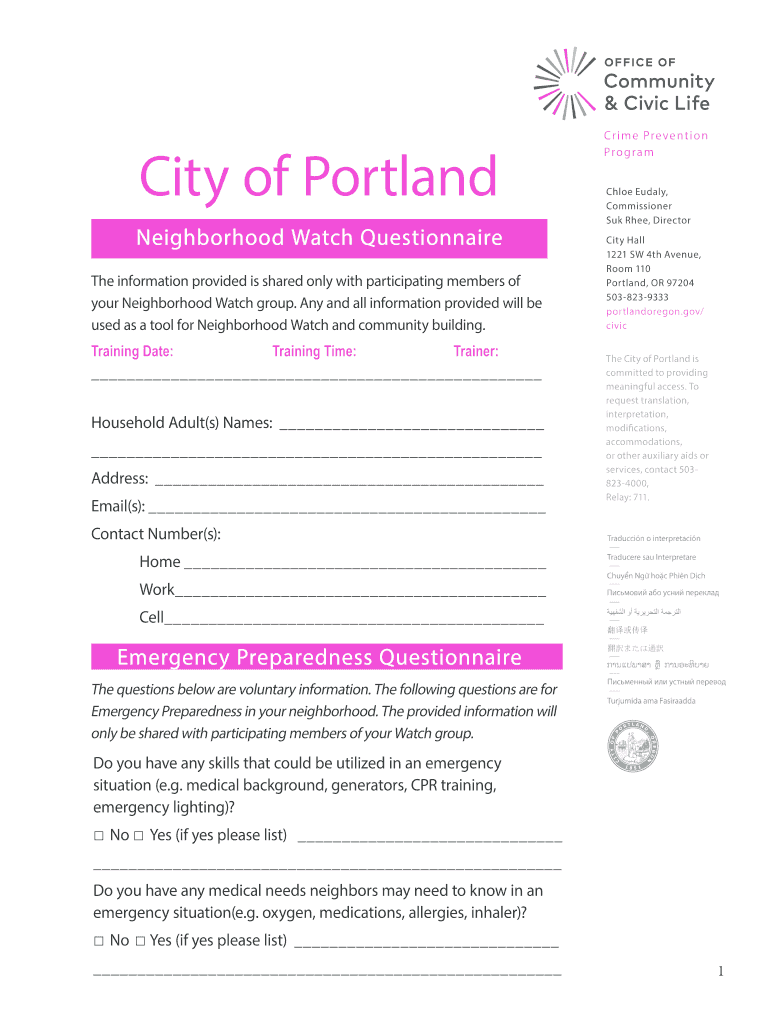
The Neighborhood Watch Questionnaire is a tool designed to gather essential information from residents participating in a Neighborhood Watch program. It serves to identify the skills, availability, and resources within a community that contribute to crime prevention and emergency preparedness. By collecting this information, community leaders can better organize and deploy resources effectively, ensuring that safety measures are both proactive and efficient.
Understanding the essentials of the Questionnaire is critical. Typically, it includes questions about personal contact information, availability for volunteering, and specific skills that participants can offer, such as first aid training or technology expertise. The data gathered forms the basis of a comprehensive community safety strategy, tailored to the unique needs and capabilities of each Neighborhood Watch group.
Key Elements of the Neighborhood Watch Questionnaire
The Questionnaire is structured to capture a wide range of information relevant to community safety. Key elements include:
-
Contact Information: Residents are asked to provide details such as their name, address, phone number, and email. This ensures that coordinators can easily communicate important updates or emergency alerts.
-
Availability: Participants indicate their availability for meetings, patrols, or community events, helping organizers plan activities and ensure adequate coverage during specific times.
-
Skills and Resources: Residents can outline any skills or resources they offer, such as knowing CPR, having a security background, or owning video surveillance equipment. This information is vital for emergency preparedness and crime prevention.
Steps to Complete the Neighborhood Watch Questionnaire
Successfully completing the Questionnaire involves a series of straightforward steps:
-
Acquire the Form: Obtain the form from local officials, community centers, or online platforms associated with your Neighborhood Watch program.
-
Fill Out Personal Details: Provide accurate and up-to-date contact information to ensure effective communication.
-
Specify Availability: Clearly indicate your time slots for participation to help coordinators schedule patrols and meetings effectively.
-
List Skills and Resources: Identify any relevant skills or resources you can contribute to the group, enhancing the community's overall safety and preparedness.
-
Submit the Completed Form: Return the completed form to the designated Neighborhood Watch coordinator or via an online submission portal, if available.
Why You Should Use the Neighborhood Watch Questionnaire
Utilizing the Questionnaire offers multiple benefits for individuals and the community:
-
Enhanced Communication: By providing your contact details, you ensure you receive timely alerts and updates about neighborhood safety.
-
Active Participation: It allows you to play an active role in improving neighborhood security by identifying the times and ways you can help.
-
Community Bonding: Sharing your skills and resources fosters neighborly cooperation and trust, crucial components of an effective Neighborhood Watch program.
Who Typically Uses the Neighborhood Watch Questionnaire
The primary users of the Questionnaire include:
-
Residents: Individuals living in the community who wish to contribute to neighborhood safety efforts.
-
Neighborhood Watch Coordinators: These leaders use the collected data to organize and direct community safety initiatives effectively.
-
Local Law Enforcement: Police departments may also utilize the information to supplement their efforts and build stronger ties with community members.


Examples of Using the Neighborhood Watch Questionnaire
Consider the following scenarios:
-
In a suburb experiencing a rise in burglaries, residents complete the Questionnaire to identify those with cybersecurity skills, enhancing local awareness and defense strategies against digital threats.
-
A coastal community prone to hurricanes uses the Questionnaire to map out resources such as emergency generators, boats, and volunteers skilled in disaster response.
Legal Use of the Neighborhood Watch Questionnaire
Legal implications ensure the responsible use of information collected through the Questionnaire:
-
Privacy Protections: Collected data is typically subject to strict privacy laws and must be handled securely, preventing unauthorized access or misuse.
-
Consent Requirements: Participants must give explicit consent for their data to be used in the manners outlined by the Neighborhood Watch program.
-
Data Use Restrictions: The information should be used solely for enhancing community safety and cannot be repurposed for commercial or non-community-centric activities.
State-Specific Rules for the Neighborhood Watch Questionnaire
The application of the Questionnaire may vary based on state laws:
-
Data Protection Laws: States like California have stringent data privacy regulations that dictate how personal data must be handled.
-
Community Engagement Policies: Local legislation may influence how Neighborhood Watch programs are organized, potentially affecting the structure or content of the Questionnaire.
Each of these sections, tailored to the specific context of your community, ensures that Neighborhood Watch programs are not only effective but also compliant with local, state, and federal guidelines, creating a safer environment for all residents.




