




01. Edit your hp fs 9040 online
Type text, add images, blackout confidential details, add comments, highlights and more.

Type text, add images, blackout confidential details, add comments, highlights and more.

Draw your signature, type it, upload its image, or use your mobile device as a signature pad.

Send it via email, link, or fax. You can also download it, export it or print it out.
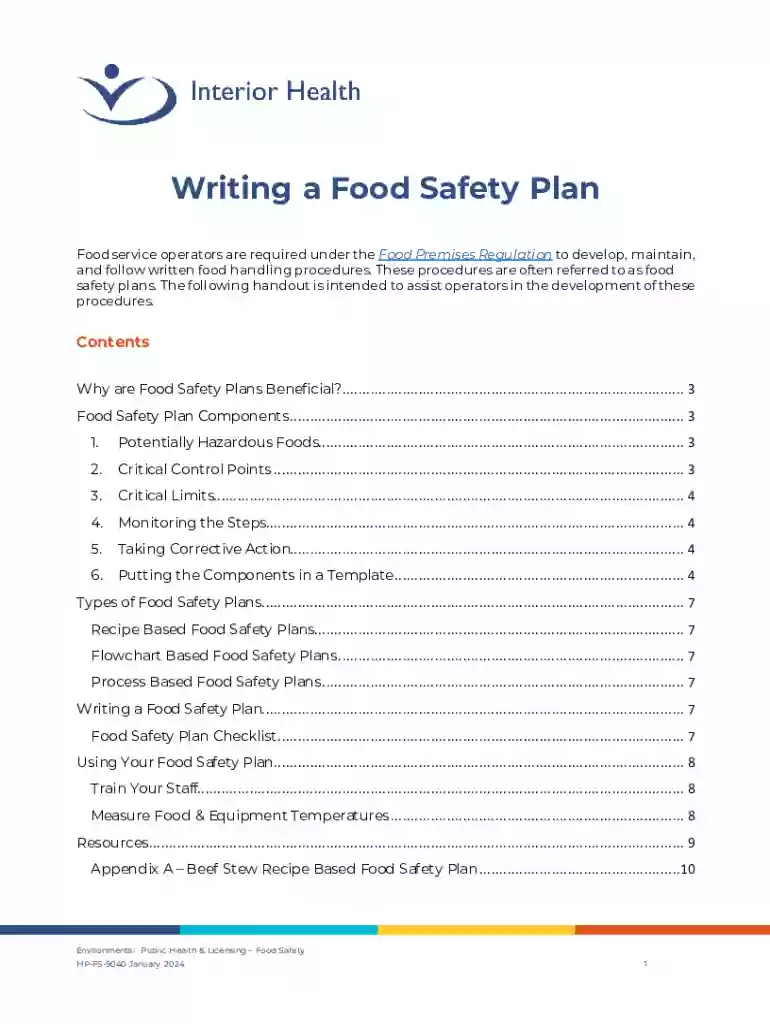
The HP-FS-9040 Writing a Food Safety Plan is an essential document for food service operators, outlining the development and maintenance of a comprehensive food safety strategy. This plan is necessary to comply with state regulations and ensures that all food service activities adhere to health and safety standards. The plan often includes key components such as critical control points (CCPs), monitoring procedures, and corrective actions to address potential food safety hazards. These elements are designed to prevent contamination and ensure the safety of food served to consumers.
To effectively utilize the HP-FS-9040 form, operators must follow specific guidelines for drafting a comprehensive food safety plan. Start by assessing all aspects of your food preparation process, from purchasing ingredients to serving meals. Identify potential hazards and determine CCPs where preventive measures can be applied. Utilize the form to structure these elements into a coherent plan that reflects your operation's specific needs.
Properly completing the HP-FS-9040 form requires detailed attention to each section to provide sufficient data for compliance. Below are step-by-step instructions to complete the plan:
An effective HP-FS-9040 plan is comprehensive and considers all aspects of food safety from procurement to service. Each element should be meticulously detailed to ensure its practical application in daily operations.
The HP-FS-9040 form is primarily used by food service operators, including restaurants, catering services, and institutional kitchens. It serves as a blueprint for maintaining high food safety standards and is critical for compliance with public health regulations. By proactively implementing a food safety plan, operators protect both consumers and their business reputation.


Compliance with the HP-FS-9040 is mandatory under state food safety regulations. Operators must regularly update their food safety plans to reflect changes in their menus, processes, or as new regulations emerge. Ensuring legal compliance not only helps in avoiding penalties but also in safeguarding public health.
Real-world examples of implementing the HP-FS-9040 can help food service operators visualize effective strategies. For instance, a small cafe might identify milk steaming as a CCP, while a catering service might focus on temperature control during transportation as a crucial point. By tailoring plans to specific operations, businesses can more effectively mitigate risks and ensure safe food for all customers.
We've got more versions of the hp fs 9040 form. Select the right hp fs 9040 version from the list and start editing it straight away!
At DocHub, your data security is our priority. We follow HIPAA, SOC2, GDPR, and other standards, so you can work on your documents with confidence.


