







Definition and Meaning of the ABC Chart All-in-One Version
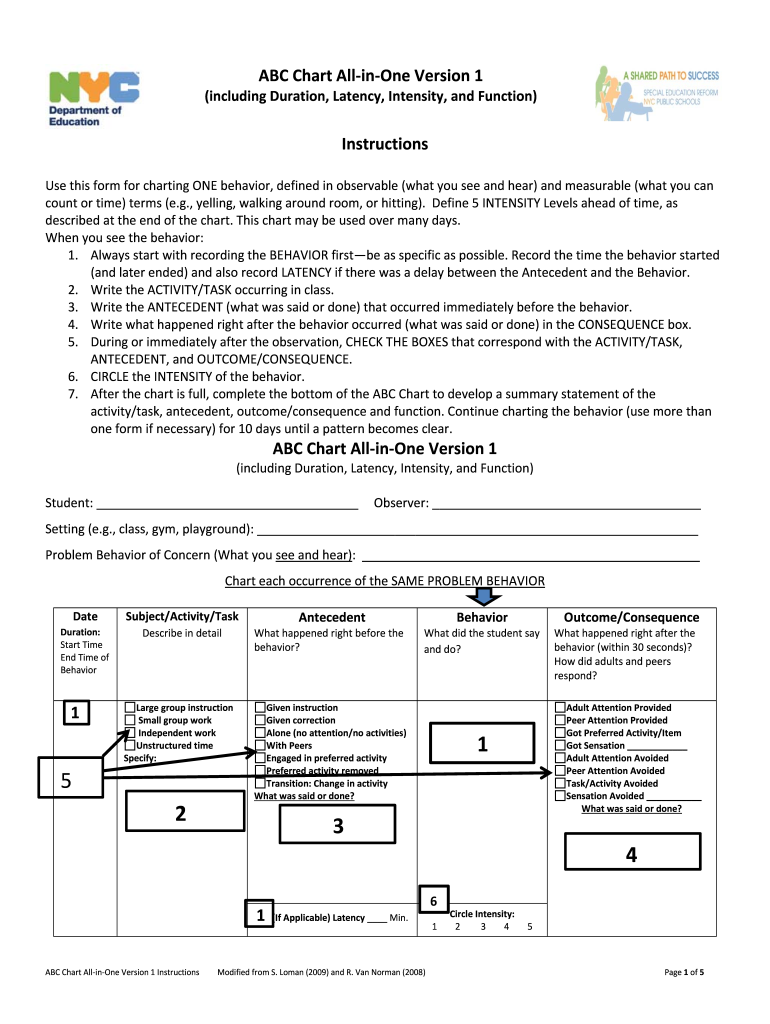
The ABC chart all-in-one version is a structured tool used primarily in educational and therapeutic settings to monitor and analyze behaviors in students and individuals. It serves to track specific occurrences of problem behaviors by documenting three critical components: Antecedents, Behaviors, and Consequences. This format allows educators, therapists, and caregivers to identify patterns and underlying functions of behaviors, facilitating tailored intervention strategies.
- Antecedents refer to the events or conditions that occur immediately before a behavior. Understanding these can help in identifying triggers.
- Behaviors are the actions or responses exhibited by the individual, which are observable and measurable.
- Consequences refer to what happens following the behavior, which can reinforce or discourage future occurrences.
By using a comprehensive ABC chart, practitioners can gain insight into whether behaviors are aimed at gaining access to something or escaping from specific situations, thereby allowing for effective planning of interventions.
How to Use the ABC Chart All-in-One Version
Utilizing the ABC chart all-in-one version requires a systematic approach to ensure effective monitoring of behaviors. The following steps outline the process:
- Initial Setup: Create or obtain the ABC chart in an editable format. Many educators opt for either digital templates or printed forms based on preference.
- Daily Observation: Record behaviors over several days to collect sufficient data. Each day, document instances of the specific behaviors, noting the antecedents and consequences clearly.
- Identifying Patterns: After collecting data for an appropriate period, review the entries to identify any patterns. Look for common antecedents that lead to behaviors and analyze potential consequences that may reinforce these actions.
- Data Analysis: Use the compiled information to drive discussions with a team (educators, therapists, or parents) focusing on behavioral interventions that address identified issues.
This structured approach facilitates a deeper understanding of behavior functions and how to implement effective management strategies.
Steps to Complete the ABC Chart All-in-One Version
Completing the ABC chart involves specific steps that ensure accuracy and reliability in documenting behavior. These steps include:
- Select the Target Behavior: Identify which behavior will be monitored. Be specific and clear to ensure everyone understands what behavior is being tracked.
- Determine Observation Period: Decide on the duration for which behavior will be recorded. Typically, several days are ideal to gather enough data for analysis.
- Record Daily Entries: Use the chart to log each instance of the behavior, including:
- Date and time of occurrence
- Specific antecedents that led to the behavior
- Description of the behavior itself
- Consequences following the behavior
- Review and Reflect: After completing the observation period, review the data collected to identify trends or patterns, considering both positive and negative reinforcements.
Should any discrepancies arise during data collection, maintain integrity by noting them as part of the observation, ensuring that all entries are as accurate as possible.
Important Terms Related to the ABC Chart All-in-One Version
Understanding key terminology is crucial when utilizing the ABC chart all-in-one version effectively. Here are some essential terms:
- Observational Data: The notes and information collected regarding behaviors during the observation period.
- Behavior Intervention Plans (BIPs): Customized strategies developed based on data to support behavioral improvements.
- Data Analysis: The process of examining and interpreting collected data to derive meaningful insights about behavior.
- Reinforcement: Any consequence following a behavior that may increase the likelihood of its recurrence in the future, which can be positive or negative.
These terms provide a foundational vocabulary that enhances communication and understanding within teams working on behavior assessment and intervention.
Examples of Using the ABC Chart All-in-One Version
Real-world application of the ABC chart can illustrate its effectiveness in various contexts:
- Educational Settings: A teacher may use the chart to track a student's disruptive behavior in class. By documenting instances per the ABC model, patterns may reveal that the student acts out when needing help with a task, indicating that skills teaching may be necessary.
- Therapeutic Environments: A therapist could use the chart to monitor a child exhibiting anxiety in social situations. By observing and documenting interactions, they may find that certain settings trigger anxiety, which can inform future intervention strategies.
- Home-Based Behavior Management: Parents might implement the ABC chart for a child exhibiting tantrums. After tracking behaviors and their triggers, they could discover that tantrums often follow denied requests for screen time, leading to the development of more effective communication and boundaries.
These examples underscore the flexibility and practicality of the ABC chart for diverse applications related to behavior tracking and analysis.




