





Definition and Meaning of Signature Over Printed Name
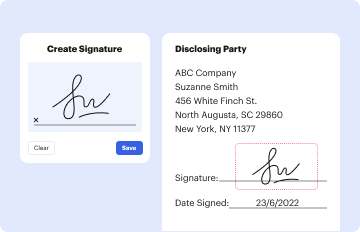
The "signature over printed name" is a practice commonly understood as placing your handwritten signature directly above your printed name on a document. This method is used to authenticate the document and affirm the identity of the signer. This concept helps establish clarity by ensuring the signatory's name is not only handwritten but also printed, which can aid in legibility, especially in legal or formal documents. By having both elements, it serves as an additional verification step, reducing ambiguities related to handwriting legibility.
How to Use the Signature Over Printed Name
To properly use the signature over a printed name, follow these steps:
- Locate the signature line: Identify the area on the document designated for signing, which often includes a line or space specifically labeled for a signature and printed name.
- Print your full name: Clearly print your full legal name below the designated signature line. Ensure that it is neat and legible.
- Sign your name: Above the printed name, sign your name using a wet ink pen or electronic signature tool if the document is digital.
- Verify placement: Double-check that your signature is positioned directly over your printed name. This alignment is crucial for maintaining the document’s credibility.
Using this method minimizes errors and uncertainty, especially in formal agreements or contracts.
How to Obtain the Signature Over Printed Name
Obtaining a signature over a printed name on a document usually involves a straightforward process. Here's how to do it:
- Prepare the document: Ensure the document includes fields for both a signature and printed name. Clearly label those areas if you are the document's creator.
- Provide instructions: If requesting a signature, inform the signer of the requirement to print their name before signing. This can be communicated verbally or included in written instructions accompanying the document.
- Collect the document: Once the individual has signed, collect the document and verify that both the signature and printed name are present and correctly executed.
This process is commonly used in forms that require finalized validation, such as legal contracts or official agreements.
Steps to Complete the Signature Over Printed Name
Completing a signature over a printed name involves careful attention to detail to ensure the document is valid:
- Check document requirements: Before signing, review the document to confirm the necessity of both a signature and printed name.
- Prepare writing tools: Use an appropriate pen if the document is in paper format, or review digital signature options if it is an electronic document.
- Print your name legibly: Below the signature line, print your full name as it appears on official records.
- Sign the document: Above the printed name, apply your signature. Ensure it fits within any additional designated areas.
- Review and submit: Confirm both elements are correctly filled out and then proceed with submitting the document according to its submission guidelines.
By following these steps, you help ensure the document’s authenticity and reduce risks of non-compliance.
Why Should You Signature Over Printed Name
The practice of placing a signature over a printed name serves multiple purposes:
- Enhanced legibility: Printing the name reduces the chance of misunderstanding due to illegible handwriting.
- Authentication: This method strengthens the authenticity of documents since both a personal signature and printed name are provided.
- Legal protection: Helps ensure documents comply with formal requirements, especially in legal agreements or notarized certification.
- Professionalism: The dual method appears more organized and thorough, enhancing the professionalism of the document.
This practice is especially beneficial in governmental, legal, or corporate contexts where document precision and clarity are paramount.
Legal Use of the Signature Over Printed Name
In legal contexts, a signature over a printed name can be crucial:
- Authentication of documents: In jurisdictions where laws require clear identification of parties to an agreement, printing a name provides that clarity.
- Verification: Some legal documents require a legible printed name to verify the identity of the signer against their handwritten signature.
- Binding agreements: In contracts, both elements are often used to indicate the signatory's acknowledgment and agreement to the terms.
Such practices are recognized under various legal frameworks, serving as a safeguard against forgery or unauthorized execution.
Key Elements of the Signature Over Printed Name
Several key elements are involved in the accurate completion of a signature over printed name:
- Signature: The handwritten element, which can be a full or abbreviated name, and should consistently match known signatures.
- Printed Name: Clearly printed full name, matching official identification records.
- Date: Date of signing, often included next to the signature to pinpoint exactly when the document was authorized.
- Positioning: Proper placement, with the signature directly over the printed name, must be ensured to reinforce legitimacy.
Attention to these elements results in a properly authenticated document suitable for formal use.
Importance of Signature Over Printed Name in Various Sectors
In various sectors, the practice of using a signature over printed name is important for different reasons:
- Business: Ensures that contracts and agreements are executed by authorized individuals.
- Legal: Provides an additional layer of verification for legal frameworks requiring documented identification.
- Government: Reduces ambiguities in forms requiring personal affirmation.
- Education: Offers clarity in consent forms needing dual verification.
Across these sectors, the practice aids in maintaining the integrity and reliability of pivotal documents.