



01. Edit your 2017 arizona form online
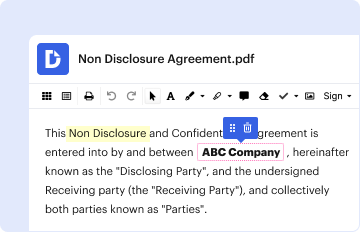
Type text, add images, blackout confidential details, add comments, highlights and more.

Type text, add images, blackout confidential details, add comments, highlights and more.

Draw your signature, type it, upload its image, or use your mobile device as a signature pad.

Send it via email, link, or fax. You can also download it, export it or print it out.
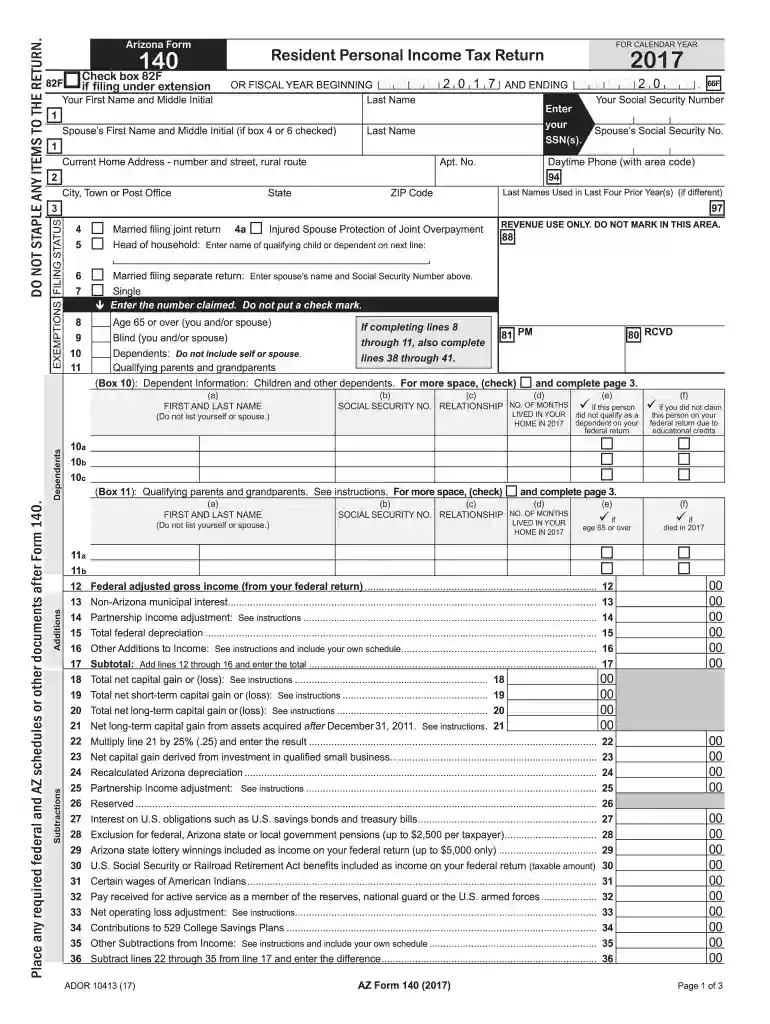
Form 140 for the 2017 tax year is an Arizona state tax document used to file personal income tax returns. It is designed to capture comprehensive information about an individual's tax situation, detailing income sources, deductions, exemptions, and tax liabilities. This form helps determine the amount of income tax an individual owes or the refund they can expect from the state of Arizona.
Gather Personal and Financial Documentation: Before starting, ensure you have W-2 forms, 1099s, records of other income, and receipts for deductions or credits.
Fill in Personal Information: Accurately input your identifying details to ensure proper processing of the form.
Select Filing Status: Choose the most appropriate filing status based on your personal situation to maximize tax benefits.
List Exemptions and Dependents: Identify all valid exemptions and dependents to lower taxable income.
Report Income: Accurately report all sources of income to avoid issues with Arizona's Department of Revenue.
Claim Deductions/Credits: Include all applicable deductions and credits to lower your taxable income as allowed by state guidelines.
Calculate Taxes Due/Refund: Use the form's instructions to determine whether additional taxes are due or if you qualify for a refund.
Review and Sign: Thoroughly review the completed form for accuracy and sign it to certify the information is true and complete.
Form 140 is primarily used by Arizona residents who:


Form 140's legal use entails adhering to Arizona's tax laws, ensuring full disclosure of income, and claiming only eligible deductions and credits. Compliance with tax laws is crucial to avoid penalties such as interest charges on underpayment of taxes or fines resulting from improper or fraudulent filings.
We've got more versions of the 2017 arizona form form. Select the right 2017 arizona form version from the list and start editing it straight away!
| Versions | Form popularity | Fillable & printable |
|---|---|---|
| 2025 | 4.4 Satisfied (47 Votes) | |
| 2024 | 4.9 Satisfied (40 Votes) | |
| 2023 | 4.8 Satisfied (46 Votes) | |
| 2022 | 4.5 Satisfied (66 Votes) | |
| 2021 | 4.8 Satisfied (35 Votes) | |
| 2020 | 4.4 Satisfied (255 Votes) | |
| 2019 | 4.3 Satisfied (138 Votes) | |
| 2018 | 4.2 Satisfied (83 Votes) | |
| 2017 | 4.3 Satisfied (87 Votes) | |
| 2016 | 4.2 Satisfied (124 Votes) | |
| 2013 | 4.5 Satisfied (41 Votes) |
At DocHub, your data security is our priority. We follow HIPAA, SOC2, GDPR, and other standards, so you can work on your documents with confidence.
You (and your spouse, if married filing a joint return) may file. Form 140 only if both of you are full year residents of. Arizona. You must use Form 140 ratherRead more
October 2017. Excel. Substitute Instructional Faculty (2356) Payment Request AP 140: Pre-retirement Reduction in Time Base (PRTB) Election Form forRead more


