






Definition & Meaning
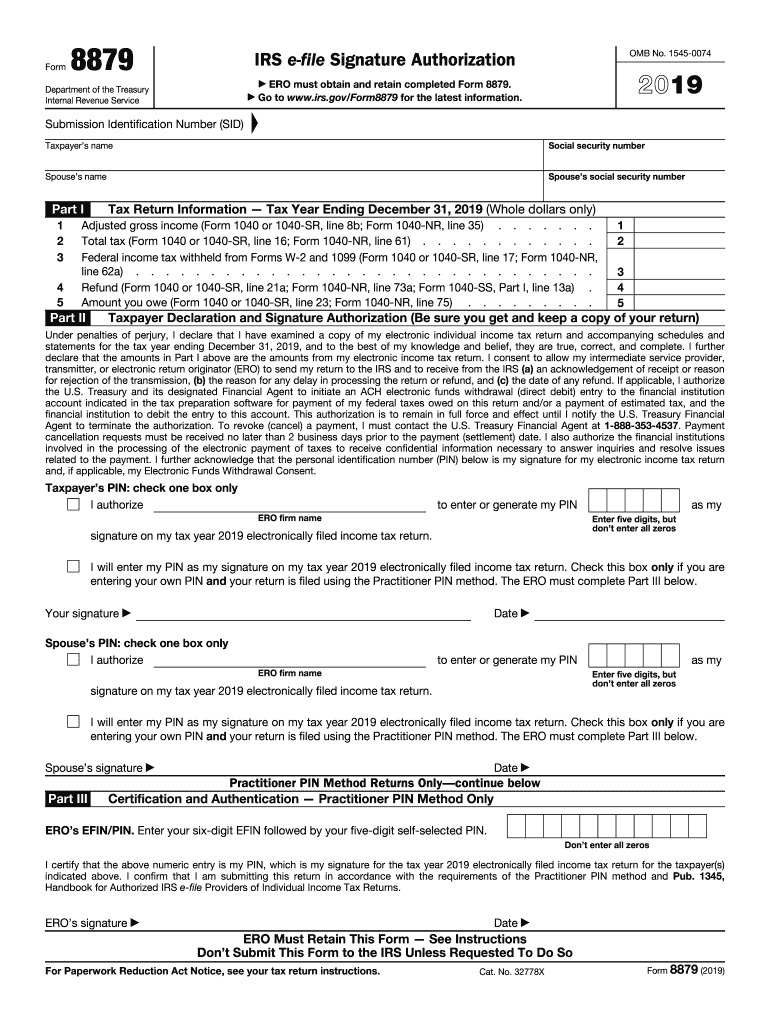
Form 8879, titled the IRS e-file Signature Authorization, is a document that enables taxpayers to authorize an Electronic Return Originator (ERO) to e-file their tax return. It acts as a digital proxy for the taxpayer's signature on their tax return, indicating consent and approval for the electronic submission. It is essential for taxpayers opting for electronic filing to understand that this form holds the same weight as physically signing their tax return.
The primary purpose of Form 8879 is to establish a secure, legally binding digital pathway for the filing process. It contains critical sections such as personal taxpayer information, specific tax return data, and required signature authorizations that validate the electronic filing. This integration simplifies the process of filing taxes electronically while maintaining adherence to IRS requirements and security standards.
Steps to Complete the 8879
-
Gather Required Information: Before beginning Form 8879, ensure all personal details and tax information are available. This includes social security numbers, filing status, and all relevant tax documentation.
-
Fill Out Personal and Tax Information: Enter personal identification details including name and Taxpayer Identification Number (TIN), then fill in parts of the form pertaining to tax data. This section mirrors specific items from the taxpayer's electronic tax return.
-
Review Tax Return Figures: Compare figures outlined on Form 8879 with the completed electronic tax return to ensure accuracy. This includes verifying adjusted gross income, total tax, and refund amounts or taxes owed.
-
Taxpayer Signature Authorization: The taxpayer must review and sign the authorization section, confirming accuracy and granting consent for the ERO to file on their behalf. This signature should correspond to their digital signature on file.
-
ERO Signature and Retention: The Electronic Return Originator will also sign the form, confirming they are authorized to file the taxpayer's return electronically. It’s crucial that both parties retain a copy of Form 8879 for their records.
-
Submission: Once completed and signed, the form does not get sent to the IRS but should be securely stored by the ERO and the taxpayer for potential audits or inquiries.
Who Typically Uses the 8879
Several groups frequently utilize Form 8879, each benefitting uniquely from its functionalities:
-
Individual Taxpayers: This group includes those wishing to submit their personal tax returns electronically, simplifying turnaround times and receipt verification.
-
Electronic Return Originators (EROs): They use the form to gather appropriate authorizations from clients and retain proof of consent for electronic submissions.
-
Tax Preparation Services: Professionals in this field rely on Form 8879 to streamline the filing process with multiple clients, ensuring compliance and maintaining secure records of authorizations.
-
Small Business Owners: Especially LLCs and sole proprietorships, that prefer electronic submissions to manage compliance efficiently without cumbersome paperwork.


IRS Guidelines
The IRS provides comprehensive directives on how Form 8879 is to be utilized within the electronic filing process:
-
Structure and Verification: The form is structured to conform with IRS digital submission requirements. Taxpayers must ensure that all information perfectly aligns with their electronic tax return to avoid discrepancies.
-
Retention Period: Both the taxpayer and the ERO must retain the signed Form 8879 for at least three years following the due date of the return or the date the return was filed, whichever is later.
-
Audit and Verification Protocols: The IRS may request Form 8879 during audits to validate electronic authorizations. Therefore, accuracy and compliance in its preparation are critical.
Important Terms Related to 8879
-
Electronic Return Originator (ERO): A certified individual or organization authorized by the IRS to submit electronic returns on behalf of taxpayers.
-
Taxpayer Identification Number (TIN): Usually a Social Security Number, it is vital for taxpayer verification.
-
e-file: The process of submitting tax returns electronically to the IRS, leveraging forms like 8879 to gain necessary authorizations.
Required Documents
To complete Form 8879 accurately, taxpayers require several supporting documents:
-
Previous Year’s Tax Return: For reference and to ensure consistency year-over-year.
-
Current Year’s Financial Documents: This includes W-2s, 1099s, or any additional documentation reflecting earned income.
-
Personal Identification: Valid forms include a driver’s license or passport to verify the taxpayer's identity.
Taxpayer Scenarios
Taxpayers from various backgrounds might interact with Form 8879 under different scenarios, including:
-
Self-Employed Individuals: Such individuals may use Form 8879 when e-filing returns that reflect variable income and deductions.
-
Retirees: With more focus on passive income, retirees who file electronically also require Form 8879 for consent.
-
Students with Part-Time Jobs: Students often have simple returns but may use Form 8879 for electronic submission ease with the help of an ERO.

Penalties for Non-Compliance
Not complying with regulations surrounding Form 8879 can incur penalties or delays in processing:
-
Failure to Retain: If key figures or authorization forms like 8879 are not maintained, taxpayers may face penalties during audits.
-
Incorrect Information: Providing erroneous data on Form 8879 can result in fines or additional scrutiny by the IRS.
Strict adherence to guidelines and attentive record-keeping can mitigate risks of penalties associated with Form 8879.