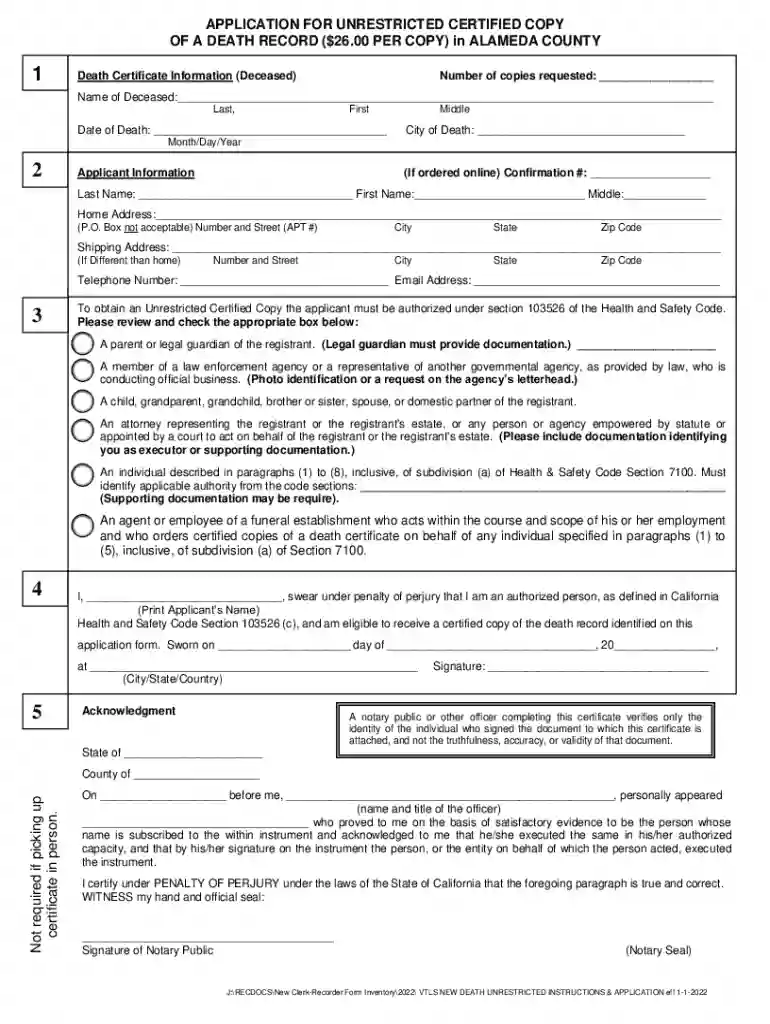
Definition & Meaning
A death certificate is an official document issued by the state that certifies the date, location, and cause of a person's death. When a funeral home gives a copy of a death certificate to a relevant party, it serves several purposes, including legal confirmation of death, settling of the deceased's estate, and closure of their legal and financial affairs. This document is a critical component in navigating the post-mortem processes.
Steps to Complete the Process
- Contacting the Funeral Home: Begin by notifying the funeral home that handled the arrangements, as they typically request death certificates on behalf of the family.
- Providing Necessary Information: Be prepared to provide personal details of the deceased, such as their full name, date of birth, and social security number to facilitate the process.
- Request Form Completion: Complete any forms provided by the funeral home, which may include a request for a certain number of certified copies.
- Identity Verification: Some states require proof of identity and proof of your relationship to the deceased. This is to ensure that only eligible individuals receive copies of the death certificate.
- Payment of Fees: Death certificates come with an associated cost, which varies by state. Ensure payment is arranged as per the funeral home's instructions.
Legal Use of the Death Certificate
A certified death certificate copy is required for several legal and administrative processes. These include:
- Settling the Deceased's Estate: Executors or administrators need the certificate to access bank accounts, transfer ownership of assets, and resolve debts.
- Insurance Claims: Life insurance companies typically require a certified copy to process a claim.
- Government Benefits: It is necessary to terminate or transfer benefits such as Social Security, pensions, or veterans' benefits.
Key Elements of the Death Certificate
- Personal Details of the Deceased: Includes full name, date of birth, and place of residence.
- Date and Place of Death: Helps ascertain jurisdiction for legal purposes.
- Cause of Death: Medical explanation of the death, critical for understanding health patterns and family history.
- Certifying Signature: Signature of a medical professional or coroner, validating the document's authenticity.
Important Terms Related to the Death Certificate
- Certified Copy: An official copy of the document, recognized by the state, which is often required for legal purposes.
- Informant: The individual who provides information about the death, often a family member or medical professional.
- Registrar: The government authority responsible for maintaining death records.
State-Specific Rules
Each state in the U.S. has specific regulations regarding death certificates. Understanding these can prevent delays:
- Eligibility Criteria: States determine who is authorized to receive a copy; family members are typically included.
- Request Requirements: Some states may require requests to be notarized, especially if made by mail.
- Processing Times: Varies widely, from a few days to several weeks.
Filing Deadlines / Important Dates
- Timely Requests: It's crucial to request certified copies soon after the death to facilitate legal and financial processes, typically within a few weeks.
- Expiration of Claims: For processes like insurance claims, there can be deadlines based on the state’s regulations or the terms of the policy.
Required Documents
To obtain a certified copy, you generally need:
- Proof of Identification: Government-issued ID.
- Proof of Relationship: Documents like birth or marriage certificates to establish a connection to the deceased.
- Completed Application Form: As provided by the funeral home or state health department.
Form Submission Methods
- Online: Some states offer electronic submission via official websites.
- Mail: Traditional method involving physical forms and checks for payment.
- In-Person: Direct submission at state or local vital records offices, typically requiring valid identification.
Who Issues the Form
- State Health Departments: Primarily responsible for issuing death certificates, either directly or through local offices.
- Vital Records Offices: Handle the administrative side of maintaining and disseminating these records.
Penalties for Non-Compliance
- Falsifying Information: Providing false details can lead to legal penalties.
- Unauthorized Requests: Attempting to obtain copies without proper eligibility can result in denied access or legal consequences.
Digital vs. Paper Version
- Digital Copies: Increasingly available, offering easier storage and transfer.
- Paper Copies: Still essential for certain transactions that require a certified physical copy.