
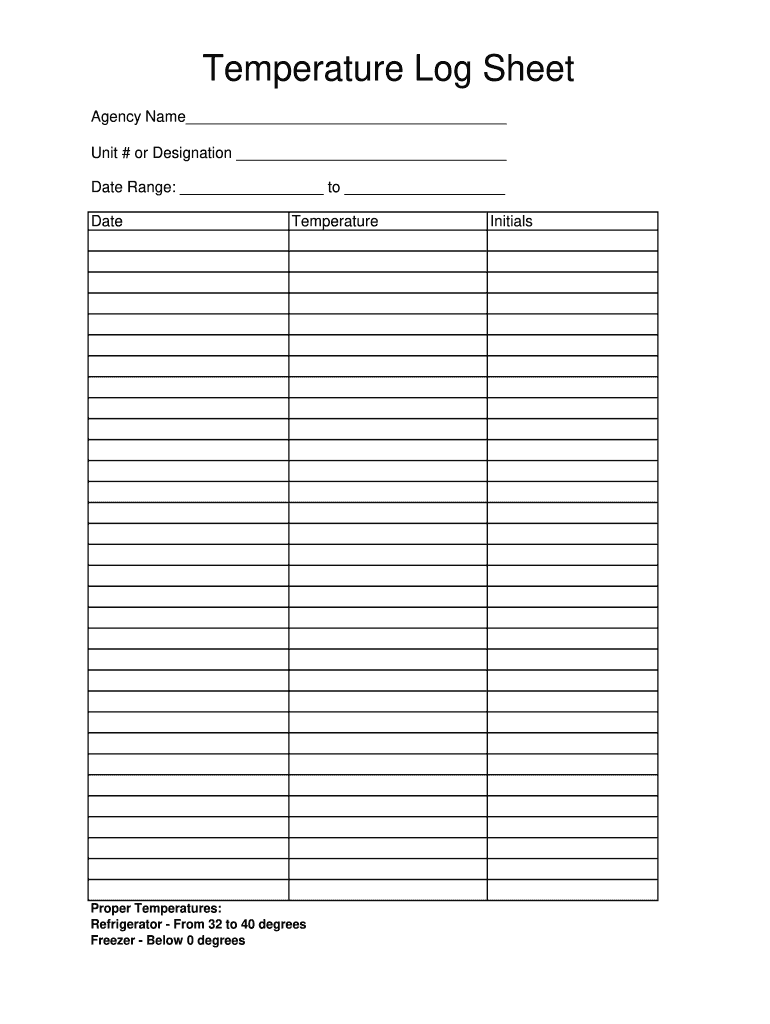







Definition & Meaning of the Food Temperature Log Sheet PDF
A food temperature log sheet PDF is a document designed for recording temperature readings associated with food storage and handling. This sheet typically helps ensure compliance with food safety regulations, documenting temperatures in refrigerators, freezers, and other food storage areas. The standard temperature ranges are essential: for refrigerators, the ideal range is between thirty-two and forty degrees Fahrenheit, while freezers should maintain a temperature below zero degrees Fahrenheit. By systematically logging these temperatures, food service operations can ensure that stored food remains safe for consumption, preventing foodborne illnesses.
The log also serves as a verification tool. It often includes spaces for staff initials, confirming that readings were taken and monitored consistently. This provides an essential audit trail for health inspectors and helps food businesses demonstrate compliance with local and state health regulations. Maintaining accurate records through food temperature log sheets is crucial for fostering trust with consumers and regulatory bodies alike.
How to Use the Food Temperature Log Sheet PDF
Using a food temperature log sheet PDF effectively requires a systematic approach to daily food safety practices. The following steps outline the typical usage:
- Download and Print: Obtain the food temperature log sheet in PDF format. It can be printed for use in physical locations like kitchens or dining areas.
- Record Temperature Readings: At specified intervals, typically during food service hours or at the start and end of the day, measure and log the temperature of relevant food storage areas. This should include items in both refrigerators and freezers.
- Initials for Verification: After logging each temperature, require a staff member's initials to verify the entry. This adds accountability and traceability to the recorded data.
- Review and Analyze: Conduct regular reviews of the log entries to identify any temperature deviations, which should be addressed immediately.
- Store Logs for Reference: Keep completed log sheets organized for easy access during health inspections or audits.
The log plays a vital role in ensuring that food safety protocols are consistently followed, which is essential in preventing the growth of harmful bacteria.
Key Elements of the Food Temperature Log Sheet PDF
Several key elements make up a comprehensive food temperature log sheet PDF, allowing users to monitor food safety effectively:
- Date and Time: Each log should specify the date and time of each temperature recording to maintain a clear timeline of temperature control efforts.
- Temperature Zones: Designated sections should indicate specific temperature zones for different appliances—usually clearly defined for refrigerators, freezers, or even hot-holding equipment if applicable.
- Temperature Readings: An area for entering actual temperature readings, typically measured in degrees Fahrenheit. This is the core of the log sheet.
- Initials of Personnel: Space for staff initials next to each entry to confirm that the reading was recorded and monitored.
- Comments Section: Optional space for notes regarding any unusual occurrences, such as a malfunctioning appliance or corrective actions taken in response to temperature deviations.
Including these elements helps ensure that the log is comprehensive, facilitating effective monitoring and compliance with food safety regulations.
Steps to Complete the Food Temperature Log Sheet PDF
Completing a food temperature log sheet PDF involves a straightforward process to ensure accurate data collection. Here’s a step-by-step guide:
- Prepare the Sheet: Print or access the PDF document on a digital device. Ensure it is easily accessible during temperature checks.
- Identify the Temperature Zones: Determine which elements you will be monitoring, such as various refrigeration units, freezers, and hot storage areas.
- Record the Date and Time: Begin each entry by noting the date and time of the temperature check at the top of the sheet.
- Measure and Log Temperatures: Use a calibrated thermometer to check the temperature within each zone. Log these readings accurately in the designated area.
- Initials Verification: After each entry, have the staff member conducting the check sign or initial next to the recorded temperature for accountability.
- Evaluate and Act: If temperatures fall outside acceptable ranges, document the issue in the comments section and take necessary corrective actions, such as adjusting appliance settings or relocating food to safe places.
By diligently applying these steps, not only is compliance ensured, but proactive measures can be taken to uphold food safety standards.
Legal Use of the Food Temperature Log Sheet PDF
In the context of United States food safety regulations, maintaining a food temperature log sheet PDF is a legal requirement for many food service establishments. The Federal Food and Drug Administration (FDA) outlines specific food safety provisions, and various state health departments often require documented proof of temperature monitoring for inspections. Failure to keep accurate records can result in citations, financial penalties, or even business closure in severe cases.
Legal guidelines emphasize the importance of keeping these logs for a specified duration, often ranging from several months to years, depending on the state's requirements. It is essential that food businesses familiarize themselves with local regulations to ensure compliance. By using the log sheet as an official record, establishments can defend against potential food safety allegations during routine inspections.
Examples of Using the Food Temperature Log Sheet PDF
There are various scenarios where implementing a food temperature log sheet PDF is critical. Here are examples that highlight its practical applications:
- Restaurant Operations: A restaurant uses the log sheet to monitor the refrigeration unit storing perishable items. Daily temperature checks ensure compliance with local health code regulations, especially crucial during peak dining hours.
- Catering Services: A catering company logs temperatures regularly for equipment transporting food to events. This ensures dishes remain at safe temperatures while being delivered and prior to serving, protecting guests from foodborne illnesses.
- Healthcare Facilities: Hospitals often maintain strict temperature controls within their kitchens and food storage areas to protect the health of patients. Temperature log sheets facilitate compliance with both food safety and health regulations.
In each case, these logs play an essential role in documentation, management, and overall food safety strategy, evolving as useful references during audits or inspections.
State-Specific Rules for the Food Temperature Log Sheet PDF
Each state in the U.S. may have different regulations surrounding food temperature monitoring and recordkeeping. According to the FDA Food Code and regional health department practices, establishments are generally held to certain standards regarding the logging of food temperatures. It is important for food service operators to be aware of the following:
- Retention Period: Some states may require records to be kept for a period of six months or more, while others might necessitate logs for one year.
- Inspections: Frequency and depth of inspections can vary; some locales conduct monthly checks, while others may only inspect bi-annually.
- Temperature Standards: Each state may specify temperature thresholds for both food storage and preparation, as varying climates can affect food safety requirements.
For business owners, staying informed about state-specific regulations is crucial in ensuring compliance and safeguarding public health. Keeping detailed records through a food temperature log sheet PDF is a viable strategy for adhering to these mandates.




