




01. Edit your landlord reference letter online
Type text, add images, blackout confidential details, add comments, highlights and more.

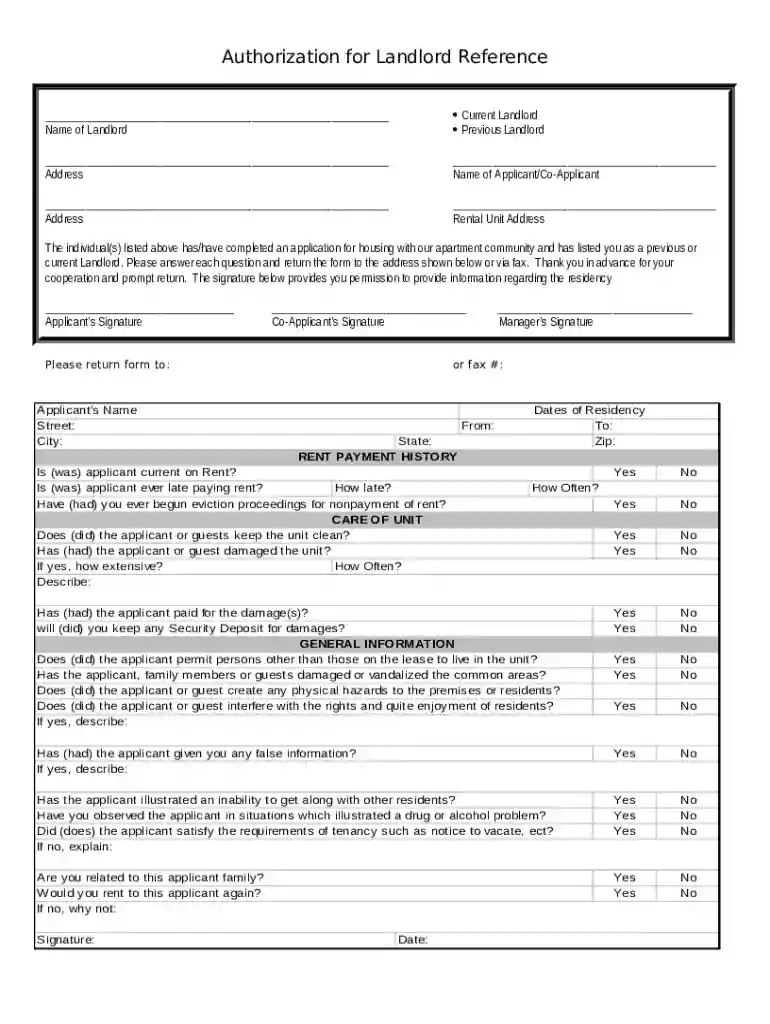
Type text, add images, blackout confidential details, add comments, highlights and more.

Draw your signature, type it, upload its image, or use your mobile device as a signature pad.

Send free landlord reference letter template via email, link, or fax. You can also download it, export it or print it out.
A landlord reference letter is a document provided by a current or past landlord that serves as a testimonial to a tenant's rental history. This letter can include essential information about the tenant's payment consistency, adherence to lease terms, and the overall care of the rental unit. Such letters are an integral part of the tenant screening process and provide valuable insights for potential future landlords.
Using the landlord reference letter involves several steps to maximize its effectiveness in the rental application process. Prospective tenants should forward this letter along with their rental application to demonstrate their reliability and suitability as a tenant. Landlords can utilize the information to assess the trustworthiness and compatibility of an applicant with their property standards.
Request from Previous Landlord: Contact your previous or current landlord, preferably in writing, and request a reference letter.
Provide Necessary Details: Offer your landlord any required details, such as your rental period, property address, and special character references they might include.
Follow Up: If a response is not received within a week, politely follow up to ensure your request is processed.
Review the Letter: Once received, review the contents for accuracy and ensure it reflects positively on your rental history.
Tenant Information: Full name and contact information of the tenant.
Rental Property Details: Address of the rented property and the duration of tenancy.
Rental Payment History: Consistency and timeliness of rent payments made by the tenant.
Property Care: Assessment of the tenant's care and maintenance of the rental unit.
General Conduct: Observations on the tenant's behavior, noise levels, and respect for property rules.
Landlord reference letters are predominantly used by:
Prospective Tenants: As supporting documents in rental applications.
Landlords and Property Managers: For evaluating potential tenants during the tenant screening process.
Real Estate Agents: When mediating between tenants and landlords to ensure smooth transactions.


The legal use of a landlord reference letter ensures transparency in the rental process. The letter remains a factual and unbiased account of the tenant's history and should comply with fair housing laws, avoiding discriminatory language or implications. The document should be truthful, as false statements can lead to legal repercussions for the issuing landlord.
Tenancy Agreement: A legal document outlining the terms between tenant and landlord.
Lease Terms: Specific conditions set within the tenancy agreement.
Reference Check: The process of verifying information provided by a tenant.
Rental History: A record of a tenant's previous rental experiences and behaviors.
A tenant applying for a new apartment in New York includes a landlord reference letter in their application, highlighting their consistent payment history and low maintenance requests.
A landlord in Los Angeles checks the reference letter of a potential tenant to confirm conduct and respect for property, aiding in the decision-making process.
While the traditional landlord reference letter is common, there are alternatives:
Reference Form: Standardized forms filled out by landlords upon request by tenants.
Verbal References: Direct phone calls between past and future landlords to discuss tenant behavior.
Automated Reference Systems: Online platforms that extract and verify tenant histories for landlords.
At DocHub, your data security is our priority. We follow HIPAA, SOC2, GDPR, and other standards, so you can work on your documents with confidence.
Mar 25, 2026 Include a brief cover letter that gives an overview of your household. Mention your interest in the rental and your ability to be aRead more
Feb 5, 2026 The Tenant Resource Center provides sample notices for ending a tenancy on their website. Milwaukee County links to eviction notice forms.


