
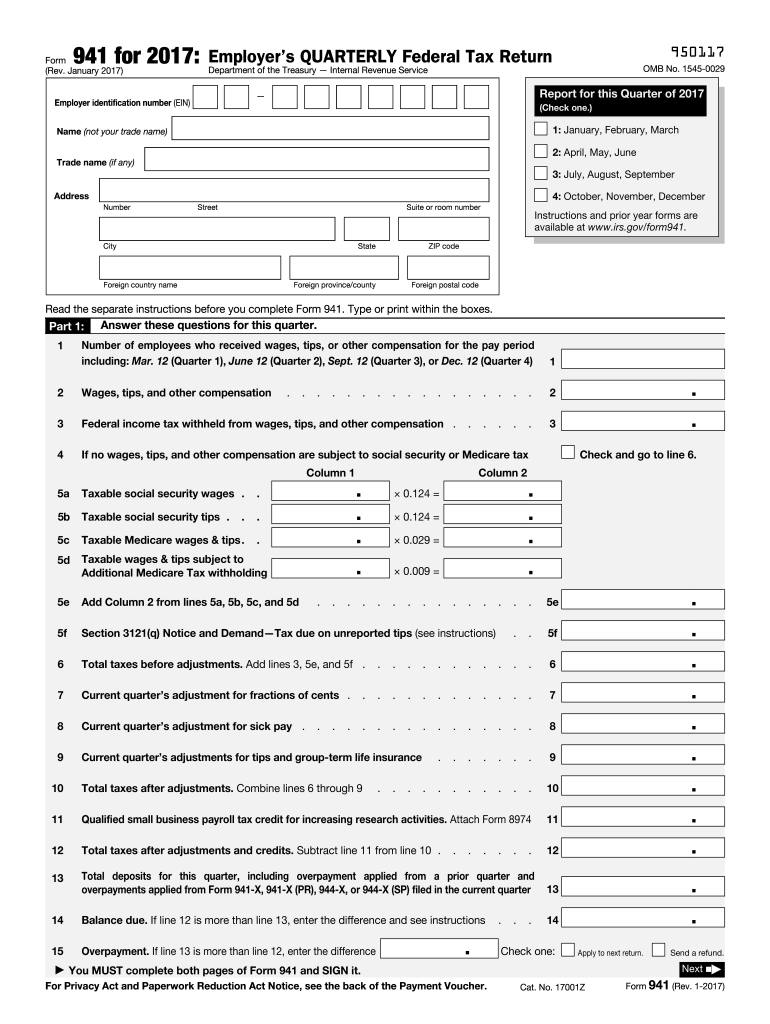







Definition and Meaning of Form 941 for 2017
Form 941, titled the Employer’s Quarterly Federal Tax Return, is a vital document in the U.S. used by employers to report wages paid to employees. This form is particularly important for the year 2017 as it addresses the reporting requirements for that specific tax year. Key components include reporting wages, tips, and other forms of compensation. Employers must also report federal income tax withheld from employees' pay, as well as both the employer's and employee's shares of Social Security and Medicare taxes. This form plays a crucial role in ensuring compliance with IRS regulations and accurate payroll tax withholdings.
How to Use the 2017 Form 941 Online
Using the 2017 Form 941 online involves several straightforward steps. Employers can streamline this process by leveraging digital platforms like the IRS e-file. Here's a basic guide:
- Prepare the Necessary Information: Gather all payroll data, including employee wages, tips, and tax withholdings.
- Access an E-file Provider: Choose an IRS-authorized e-file provider that supports Form 941. Ensure that the provider offers the 2017 version of the form.
- Enter Data Accurately: Input detailed payroll information into the e-file system. Cross-check each field to ensure accuracy.
- Review and Confirm: Go through the filled form to verify all details. Make any necessary corrections.
- Submit the Form: Once confirmed, submit the form via the e-file system. Ensure you receive a confirmation receipt for your records.
Steps to Complete the 2017 Form 941
Completing Form 941 for 2017 requires attention to detail and accurate reporting. Follow these steps:
-
Employer Identification Information:
- Provide your Employer Identification Number (EIN).
- Enter the employer's name and address.
-
Report Employee Compensation:
- Fill in total wages, tips, and other taxable payments made to employees.
- Include adjustments for sick pay, taxable fringe benefits, and group-term life insurance.
-
Calculate Taxes:
- Report federal income tax withheld from employees' wages.
- Calculate and enter both the employer's and employee's portions of Social Security and Medicare taxes.
-
Make Adjustments:
- Account for adjustments such as fractions of cents, sick pay, and life insurance costs.
-
Determine Payment Amounts:
- Calculate the total taxes due after adjustments. If underpaid, figure out the exact amount owed.
-
Sign and Submit:
- Ensure an authorized person signs the form before submission.
- Decide on e-filing or mailing based on preference and availability.
Why You Should File the 2017 Form 941
Filing the 2017 Form 941 is obligatory for employers who pay wages subject to withholding. Here’s why it's crucial:
- Compliance with IRS Regulations: Avoid penalties by filing correctly and on time.
- Accurate Tax Reporting: Ensures that Social Security, Medicare, and federal income taxes are reported correctly.
- Avoidance of Liabilities: Proper filing reduces the risk of incurring additional tax liabilities or audits.
- Record of Employment Tax Payments: Serves as a record for future reference or audits.
Important Terms Related to Form 941
Understanding key terms associated with Form 941 is essential:
- FICA Taxes: Refers to the combined Social Security and Medicare taxes paid by both employers and employees.
- Federal Income Tax Withholding: The amount of tax withheld from an employee’s wages by the employer for federal income taxes.
- EIN: The Employer Identification Number is a unique number assigned to a business entity for tax purposes.
- Adjustments: Modifications made to account for discrepancies or specific situations like over-reported wages.
Filing Deadlines and Important Dates for 2017
Timely filing is critical:
- Quarterly Deadlines: Form 941 must be filed by the last day of the month following the end of each quarter (e.g., April 30 for Q1, July 31 for Q2).
- Final Dates for 2017:
- 1st Quarter: April 30, 2017
- 2nd Quarter: July 31, 2017
- 3rd Quarter: October 31, 2017
- 4th Quarter: January 31, 2018
Required Documents for Filing
Before filing Form 941 for 2017, ensure you have the following:
- Employee Payroll Records: Documentation of wages, tips, and tax withholdings.
- EIN Documentation: Your assigned IRS Employer Identification Number.
- Adjustment Records: Details of any adjustments applied, such as overpayment credits or sick pay.
- Previous Filing Information: Copies of past Forms 941 to reference and ensure consistency.
Penalties for Non-Compliance
Failing to file Form 941 can lead to substantial penalties:
- Failure to File: A penalty of 5% of the unpaid tax amount per month, up to 25%.
- Late Payment Penalty: 0.5% of the unpaid tax for each month the tax remains unpaid.
- Interest Charges: Accrued on unpaid taxes until they are fully paid.
Software Compatibility for Filing
Employers can utilize various software to file Form 941 online in 2017:
- TurboTax and QuickBooks: Offer specific modules to help businesses manage and file their taxes, ensuring compatibility with IRS guidelines.
- IRS E-file Systems: Accessible for direct entry of the form data online, streamlining electronic submissions.
- Payroll Software: Some payroll systems include integrated functionalities to file Form 941 automatically.
Arm yourself with all the necessary information and adhere to IRS regulations to ensure smooth and compliant filing of the 2017 Form 941.


