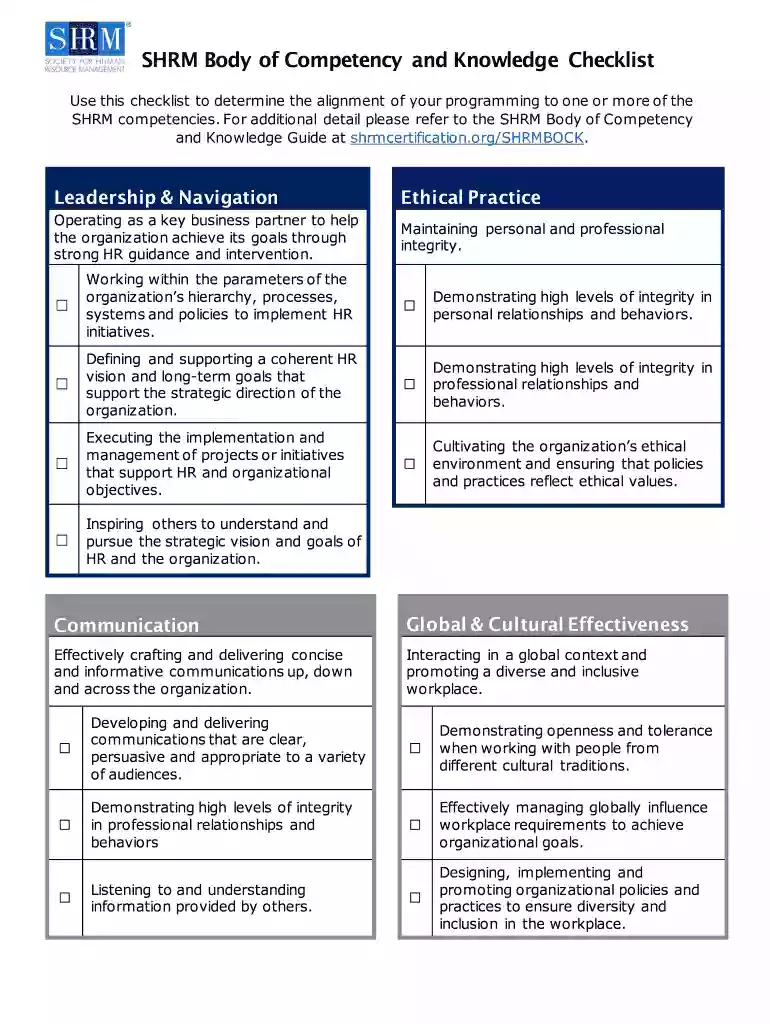
Definition & Meaning
The SHRM Body of Competency and Knowledge Checklist is a comprehensive tool used by human resources (HR) professionals to align their practices with the competencies outlined by the Society for Human Resource Management (SHRM). This checklist serves as a guide to ensure HR programs and activities are in accordance with industry standards and best practices. It includes a detailed framework of competencies such as Leadership & Navigation, Ethical Practice, Communication, and Global & Cultural Effectiveness, among others, which are essential for supporting organizational goals and improving HR functions.
Key Elements of the SHRM Body of Competency and Knowledge Checklist
The checklist is structured around key competencies critical for HR success:
- Leadership & Navigation: Focuses on steering organizations through change, managing teams effectively, and making strategic decisions.
- Ethical Practice: Emphasizes maintaining high ethical standards and ensuring compliance with policies and regulations.
- Communication: Highlights the importance of clear and effective communication within and outside the organization.
- Global & Cultural Effectiveness: Involves understanding and respecting diverse cultures and implementing inclusive HR practices.
- Relationship Management: Stresses building and maintaining positive relationships with all stakeholders.
- Consultation: Provides guidance on being a strategic partner in solving organizational challenges.
- Business Acumen: Encourages understanding of the business model and how HR can drive successful outcomes.
How to Use the SHRM Body of Competency and Knowledge Checklist
To effectively use the checklist, HR professionals should:
- Assess Current Competencies: Evaluate the existing skills and practices of the HR team against the checklist.
- Identify Gaps: Determine areas lacking in current HR activities and develop a plan to address these deficiencies.
- Implement Changes: Introduce new HR strategies or enhance existing ones to align with the checklist's competencies.
- Monitor Progress: Regularly review HR initiatives to ensure compliance with the competencies outlined in the checklist.
- Adjust as Needed: Stay flexible and ready to modify practices based on organizational changes or external influences.
Why Use the SHRM Body of Competency and Knowledge Checklist
Organizations should utilize the checklist for several reasons:
- Ensure Industry Compliance: Aligns HR practices with industry standards and best practices.
- Improve HR Effectiveness: Helps pinpoint inefficiencies in HR operations and provides guidance for improvement.
- Support Organizational Goals: Ensures HR strategies are in sync with overall business objectives.
- Facilitate Professional Development: Identifies opportunities for HR professionals to develop and enhance their skills.
Steps to Complete the SHRM Body of Competency and Knowledge Checklist
Completing the checklist involves several steps:
- Review Competencies: Familiarize yourself with the competencies and knowledge areas included in the checklist.
- Conduct a Self-Assessment: Evaluate the current HR practices against the checklist.
- Identify Areas for Improvement: Determine areas where competencies need enhancement or development.
- Develop an Action Plan: Create a detailed plan to address the identified gaps.
- Implement Changes: Apply the action plan to improve HR practices.
- Evaluate Progress: Regularly assess the impact of changes on HR effectiveness.
Important Terms Related to SHRM Body of Competency and Knowledge Checklist
Understanding the following terms is essential:
- Competency: The combination of skills, knowledge, and abilities required for effective HR practice.
- Best Practices: Established HR methods that yield optimal results.
- Gap Analysis: A tool to identify and assess gaps in competencies.
Examples of Using the SHRM Body of Competency and Knowledge Checklist
HR departments across various industries, such as healthcare, finance, and technology, use the checklist:
- Healthcare: Ensures compliance with healthcare regulations and enhances staff training programs.
- Finance: Aligns HR practices with financial industry standards and supports effective talent management.
- Technology: Facilitates agile HR processes that adapt quickly to technological advancements.
Legal Use of the SHRM Body of Competency and Knowledge Checklist
From a legal standpoint, the checklist serves as a:
- Benchmark for HR Practices: Ensures HR activities comply with legal and regulatory requirements.
- Documentation Tool: Provides a record of HR competency evaluations and developments.
Versions or Alternatives to the SHRM Body of Competency and Knowledge Checklist
While SHRM's checklist is widely recognized, other frameworks include:
- CIPD Profession Map: Offers a competency framework used mainly in the UK and Europe.
- HRCI Certification: Provides credentials focusing on U.S.-based business practices.
Adopting the SHRM Body of Competency and Knowledge Checklist can significantly enhance HR functions by ensuring alignment with industry standards, fostering professional development, and supporting strategic organizational objectives.