




01. Edit your form online
Type text, add images, blackout confidential details, add comments, highlights and more.

Type text, add images, blackout confidential details, add comments, highlights and more.

Draw your signature, type it, upload its image, or use your mobile device as a signature pad.

Send it via email, link, or fax. You can also download it, export it or print it out.
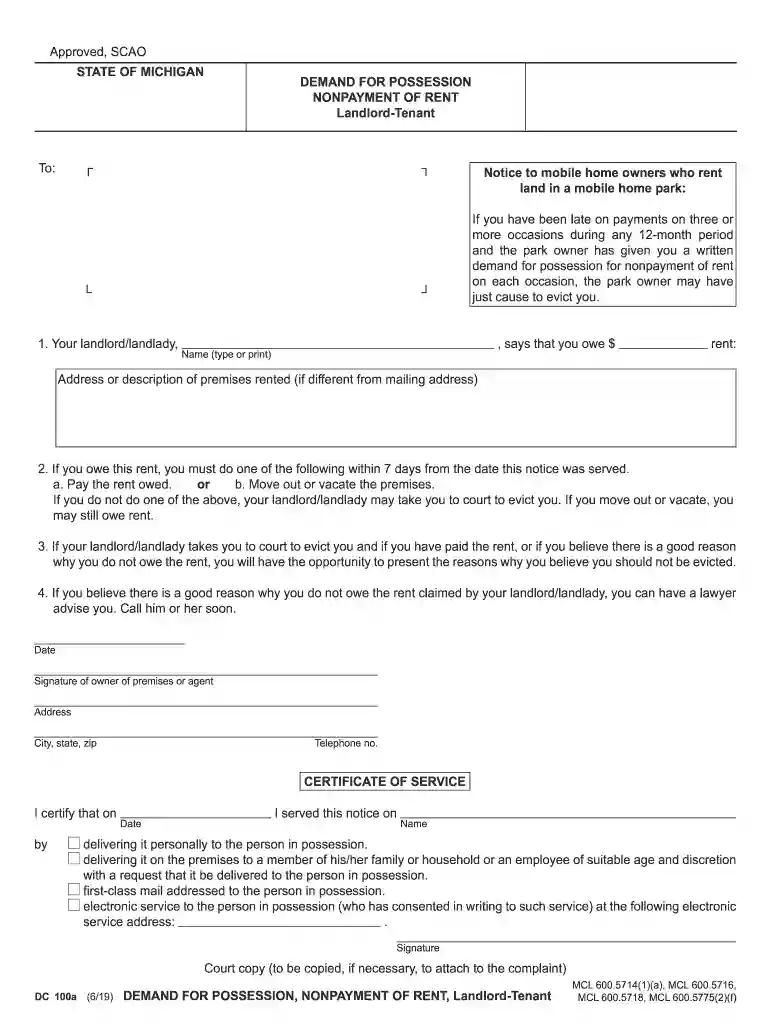
The "DC 100a, Demand for Possession, Nonpayment of Rent, Landlord-Tenant" form is a legal document used in the state of Michigan. It allows landlords of mobile home parks to formally demand possession of a rented property due to the tenant's failure to pay rent. This notice serves as the first step in the eviction process, notifying the tenant of their obligation to either pay the overdue rent or vacate the premises. The form specifies a seven-day time frame within which the tenant must resolve the payment issue to avoid potential eviction.
To utilize the DC 100a form effectively, landlords should follow these steps:
It's important for landlords to understand and follow these instructions precisely to ensure the process is legally compliant.
Completing the DC 100a form involves several key steps:
By following these steps, landlords can ensure the form is correctly prepared for submission.
Landlords benefit from using the DC 100a form because it legally formalizes the eviction process for nonpayment of rent. This document helps landlords assert their rights while providing tenants a clear notice of their obligations. It protects both parties by clearly outlining the terms and implications of nonpayment, thereby reducing potential conflicts and misunderstandings.
These elements are vital for the legality and effectiveness of the form.
Understanding terms related to the DC 100a is crucial for proper usage:
These terms help in clearly defining the process and responsibilities for both landlords and tenants involved.
The DC 100a form is specific to Michigan, following state law regarding landlord-tenant relations. Michigan law necessitates a seven-day notice for nonpayment, which aligns with the typical timeframe mentioned in this form. Landlords must be mindful of this and other state-specific regulations to ensure adherence.
Failure to properly complete or serve the DC 100a form can lead to delayed eviction proceedings and potential legal liabilities for landlords. Non-compliant forms could be dismissed in court, meaning landlords might lose the ability to reclaim possession promptly. It underscores why ensuring accuracy and legality in each form is crucial.
At DocHub, your data security is our priority. We follow HIPAA, SOC2, GDPR, and other standards, so you can work on your documents with confidence.


