
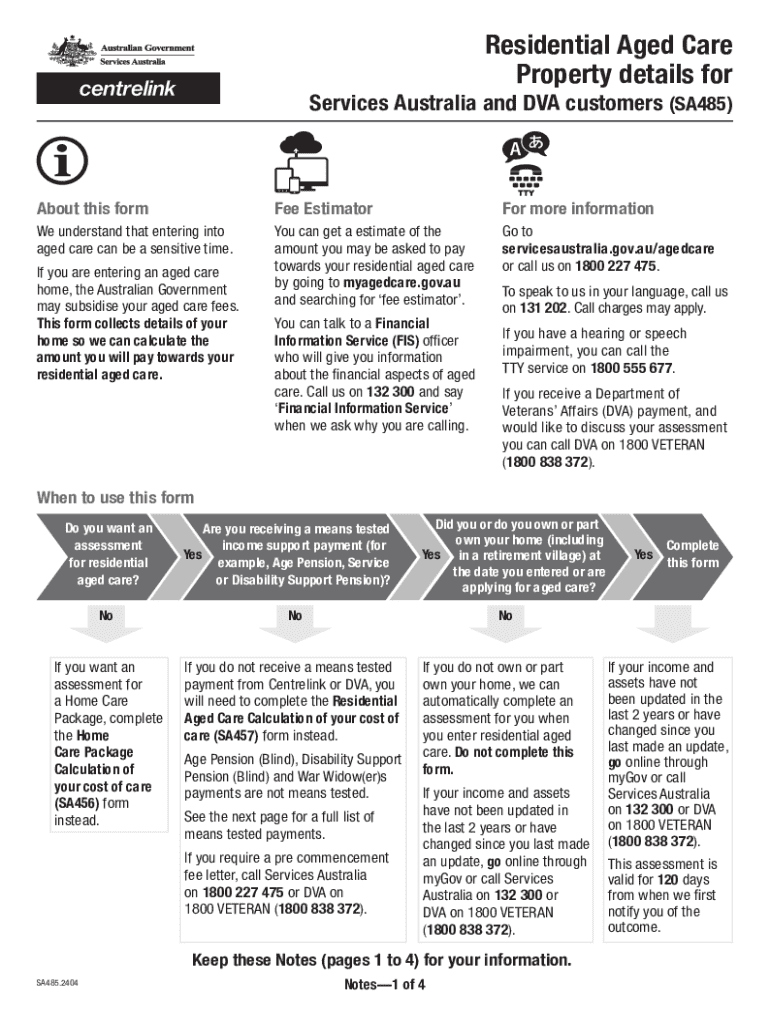







Definition & Meaning
The "Residential Aged Care Property Details" form is a crucial document used by Services Australia to assess the financial capabilities of individuals applying for aged care services. This form collects detailed information about an applicant's residential property, which helps determine the fees and contributions required for aged care. Such details include the property’s current market value, mortgage status, and any rental income generated from it. This information is vital for accurate fee estimation, ensuring that applicants are fairly assessed based on their financial standing.
How to Use the Residential Aged Care Property Details Form
Using the "Residential Aged Care Property Details" form involves several steps designed to ensure comprehensive and accurate data submission. Applicants must:
- Gather all relevant documents reflecting the property's status, such as mortgage statements, rental agreements, or property valuation reports.
- Accurately fill in each section, detailing present market value, outstanding mortgage, and any secondary properties.
- Verify that no mandatory field is left incomplete to prevent delays in processing.
- Sign and submit the form within the stipulated guidelines, keeping a copy for personal records.
Inaccuracies or omissions can lead to an incorrect assessment of aged care fees, highlighting the need for careful completion.
Steps to Complete the Residential Aged Care Property Details Form
Completing the form consists of several essential steps:
- Review Eligibility: Ensure that the applicant qualifies for aged care assessment by meeting specific financial criteria outlined by Services Australia.
- Gather Information: Collect documentation related to property ownership and financial obligations, including valuations and mortgage details.
- Detail Financials: Provide an accurate account of the property’s equity, income generated, and any loans secured against it.
- Complete Sections: Fill in all parts of the form meticulously, adhering to instructions for each section.
- Consult a Professional: If unsure, consider consulting a financial advisor or aged care specialist for assistance.
- Submit the Form: Send the completed form to Services Australia through the specified method, ensuring all supporting documents are attached.
Key Elements of the Residential Aged Care Property Details Form
Key elements within the form require specific focus:
- Property Valuation: Provide the most recent and accurate valuation.
- Ownership Details: Clarify sole or joint ownership and any changes in ownership.
- Income from Property: Detail any rental income and associated expenses.
- Debts and Liabilities: Include all outstanding mortgage amounts and other debts.
A complete and precise submission ensures the applicant's financial situation is accurately represented, impacting the assessment outcome.
Important Terms Related to Residential Aged Care
Understanding critical terms is essential for accurate form completion:
- Market Value: The current estimated price that the property would fetch on the open market.
- Equity: The difference between the market value of the property and the outstanding balance of loans secured against it.
- Rental Income: Income generated through leasing the property to tenants.
- Mortgage: A secured loan where the property serves as collateral.
Familiarity with these terms aids applicants in providing precise data, potentially affecting aged care fee calculations.
Who Typically Uses the Residential Aged Care Property Details Form
This form is primarily used by individuals entering residential aged care facilities, where property assets significantly influence funding and service eligibility. It is often submitted by:
- Older Adults or Their Representatives: Those seeking aged care support from government programs.
- Financial Professionals: Advising clients on aged care financial planning.
- Legal Representatives: Assisting clients with decision-making in financial or aged care matters.
Ensuring the right individuals are completing the form avoids unnecessary processing delays.


Legal Use of the Residential Aged Care Property Details Form
The legal use of this form is outlined by Services Australia requirements. The collected data assists in:
- Determining Fees: Directly influencing the amount payable for aged care services.
- Compliance with Regulations: Ensuring applicants meet legal requirements for receiving government support.
- Privacy and Security: Protecting applicant details under relevant privacy laws.
Non-disclosure or misinformation could result in penalties or legal actions, emphasizing the importance of legal compliance.
Required Documents
Completing the form necessitates several supporting documents, such as:
- Property Valuation Reports: Offers a current financial perspective on the property’s worth.
- Mortgage Statements: Provides insights into financial commitments tied to the property.
- Ownership Proof: Demonstrates legal rights over the property.
- Rental Agreements (if applicable): Details the lease terms and financial returns.
Submitting complete and accurate documentation enhances the chances of a precise aged care fee determination and eligibility assessment.




