
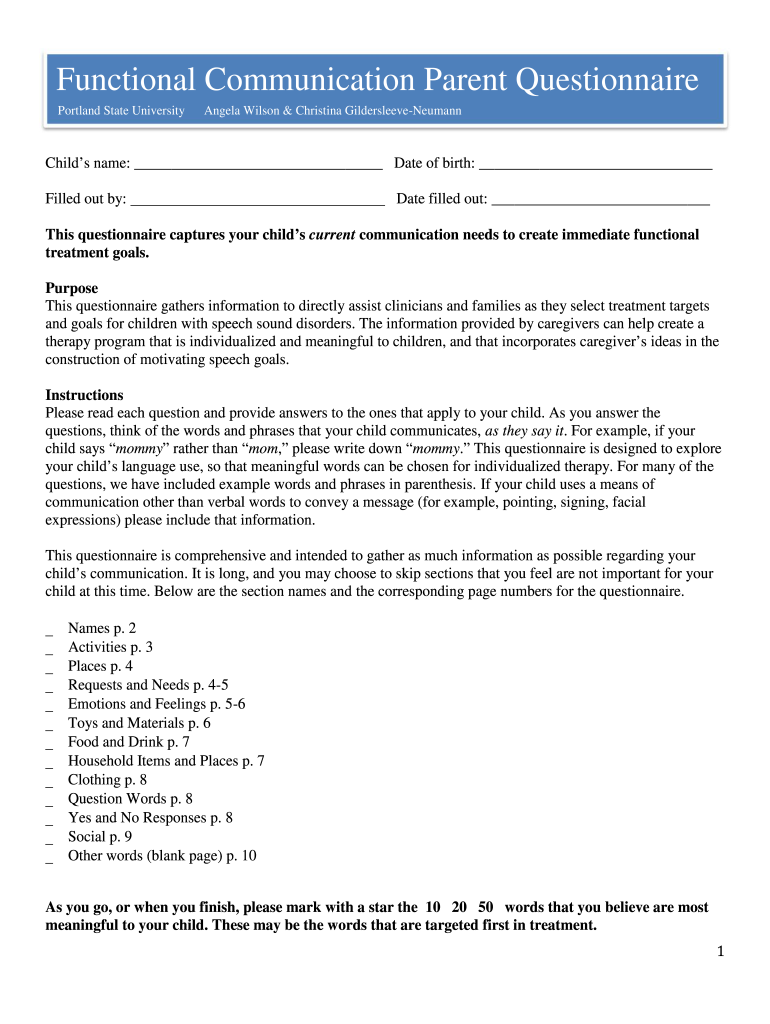







Definition and Meaning of the Functional Communication Parent Questionnaire
The Functional Communication Parent Questionnaire is an assessment tool designed to collect important insights from caregivers about a child's communication abilities. Developed at Portland State University, it focuses on how children use language in various contexts, which can significantly assist in setting personalized treatment goals for children with communication difficulties, such as speech sound disorders. This tool addresses numerous aspects of communication by prompting caregivers to detail their child's articulations, word uses, and contextual language applications.
Purpose of the Questionnaire
The questionnaire helps in understanding the child's everyday communication in diverse scenarios, allowing clinicians to tailor interventions effectively. It encourages parents to provide specific examples of their child's communication and marks key words that are particularly meaningful for subsequent therapeutic activities.
Benefits for Clinicians and Families
Using the functional communication parent questionnaire can facilitate proactive discussions between families and professionals. Clinicians can gain a clearer picture of a child's verbal interactions, social communication skills, and how they navigate conversations. This collaboration enhances the goal-setting process, ensuring that tailored strategies can be implemented to improve communication outcomes.
Key Elements of the Functional Communication Parent Questionnaire
The functional communication parent questionnaire includes several key components that provide a comprehensive understanding of a child's communication skills. Each section is designed to elicit detailed responses that reflect various aspects of functional communication.
Sections of the Questionnaire
- Personal Information: Collecting names, ages, and general details about the child.
- Communication Contexts: Exploring how the child uses language in specific situations, such as home, school, and social settings.
- Types of Language Used: Identifying various categories of words and phrases the child employs, including requests, names for objects, and social interactions.
- Frequency and Categories: Documenting how often the child engages in these communication types and within what contexts.
- Specific Examples: Encouraging caregivers to share particular instances that showcase the child's communication style and effectiveness.
Importance of Detailed Responses
Encouraging comprehensive and specific responses from caregivers helps capture the nuances of the child's communication experiences, which is vital for accurate assessment and intervention planning.
Steps to Complete the Functional Communication Parent Questionnaire
Completing the functional communication parent questionnaire involves several structured steps to ensure that caregivers provide thorough and meaningful information.
Step-by-Step Instructions
- Gather Necessary Information: Caregivers should first collect relevant details about the child's developmental history and communication experiences.
- Review the Questionnaire: Familiarize yourself with the various sections and types of questions posed.
- Fill Out Each Section: Respond to prompts by providing examples of communication styles and contexts.
- Emphasize Important Words: Highlight words used by the child that are significant in understanding their communication.
- Submit the Questionnaire: Return the completed form to the appropriate clinician or educational professional.
Recommendations for Completion
- Take time to reflect on communication interactions.
- Involve other caregivers or family members to gain diverse perspectives.
- Revise and refine responses to ensure clarity and completeness, focusing on the child’s strengths and challenges.
How to Use the Functional Communication Parent Questionnaire
The functional communication parent questionnaire serves as a pivotal resource in evaluating and improving a child's communication skills. Understanding its usage can enhance its effectiveness for caregivers and clinicians alike.
Application in Clinical Settings
- Assessment Tool: Used by speech-language pathologists (SLPs) to gather essential baseline information and design individualized treatment plans.
- Clinical Discussions: Enables meaningful dialogues between families and clinicians regarding child communication and development.
- Progress Tracking: Reevaluating the questionnaire periodically can help assess progress and adapt strategies as necessary.
Integration with Therapy Sessions
Incorporating insights from the questionnaire into therapy sessions can create a more informed treatment environment. Clinicians can align their approaches with the communication styles identified by caregivers, allowing for more tailored and relevant therapeutic interventions.
Examples of Using the Functional Communication Parent Questionnaire
Illustrating the functional communication parent questionnaire in practice can enrich understanding of its applications and benefits through real-world scenarios.
Case Studies
- Case of a Child with Speech Sound Disorder: A caregiver completes the questionnaire detailing the child’s use of certain sounds and words in context. This information helps the clinician develop specific sound-targeting exercises that align with daily communication instances.
- Social Interaction Focus: Another family notes that their child often struggles to initiate conversations. The clinician devises social skills exercises aimed at teaching effective conversation starters based on the child's interests shared in the questionnaire.
Impactful Outcomes
By facilitating detailed discussions about the child's communication, the questionnaire lays the groundwork for developing effective intervention strategies tailored to individual needs. This collaborative model enhances not only therapeutic outcomes but also the family’s engagement in the child's communication journey.
Who Typically Uses the Functional Communication Parent Questionnaire
The functional communication parent questionnaire is an essential tool utilized by a variety of professionals and caregivers, each focusing on different aspects of a child's communication abilities.


Primary Users
- Speech-Language Pathologists (SLPs): Use the questionnaire to understand a child's communication needs and establish individualized therapy goals.
- Special Education Teachers: Employ insights from the questionnaire to support tailoring educational approaches that enhance communication skills.
- Parents and Caregivers: Provide critical information about their child's everyday communication, fostering collaboration with professionals.
Benefits for Practitioners and Families
Collaboration between parents and professionals ensures that interventions align with the child's specific communication experiences, creating a comprehensive understanding of their needs and guiding effective strategies for growth.
Important Terms Related to the Functional Communication Parent Questionnaire
Understanding key terminologies associated with the functional communication parent questionnaire is fundamental for both caregivers and professionals.
Essential Definitions
- Functional Communication: Refers to the practical use of language in real-life situations, emphasizing the effectiveness of communication rather than mere knowledge of vocabulary.
- Communication Disorder: A broad term encompassing various difficulties in a child's ability to send, receive, and process information, which can impact speech, language, or social communication skills.
- Assessment Tools: Instruments or questionnaires, such as the functional communication parent questionnaire, developed to evaluate specific skills or areas related to communication.
Significance of These Terms
A clear understanding of these terms supports effective communication between caregivers and professionals, leading to more productive discussions about assessments and intervention strategies for the child’s communication needs.




