
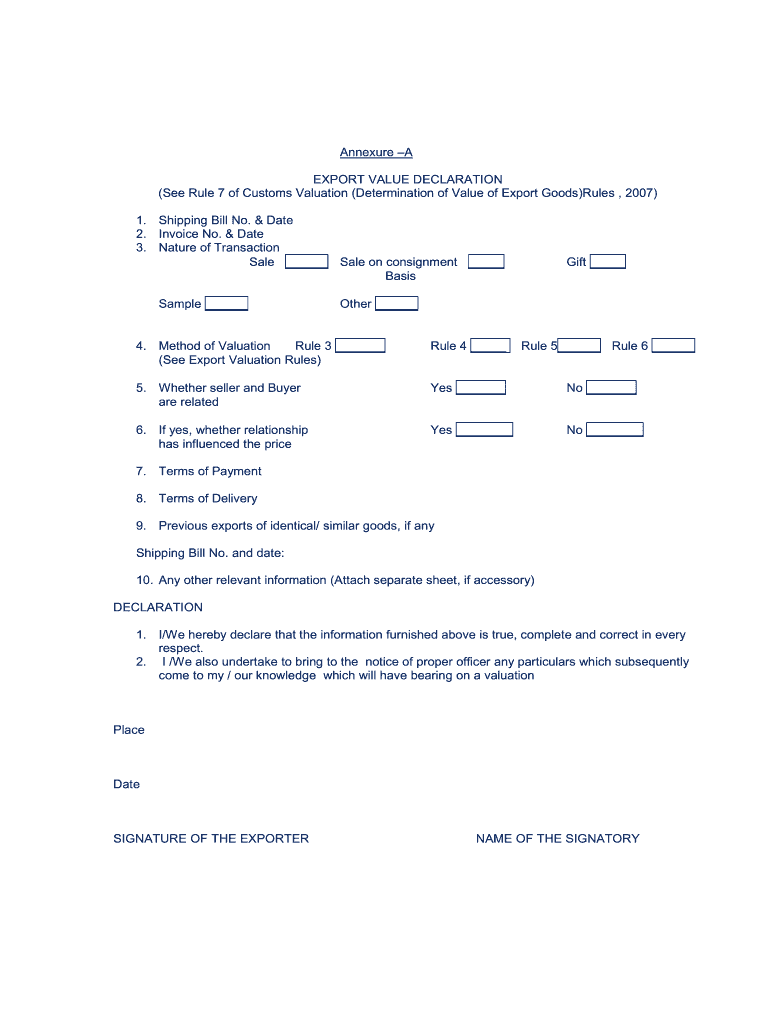







Understanding the Export Value Declaration Format
The Export Value Declaration format serves as a vital document in international trade, particularly under the Customs Valuation Rules, 2007. This format plays a key role in documenting the value of goods being exported. It includes essential details that aid customs officials in assessing the correct duties and taxes applicable. Understanding its components is crucial for exporters looking to comply with regulations and facilitate smooth international transactions.
Key Components of the Export Value Declaration
-
Shipping and Invoice Details
This section captures crucial information regarding the shipment, such as the exporter’s contact details, the recipient’s information, and specific invoice numbers linked to the export. Ensuring accurate entry in this segment minimizes shipping delays. -
Nature of Transaction
Clearly stating the type of transaction—whether it is a sale, gift, or consignment—helps customs determine the applicable valuation rules. This clarity is essential to avoid legal complications. -
Method of Valuation
Different methods are available for determining the value of goods being exported, including the transaction value and computed value. The export value declaration format requires the exporter to specify which method is used and provide supporting documentation.
Relationships Between Parties
- Seller and Buyer Relationship
Understanding the relationship between the seller and buyer is important in determining if there are any influences affecting the price of the goods. For example, relationships may alter the transaction value in cases where parties have special relationships that could affect pricing.
Payment and Delivery Terms
-
Terms of Payment
This section outlines how and when payment will be made, which can include cash upfront, credit, or other arrangements. Clearly defined terms help mitigate disputes that may arise regarding payment expectations. -
Delivery Terms
The declaration should specify who bears the shipping costs and the responsibilities of each party until the goods are delivered. Typical terms might align with Incoterms, which further clarifies each party’s obligations.
Previous Export History
- Prior Exports of Similar Goods
Documenting past exports can provide evidence for the declared value and help customs evaluate if the pricing is consistent with market trends. Including details about previously exported items can strengthen the legitimacy of the current value declaration.
Exporter’s Declaration
- Affirmations by the Exporter
The declaration concludes with a statement where the exporter affirms the accuracy and completeness of the provided information. This affirmation is a legal commitment, underscoring the importance of honesty in the declaration process.
Importance of Compliance
- Regulatory Adherence
Adhering to the guidelines set out in the export value declaration format is critical. Non-compliance can lead to penalties, delays, or even seizure of goods by customs authorities, which can have substantial financial implications for businesses.
Completing the Form Effectively
- Using the Right Format
Export value declaration formats are often standardized and can be found in Word or Excel formats. Utilizing an official template ensures that all necessary fields are included and minimizes errors during completion.
Variations and Alternatives
- Alternatives to the Standard Format
Alternatives such as the Export Declaration Form in PDF or other electronic formats may be applicable in certain situations, depending on the jurisdiction and the specific requirements of the exporting country.
Final Considerations
- Review and Submission
Before submission, exporters should ensure all information is accurate, all required documents are attached, and that the declaration is signed appropriately. A thorough review can prevent issues and ensure compliance.




