




Here's how it works
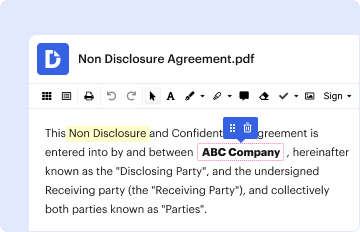
01. Edit your bipolar safety plan template online
Type text, add images, blackout confidential details, add comments, highlights and more.
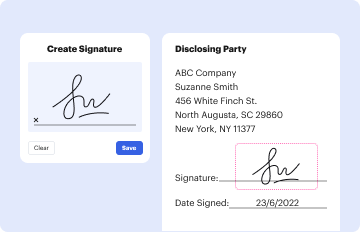
02. Sign it in a few clicks
Draw your signature, type it, upload its image, or use your mobile device as a signature pad.

03. Share your form with others
Send mental health safety plan template via email, link, or fax. You can also download it, export it or print it out.
How to use or fill out mental health crisis plan template pdf with our platform

- Click ‘Get Form’ to open the mental health crisis plan template in the editor.
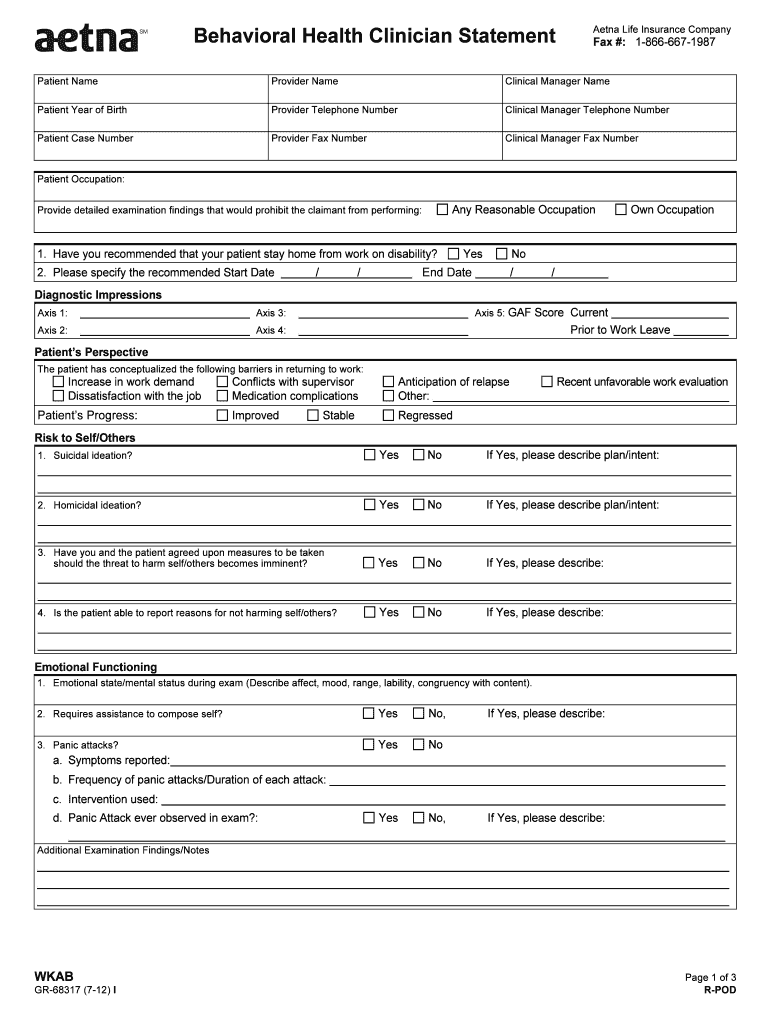
- Begin by entering the patient’s name and year of birth in the designated fields. This information is crucial for identifying the individual involved.
- Fill out the provider and clinical manager details, including names and contact numbers. Accurate contact information ensures effective communication.
- In the 'Patient's Perspective' section, describe any barriers to returning to work as noted by the patient. This helps in understanding their situation better.
- Address any suicidal or homicidal ideation by selecting 'Yes' or 'No' and providing detailed descriptions if applicable. This is vital for assessing risk levels.
- Complete sections on emotional functioning and cognitive functioning, detailing observations made during examinations. Use checkboxes and text fields as needed.
- Finally, review all entries for accuracy before signing and dating the form at the bottom. Ensure that all necessary notes are included for clarity.
Start using our platform today to easily fill out your mental health crisis plan template for free!
Fill out mental health crisis plan template pdf online
It's free
It's free
See more mental health crisis plan template pdf versions
We've got more versions of the mental health crisis plan template pdf form. Select the right mental health crisis plan template pdf version from the list and start editing it straight away!
| Versions | Form popularity | Fillable & printable |
|---|---|---|
| 2012 | 4.8 Satisfied (122 Votes) |
Got questions?
We have answers to the most popular questions from our customers. If you can't find an answer to your question, please contact us.
Contact us
What are the 5 steps of a crisis management plan?
The Five Phases of Crisis Management Phase 1: Early Warning and Signal Detection. We know that crises happen. Phase 2: Preparation and Prevention. Phase 3: Damage Containment. Phase 4: Recovery. Phase 5: Learning and Reflection.
What are the 5 Cs of crisis?
Here, we are going to discuss what we believe are the 5 Cs of crisis communications: Concern, Commitment, Competency, Clarity, and Confidence. Each one of these is important to keep in mind as you build your crisis response plan and any appropriate response you may have when a crisis arises.
What is considered a mental health crisis?
The first three focus on listening. Step 1: Define the Problem. Step number one asks the crisis worker to define the problem. Step 2: Ensure the Individuals Safety. Step 3: Provide Support. Step 4: Explore Alternatives. Step 5: Make Plans. Step 6: Obtain Commitment.
What are the five 5 areas of crisis management?
The five areas of crisis management that businesses must focus on include risk assessment and planning, crisis communication, incident response, business continuity, and crisis recovery. By focusing on these areas, businesses can increase their chances of surviving and thriving even in the face of a crisis.
What are at least 5 essential elements of crisis management and explain each?
An effective crisis management plan has 10 essential elements. These include a risk analysis, an activation protocol, a chain of command, a command center plan, response action plans, internal and external communication programs, resources, training, and a review.
Security and compliance
At DocHub, your data security is our priority. We follow HIPAA, SOC2, GDPR, and other standards, so you can work on your documents with confidence.
Learn more


People also ask
What are 5 things that need to be included in a crisis plan?
6 steps to create a crisis management plan Identify your crisis leadership team. Assess risk. Determine the business impact. Plan the response. Solidify the plan. Review and update.
What are the 5 Ps of crisis management?
The 5 Ps of Crisis Management are Predict, Prevent, Prepare, Perform, Post-Action and Assessment. This framework involves trying to remove uncertainty from the future by updating inputs, intelligence about possible threats, knowing possible targets and knowing vulnerabilities.