Definition and Purpose of Hand Therapy Putty Exercises
Hand therapy putty exercises are designed to strengthen the muscles in the hands, fingers, and forearms. They are commonly used in rehabilitation settings for individuals recovering from hand injuries, surgeries, or those suffering from conditions such as arthritis or carpal tunnel syndrome. The exercises utilize special putty that can be manipulated to improve grip strength, dexterity, and fine motor skills.
Key Elements of Hand Therapy Putty
- Types of Putty: Hand therapy putty comes in various resistance levels, typically color-coded from soft to firm, allowing for progressive resistance as strength and coordination improve.
- Texture and Consistency: The putty is designed to be easily manipulated, providing tactile feedback while working the muscles.
- Material Safety: Made from non-toxic materials, the putty is safe for prolonged use in therapeutic settings.
How to Use Hand Therapy Putty for Strengthening
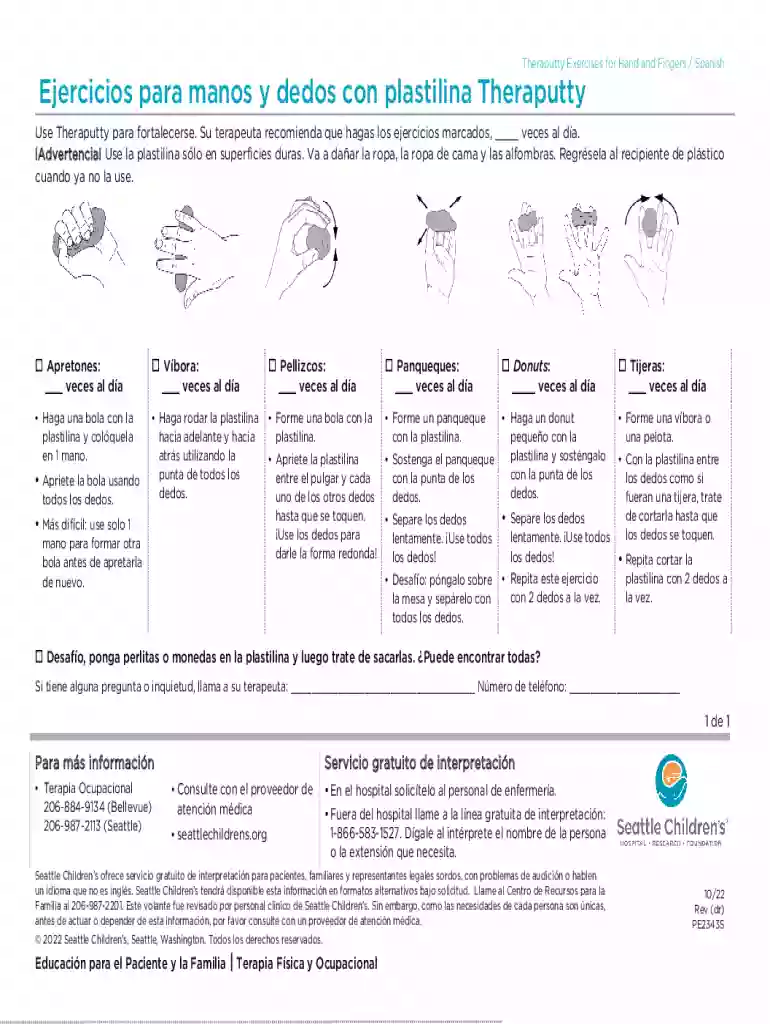
Hand therapy putty exercises are customizable, allowing users to focus on specific muscle groups. Here’s how you can effectively use the putty for exercise:
- Squeeze Exercise: Hold a small amount of putty in your palm and squeeze as hard as possible without causing pain. This strengthens the overall grip.
- Finger Extensions: Place putty between fingers and spread them apart to work on finger strength and flexibility.
- Pinch Grip: Using the thumb and fingers, pinch the putty and hold it for several seconds to increase pinch strength.
- Rolling Techniques: Roll the putty into a snake shape using your fingers and palm to enhance dexterity and coordination.
Safety Considerations
- Surface Use: Perform exercises on non-slippery surfaces to prevent accidental falls or the putty rolling away.
- Duration: Start with short intervals and gradually increase to avoid overexertion, especially after surgery or injury.
Steps to Complete Hand Therapy Putty Exercises
For optimal results, it is crucial to follow a structured routine:
- Warm-Up: Begin with basic finger stretches and movements to prepare muscles.
- Select the Appropriate Putty: Choose resistance based on current strength and avoid using too firm putty initially.
- Perform Targeted Exercises: Follow specific exercise instructions according to therapeutic goals.
- Cool Down: End with gentle hand and wrist massages to relax the muscles.
Frequency and Repetition
- Daily Exercises: Recommended for at least once a day or as prescribed by a therapist.
- Repetitions: Start with 5-10 repetitions per exercise, increasing as strength improves.
Who Typically Uses Hand Therapy Putty
Hand therapy putty is widely used by diverse groups, including:
- Rehabilitation Patients: People recovering from hand injuries or surgeries.
- Individuals with Arthritis: To increase joint flexibility and reduce stiffness.
- Occupational Therapists: Commonly used in clinical settings for therapeutic exercises.
- Musicians and Artists: To maintain dexterity and hand strength for precise movements.
Common Conditions Addressed
- Carpal Tunnel Syndrome: Helps in reducing pain and increasing hand function.
- Stroke Recovery: Supports the rehabilitation of fine motor skills post-stroke.
Important Terms Related to Hand Therapy Putty
Understanding key terminology is essential for effective use:
- Therapeutic Resistance Levels: Various resistance levels indicated by color coding of the putty.
- Fine Motor Skills: The coordination of small muscles in movements requiring precision.
- Grip Strength: The force applied by the hand to pull or suspend objects.
Medical Context
- Occupational Therapy: A form of therapy focused on enabling participation in meaningful daily activities.
- Rehabilitation Protocols: Structured programs designed to restore normal function and movement.
Examples of Using Hand Therapy Putty
Real-world application examples help illustrate the benefits:
Practical Scenarios
- Children with Developmental Delays: Used in pediatric therapy to aid in fine motor skill development.
- Professional Musicians: To maintain and enhance finger dexterity essential for performance.
Legal Considerations for Therapeutic Use
When utilizing hand therapy putty, especially in professional settings, there are legal aspects to consider:
- Professional Supervision: Exercises should be performed under the guidance of a certified therapist for medical cases to ensure safety and effectiveness.
- Non-Compliant Use Warnings: Unauthorized use or improper techniques may lead to injury and complicate existing conditions.
Regulatory Standards
- FDA Guidelines: Compliance may be necessary if the putty is classified as a medical device.
- Professional Ethics: Therapists must adhere to ethical practices when prescribing putty exercises.
By understanding and applying these detailed insights into hand therapy putty exercises, users can achieve optimal therapeutic outcomes and enhance their hand function effectively.