Smartpractice shopcategoryT R U E TEST Ready-to-Use Patch Test Panels - SmartPractice 2026

Get Form
smartpractice shopcategoryT R U E TEST Ready-to-Use Patch Test Panels - SmartPractice Preview on Page 1

Here's how it works

01. Edit your form online
Type text, add images, blackout confidential details, add comments, highlights and more.

02. Sign it in a few clicks
Draw your signature, type it, upload its image, or use your mobile device as a signature pad.

03. Share your form with others
Send it via email, link, or fax. You can also download it, export it or print it out.

Definition and Meaning

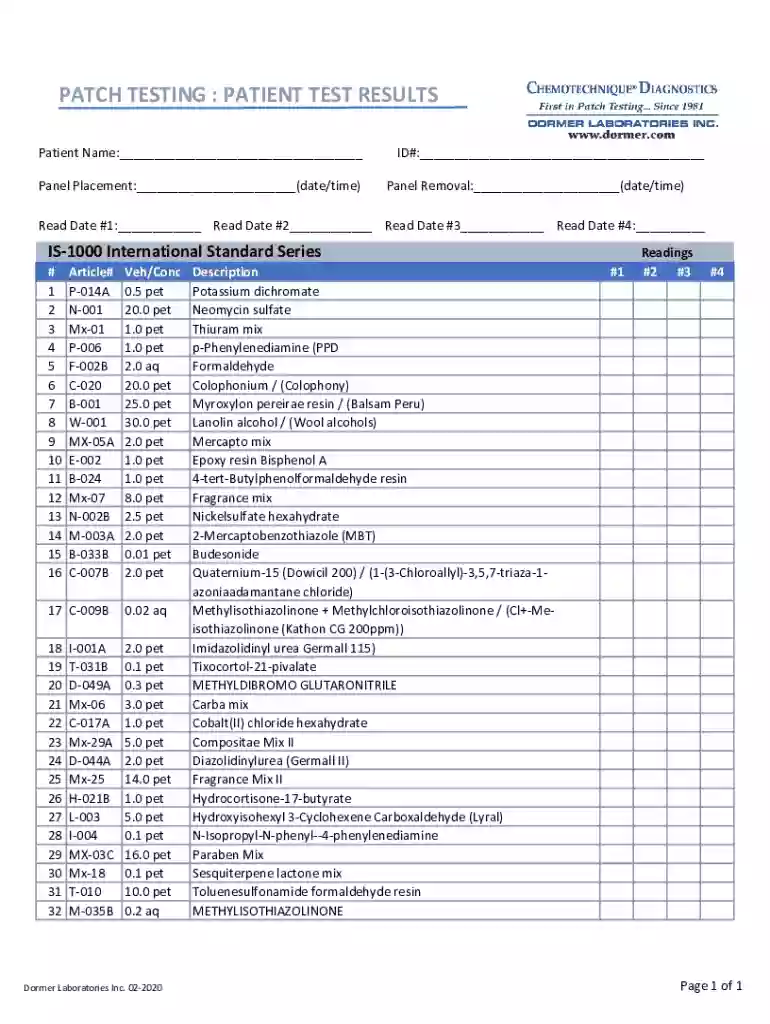
The "smartpractice shopcategoryT R U E TEST Ready-to-Use Patch Test Panels - SmartPractice" refers to a diagnostic tool used to identify allergies or sensitivities to specific substances. While this tool is highly specialized, it serves an essential function in dermatology by allowing healthcare professionals to efficiently test for reactions to various chemicals. The components in the kit are pre-arranged and ready for immediate application, streamlining the testing process.

Key Features

  • Pre-Made Panels: Eliminates preparation time and ensures consistent testing conditions.
  • Comprehensive Substance List: Covers a wide range of potential allergens commonly encountered in various environments, enhancing diagnostic accuracy.
  • Ease of Use: Designed for simplicity, even for clinics with high patient volumes or limited resources.

How to Use the Patch Test Panels

Utilizing the "Ready-to-Use Patch Test Panels" involves specific steps to ensure accurate results. Here is a structured approach to using these panels effectively:

  1. Preparation:

    • Ensure a clean and dry test area on the patient's skin, typically on the back.
    • Confirm that the patient has refrained from using topical steroids and antihistamines for a minimum of 48 hours.
  2. Application:

    • Peel off the required number of panels.
    • Apply each panel firmly onto the skin, ensuring full contact.
  3. Observation Period:

    • Instruct the patient to avoid activities that may cause excessive sweating.
    • The panels remain on the patient for 48 hours.
  4. Reading the Results:

    • After removing the panels, conduct initial readings immediately.
    • Conduct subsequent readings 72 and 96 hours post-application to note delayed reactions.

How to Obtain the Patch Test Panels

Accessing these patch test panels is straightforward for licensed healthcare facilities. Here are key steps and considerations:

Procurement Channels

  • Authorized Distributors: Obtain through official distributors or directly from SmartPractice to ensure authenticity and availability.
  • Online Platforms: Purchase through healthcare-focused online marketplaces with options for bulk buying.

Licensing Requirements

  • Ensure facility licensing aligns with local regulations regarding diagnostic tool usage.
  • Confirm practitioner credentials meet standards for administering dermatological tests.

Steps to Complete the Patch Test

Conducting a patch test using these panels requires attention to detail and procedural accuracy:

  1. Patient Evaluation:

    • Prior to testing, assess patient history for any prior adverse reactions.
  2. Panel Setup:

    • Select appropriate panels according to the substances needed for testing.
  3. Panel Application:

    • Secure panels to avoid detachment.
  4. Post-Application Care:

    • Educate the patient on post-application care, focusing on avoiding moisture to prevent panel loosening.
  5. Result Documentation:

    • Record findings meticulously for future reference and treatment planning.

Who Typically Uses the Patch Test Panels

The primary users of the "Ready-to-Use Patch Test Panels" are healthcare professionals specializing in dermatology and allergy diagnostics. These include:


  • Dermatologists: Use to diagnose contact dermatitis or related allergic conditions.
  • Allergists: Employ panels to determine allergen-specific responses for treatment plans.
  • Clinical Researchers: Utilize panels in studies analyzing allergen prevalence and reaction patterns.
decoration image ratings of Dochub

Important Terms Related to Patch Testing

Understanding key terminology used in patch testing is crucial for accurate communication and documentation:

Terms

  • Allergen: A substance that causes an allergic reaction.
  • Patch Test: A method to test for skin allergies involving direct skin application of potential allergens.
  • Erythema: Redness of the skin, important when interpreting test results.
  • Pruritus: Itching, an indicator of allergic reaction severity.

Legal Use of the Patch Test Panels

Ensuring the lawful administration of patch test panels involves compliance with regulations governing medical diagnostic tools:

Compliance Standards

  • FDA Approval: Confirm the panels carry necessary approvals for use in the United States.
  • Documentation Practices: Maintain accurate records of test administration and results, adhering to HIPAA guidelines for patient confidentiality.

Key Elements of the Patch Test Panels

Several core components make up the patch test panels, each playing a role in their efficient function:

  • Hypoallergenic Adhesives: Minimize skin irritation while ensuring consistent panel adherence.
  • Detailed Substance Index: Facilitates selection of pertinent allergens for individual tests.
  • Durability: Designed to withstand normal daily activities without compromising testing integrity.

Examples of Using the Patch Test Panels

Utilizing these panels can be observed across various real-world scenarios:

  • Clinical Settings: Used regularly in dermatology clinics for patients presenting with contact dermatitis.
  • Academic Research: Employed in studies aimed at identifying prevalent allergens in different populations.
  • Occupational Health: Assists in determining workplace-related skin reactions to substances such as industrial chemicals.
be ready to get more

Complete this form in 5 minutes or less

Get form

Got questions?

We have answers to the most popular questions from our customers. If you can't find an answer to your question, please contact us.
Contact us
The most common side effect of skin testing is slightly swollen, red, itchy bumps, called wheals. These wheals may be most noticeable during the test. In some people, though, an area of swelling, redness and itching may develop a few hours after the test and remain for a couple of days.
A patch test is a type of allergy test for contact dermatitis, a skin reaction that can develop after exposure to an allergen over several days. It can help your healthcare provider determine the cause of rashes, eczema or other skin irritations.
The patches and test area marked with ink must be kept dry throughout the entire test. Do not apply anything to the test area. This includes all soaps, creams, ointments and moisturizers.
Understanding Insurance Coverage for Allergy Tests Skin and IgE tests are generally covered by insurance. Patch tests or oral food challenges may need prior authorization due to their complexity or higher risk. Coverage is often limited to services performed by in-network providers.

Security and compliance

At DocHub, your data security is our priority. We follow HIPAA, SOC2, GDPR, and other standards, so you can work on your documents with confidence.

Learn more
ccpa2
pci-dss
gdpr-compliance
hipaa
soc-compliance