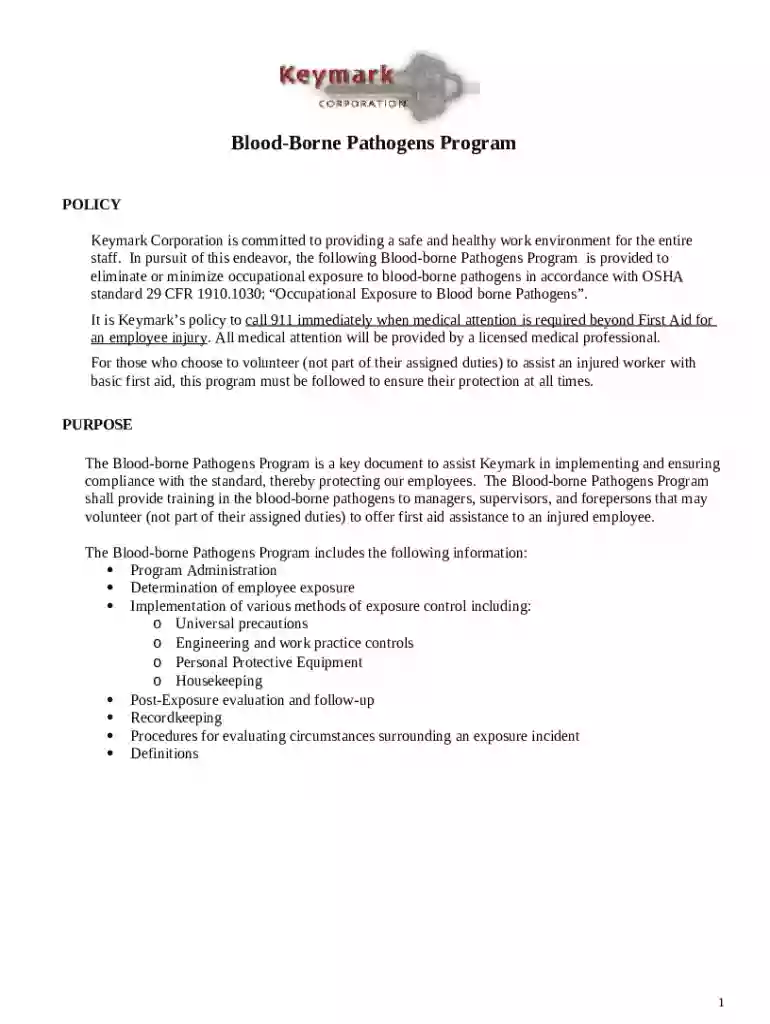
Definition & Meaning
The Bloodborne Pathogen Exposure Control Plan for Facilities is a document designed to provide a systematic approach for organizations to minimize occupational exposure to bloodborne pathogens. It aligns with OSHA standards mandated to safeguard employee health by outlining specific procedures and guidelines. This plan typically includes the implementation of preventative measures, training protocols, and the use of personal protective equipment (PPE).
- Bloodborne Pathogens: Pathogens such as viruses or bacteria that are present in human blood and can cause diseases.
- OSHA Compliance: The plan ensures that organizations adhere to standards established by the Occupational Safety and Health Administration to prevent workplace infections.
- Preventative Measures: Includes practices like using PPE, proper disposal of sharps, and maintaining hygiene standards.
Key Elements of the Bloodborne Pathogen Exposure Control Plan
The Bloodborne Pathogen Exposure Control Plan contains critical components that enable safe work environments.
Hazard Identification and Risk Assessment
- Identify Potential Hazards: Recognize activities and sites where employees may be exposed to bloodborne pathogens.
- Risk Assessment: Evaluate the likelihood and impact of exposure in particular work environments.
Implementation of Universal Precautions
- Universal Precautions: Treat all human blood and certain human body fluids as if they are known to be infectious.
- Techniques such as handwashing, proper glove usage, and safe handling and disposal of needles are emphasized.
Personal Protective Equipment (PPE)
- Involves providing proper PPE like gloves, gowns, masks, and face shields to employees.
- Ensures availability and proper usage to reduce potential exposure.
Training and Education
- Comprehensive Training Programs: Regularly conducted to ensure employees are educated on handling bloodborne pathogens safely.
- Content Coverage: Includes pathogen transmission, handling emergencies, and using protective equipment.
Recordkeeping and Documentation
- Documentation Practices: Meticulous recordkeeping of all training sessions, incidents, and medical evaluations.
- Annual Review: Regular evaluations and updates to the plan based on new regulations or incidents within the workplace.
Steps to Complete the Bloodborne Pathogen Exposure Control Plan
Implementing the Bloodborne Pathogen Exposure Control Plan involves a series of necessary steps to ensure an organization remains compliant and safe.
- Assessment of Current Practices: Conduct a thorough evaluation of existing procedures related to bloodborne pathogen exposure.
- Development of the Plan: Create a detailed plan mapping strategies to minimize exposure, including employee roles and response actions.
- Employee Training: Initiate a comprehensive training program tailored to educate staff on exposure prevention and the use of PPE.
- Integration of Safety Equipment: Ensure availability and use of PPE and other safety tools.
- Monitoring and Evaluation: Regularly monitor the plan’s effectiveness and make necessary updates to procedures.
Legal Use of the Bloodborne Pathogen Exposure Control Plan
Complying with legal guidelines in the establishment and execution of the Bloodborne Pathogen Exposure Control Plan is crucial.
- OSHA Regulations: The implementation of this plan must adhere to OSHA's Bloodborne Pathogens Standard 29 CFR 1910.1030.
- Recordkeeping Requirements: Ensure records of exposure incidents, training sessions, and plan updates are meticulously maintained.
Important Terms Related to Bloodborne Pathogen Exposure Control Plan
Understanding specific terminology associated with bloodborne pathogen exposure is essential.
- Hepatitis B Virus (HBV) and Human Immunodeficiency Virus (HIV): Common bloodborne pathogens that pose significant health risks.
- Engineering Controls: Physical changes to the workplace that isolate or remove the bloodborne pathogen hazard from the workplace.
- Work Practice Controls: Behavioral guidelines to reduce or eliminate exposure risks, such as proper handwashing techniques.
Examples of Using the Bloodborne Pathogen Exposure Control Plan
Practical applications of the Bloodborne Pathogen Exposure Control Plan demonstrate its importance in real-world scenarios.
- Hospitals: Reduction in occupational exposure incidents by enforcing strict adherence to universal precautions and regular training.
- Schools: Implementing the plan in school nursing stations to manage accidental needle sticks or blood spills.
- Manufacturing Plants: Adoption of PPE and exposure control protocols for first aid responders handling workplace injuries.
State-Specific Rules for the Bloodborne Pathogen Exposure Control Plan
It's important to recognize variations in regulations and enforcement across different states.
- Some states have additional requirements and enforcement authorities, such as the California Occupational Safety and Health Administration (CalOSHA), which may have more stringent standards.
- Organizations must ensure they are compliant with both federal OSHA standards and any additional state-mandated regulations.