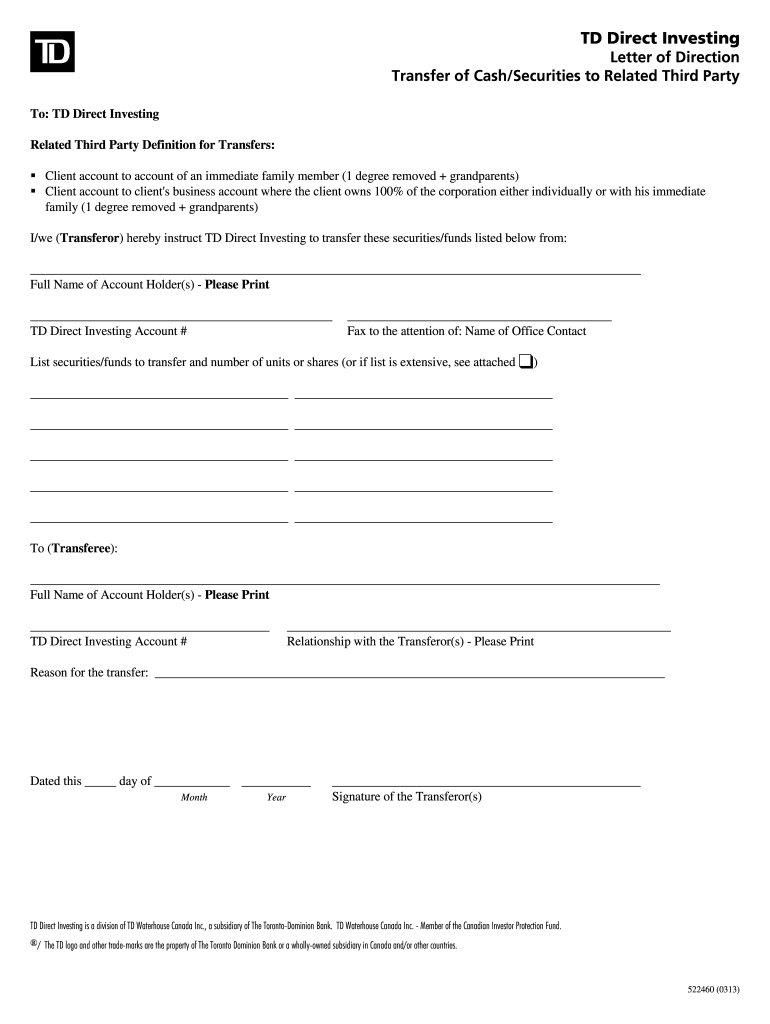







Definition and Meaning of the TD Letter of Direction
A TD Letter of Direction is a formal document that facilitates the transfer of cash or securities from a TD Direct Investing account to a designated third party. This third party is typically defined as immediate family members or business accounts owned entirely by the account holder. The document serves as a clear instruction from the account holder, detailing the specifics of the transfer, including amounts and recipient information.
Generally, this type of letter is essential for ensuring that the transfer process is legally recognized and compliant with financial regulations. A properly filled and signed TD Letter of Direction ensures that the recipient can access the transferred funds or securities without complications.
Key Components of the TD Letter of Direction
-
Account Holder Information: This section requires the complete details of the account holder, including name, account number, and contact information.
-
Transfer Details: Clearly defines the cash or securities amount being transferred, as well as the recipient's details, ensuring that the funds are directed accurately.
-
Signatures: The account holder's signature is mandatory, indicating consent for the transaction, and it may require a signature from the recipient in certain cases.
Steps to Complete the TD Letter of Direction
Completing a TD Letter of Direction involves several straightforward steps. By following these steps, you can ensure that the document meets all necessary requirements for processing.
-
Gather Required Information: Collect all essential details such as account number, recipient name, and the specific amount to be transferred.
-
Fill Out the Document:
- Start by entering your information as the account holder.
- Include the details of the transaction under the transfer section, ensuring clarity on what is being transferred and to whom.
-
Review for Accuracy: Ensure all entered information is correct. Double-check the account number, amounts, and recipient information to avoid unnecessary delays.
-
Sign the Document: As the account holder, sign the letter to confirm that you authorize the transaction. If applicable, obtain the signature from the recipient.
-
Submit the Letter: Send the completed TD Letter of Direction to the appropriate department at TD Direct Investing, following the specified submission method (which may include mailing, faxing, or submitting online).
Legal Use of the TD Letter of Direction
The TD Letter of Direction is legally recognized, serving as a binding document that authorizes the transfer of funds or securities.
Compliance with Financial Regulations
-
ESIGN Act Compliance: The letter must be compliant with the Electronic Signatures in Global and National Commerce Act, ensuring that electronic signatures are valid and enforceable.
-
Verification Requirements: Institutions may require additional verification, such as identity confirmation, to prevent fraudulent transactions.
Assurance of Transfer Accuracy
Legally, the TD Letter of Direction protects all parties involved by documenting the intent of the transfer. This documentation can safeguard against disputes regarding the transaction and provides a record that can be referenced if questions arise in the future.
Important Terms Related to the TD Letter of Direction
Understanding specific terms related to the TD Letter of Direction can provide clarity on its use and legal implications.
- Transferor: The account holder initiating the transfer.
- Transferee: The individual or entity receiving the transferred funds or securities.
- Fillable Fields: Sections within the document where information is to be entered, such as recipient's name and amount.
These terms accurately describe the roles in the transfer process and ensure that all parties have a clear understanding of their responsibilities.
Who Typically Uses the TD Letter of Direction
The TD Letter of Direction is utilized by a variety of individuals and entities engaged in financial transactions or investment activities.


Common Users Include:
- Individual Investors: Those managing personal investments or transferring assets to family members.
- Business Owners: Owners of sole proprietorships or partnerships that may need to transfer funds for operational reasons or to other business accounts.
- Estate Executors: Individuals managing estates may use the letter to transfer funds to beneficiaries as part of asset distribution.
This diverse user base underlines the document's relevance across various financial contexts.