
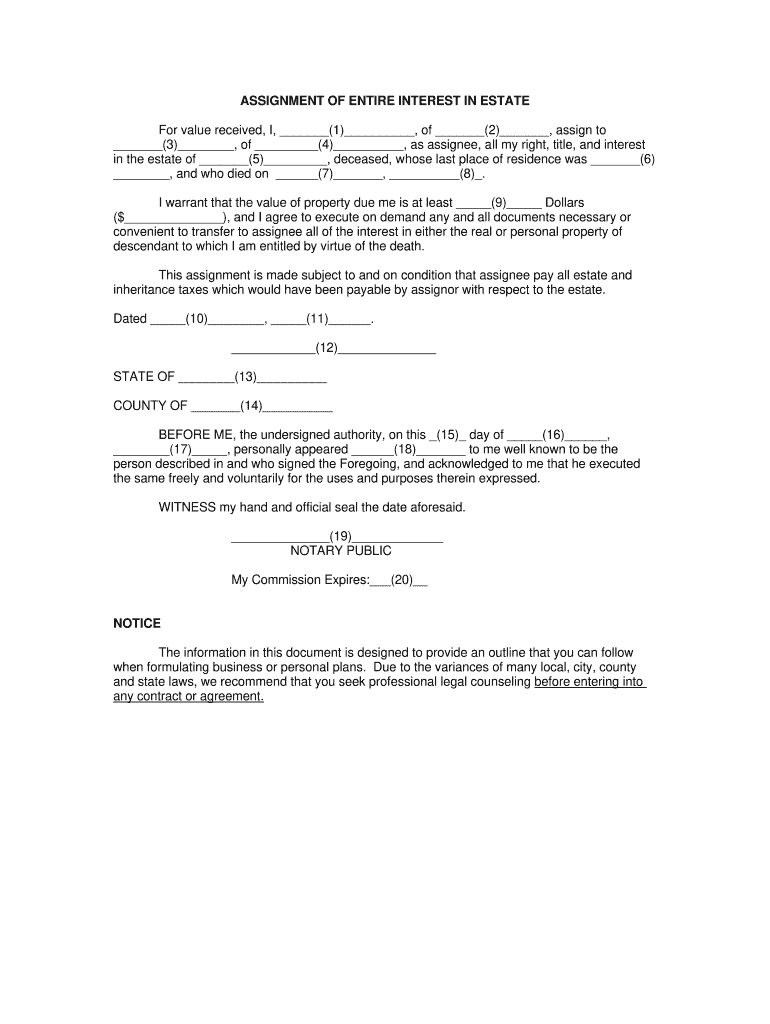







Definition and Meaning of the Assignment of Interest in Estate Form
The assignment of interest in estate form is a legal document used to transfer a beneficiary's rights to an asset or income from a deceased person's estate to another party. This transfer can include various assets, such as real estate, bank accounts, and personal property. The assignor (the person transferring the interest) must clearly outline their relationship to the deceased and provide their and the assignee’s (the person receiving the interest) relevant personal information. Using this form helps ensure that the transfer of interest complies with applicable laws and regulations while protecting the rights of all parties involved.
Key components of the assignment of interest form include:
- Assignor Information: Full name, address, and relationship to the deceased.
- Assignee Information: Full name and address of the person receiving the interest.
- Estate Details: Information related to the deceased estate, including the name and date of death.
- Conditions and Restrictions: Any applicable conditions, such as estate tax responsibilities and other legal obligations.
Steps to Complete the Assignment of Interest in Estate Form
Completing the assignment of interest in estate form involves a few critical steps to ensure accuracy and compliance with legal standards. Below is a detailed breakdown of the process:
- Obtain the Form: Access a professionally designed template for the assignment of interest in estate form, ensuring it meets your state's requirements.
- Fill in Assignor and Assignee Details:
- Enter the name, address, and relationship to the deceased for the assignor.
- Provide the assignee's name and address, ensuring correct information to avoid future disputes.
- Provide Estate Information:
- Include the deceased person's full name and date of death.
- Clearly describe the specific interest being assigned—whether it's a particular asset or income derived from the estate.
- Include Legal Conditions:
- State any specific conditions or restrictions associated with the assignment, such as tax obligations.
- Sign and Notarize:
- The assignor must sign the form, often requiring notarization to validate the document legally.
- Distribute Copies:
- After signing, provide copies of the completed form to all involved parties, including the assignee and estate executor.
Legal Use of the Assignment of Interest Form
The assignment of interest in estate form is legally binding once completed correctly. It ensures that the assigned rights are transferred according to the laws governing estates and property transfers. Understanding the legal implications is crucial for anyone involved in such transactions.
- Compliance with State Laws: Each state has specific laws governing inheritance and property rights. The form must adhere to these regulations to be enforceable.
- Tax Responsibilities: Both the assignor and assignee may face tax implications when transferring interests. The form should specify how these responsibilities are handled.
- Validity and Challenge: If not properly executed, the assignment could be challenged in court, possibly jeopardizing the interests of both parties.
Important Elements Related to the Assignment of Interest in Estate
Several key elements must be accurately included in the assignment of interest in estate form to ensure its validity and effectiveness:
- Description of Interest: Clearly delineating the interest being assigned is vital. For example, specifying whether the interest is in real estate, bank accounts, or personal property helps avoid ambiguity.
- Consideration Clause: Some forms include a section that outlines whether there is any consideration (payment or equivalent value) exchanged for the transfer of interest. This can be necessary for legal compliance.
- Revocation of Previous Assignments: If applicable, the form may include a statement revoking any prior assignments related to the same interest.
- Signatures: Both the assignor and any required witnesses must sign. Some jurisdictions may require additional signatures for certain types of assets.
Examples of Using the Assignment of Interest in Estate Form
Understanding practical scenarios can aid beneficiaries in recognizing when and how to use the assignment of interest in estate form effectively:
- Transferring Real Estate: A beneficiary may decide to assign their interest in a family home to a sibling to facilitate a sale. The assignment form will detail the property, specify the share being transferred, and include necessary legal language.
- Business Interests: If the deceased owned a portion of a business, the surviving family members could assign their interest in that business to a partner or another family member using the form to ensure all parties are appropriately informed and involved in the process.
- Income from Trusts: In cases where the estate involves a trust generating income, the beneficiary may use this form to assign their future rights to income from that trust to another party, perhaps as part of a financial arrangement.
Additional Considerations for the Assignment of Interest in Estate Form
In addition to the requirements and processes associated with this form, several considerations should be taken into account:
- Notarization Requirements: This form often requires notarization to be valid. It is essential to verify whether state laws mandate witnessing to ensure compliance.
- Impact on Estate Administration: Assigning interests may have implications for current estate administration and distribution. Beneficiaries should consult with an estate attorney to understand the full ramifications.
- Record-Keeping: Maintaining records of the assignment form and associated communications is crucial for future reference and to address any potential disputes.
By understanding the functions and requirements associated with the assignment of interest in estate form, beneficiaries can navigate the complexities of inheritance and estate management more effectively. Numerous legal nuances are involved, making it advisable to seek professional assistance when necessary.




