
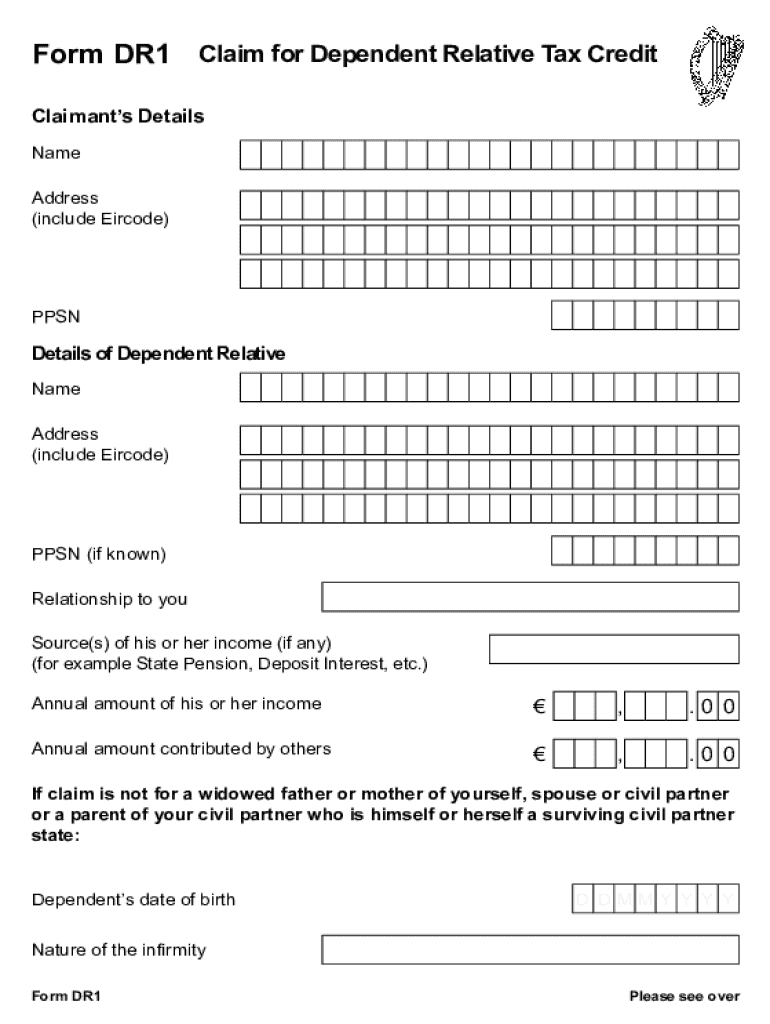







Definition & Meaning
The Claim for Dependent Relative Tax Credit is a form that allows taxpayers to claim a tax credit for financially supporting a dependent relative. In the context of U.S. taxation, this is often relevant for individuals who provide support for qualifying relatives such as elderly parents or disabled family members. This credit can reduce the taxpayer’s overall tax liability, providing financial relief and recognizing the taxpayer’s contribution to dependents' well-being.
How to Use the Claim for Dependent Relative Tax Credit
To utilize the Dependent Relative Tax Credit, taxpayers must first determine if their relative qualifies as a dependent under IRS rules. This involves evaluating factors like the relative’s income, the amount of support provided by the taxpayer, and the relationship to the taxpayer. Once eligibility is confirmed, taxpayers can complete the form by entering necessary information such as their social security number, the dependent’s details, and the amount of the credit they are claiming. Following completion, this form should be included with the taxpayer’s annual tax return.
Steps to Complete the Claim for Dependent Relative Tax Credit
- Gather Information: Collect personal details of the dependent, including their social security number, income details, and proof of relationship.
- Verify Eligibility: Ensure that the dependent meets IRS criteria, such as having an income below a certain threshold and receiving more than half of their financial support from the taxpayer.
- Fill Out the Form: Enter all required information accurately on the Claim for Dependent Relative Tax Credit form. Make sure to cross-check numbers to avoid discrepancies.
- Attach Supporting Documents: Include any required documentation that verifies the information provided, such as income statements or proof of relationship.
- Submit with Tax Return: File the completed form alongside your federal tax return, whether submitting electronically or by mail.
Eligibility Criteria
Eligible taxpayers for Claiming the Dependent Relative Tax Credit primarily include those who provide significant financial support to a qualifying dependent. Specific criteria might involve:
- Relationship: The dependent must be a relative, such as a parent, grandparent, uncle, or sibling.
- Residency: The dependent usually needs to be a U.S. resident or qualifying non-resident alien.
- Support Level: The taxpayer must provide more than half of the dependent’s financial support.
- Income Threshold: The dependent’s income must fall below a specified limit set annually by the IRS.


Filing Deadlines / Important Dates
Filing deadlines for the Claim for Dependent Relative Tax Credit align with general tax filing deadlines in the United States. Taxpayers must submit their claim by April 15th, the traditional federal tax filing deadline, unless an extension has been granted. It’s essential for taxpayers to monitor IRS announcements for any changes to these dates due to external circumstances, like natural disasters or federal decisions.
Required Documents
To substantiate the claim, taxpayers generally need to produce:
- Proof of Income: Pay stubs or other income statements for the dependent.
- Proof of Support: Documentation showing financial support provided to the dependent.
- Identification Documents: Social security cards or equivalent identification for both the taxpayer and the dependent.
- Proof of Relationship: Birth certificates, court documents, or other legal papers verifying the relationship between the taxpayer and the dependent.
State-Specific Rules for the Claim
Different states may have additional rules or credits similar to the federal Dependent Relative Tax Credit. Taxpayers should check their state’s Department of Revenue website to understand any specific state provisions, deadlines, or additional credits available. Some states might offer similar credits with distinct eligibility requirements, which are designed to provide financial relief for taxpayers supporting a dependent relative.
Examples of Using the Claim for Dependent Relative Tax Credit
Taxpayers often use this credit in scenarios such as:
- Elderly Parents: Claim a tax credit while supporting elderly parents with low or no income.
- Disabled Family Members: Relief for taxpayers supporting adult children or siblings with disabilities.
- Extended Family: Assisting low-income relatives who rely on the taxpayer for essential financial support.
These examples illustrate the practical application of the credit and its potential to lessen the financial burden on supportive taxpayers.




