




01. Edit your rbt inactive status online
Type text, add images, blackout confidential details, add comments, highlights and more.

Type text, add images, blackout confidential details, add comments, highlights and more.

Draw your signature, type it, upload its image, or use your mobile device as a signature pad.

Send rbt inactive to active via email, link, or fax. You can also download it, export it or print it out.
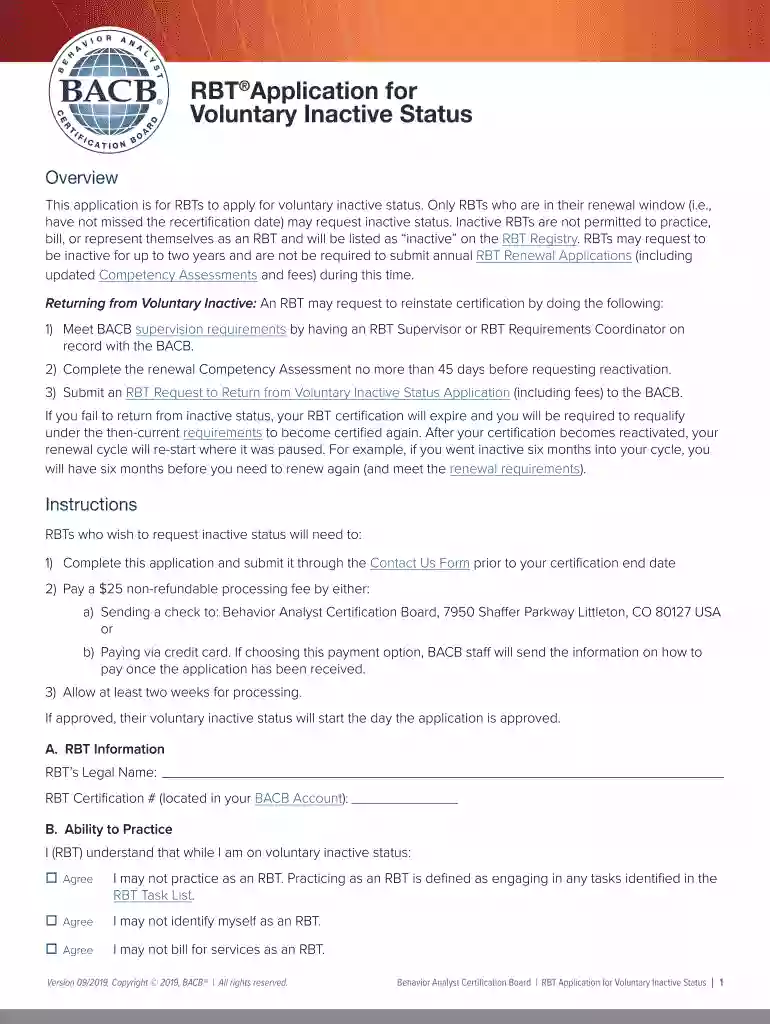
The term "RBT voluntary inactive status" refers to a specific designation granted to Registered Behavior Technicians who choose not to maintain their active certification temporarily. This status is particularly beneficial for those who cannot fulfill the continuing education requirements or wish to take a professional break for personal reasons. During this period, RBTs cannot engage in professional activities or present themselves as active RBTs. Instead, they are listed publicly as 'inactive' on the RBT Registry. This option is only available during the renewal window, aligning with certification expiration dates, and requires an application process to transition back to active status.
Utilizing the RBT voluntary inactive status involves understanding its strategic importance. Primarily, it serves as a safeguard for professionals who anticipate interruptions in their work due to personal or professional reasons, preventing the complete lapse of their credential. RBTs might consider invoking this status when they foresee temporary inability to meet practice or supervision requirements, ensuring that they maintain a semblance of professional continuity. To effectively use this status, candidates should align their transition with their certification renewal cycle and adhere to any application procedures stipulated by the Behavior Analyst Certification Board (BACB).
Securing the RBT voluntary inactive status involves submitting a formal application to the BACB within the stipulated renewal period. The process requires paying a $25 processing fee and completing an online application. RBTs must ensure that their request is processed before the certification end date. Any delays can lead to lapses, affecting their standing. Documentation typically includes proof of certification and reasons for seeking inactive status. Following approval, RBTs are officially recognized as inactive on the RBT Registry until they choose to resume active status in compliance with BACB guidelines.
Prepare Documentation:
Submit Application:
Wait for Approval:
Confirmation:
Planning for Reactivation:
RBT voluntary inactive status offers a strategic pause for those unsure about their immediate career path or those needing time for personal commitments without the pressure of imminent certification lapses. This status allows professionals to maintain their association with the field potentially easing their transition back into active practice. It is particularly useful for those on long-term leaves, such as parental or medical absences, or when relocating to regions where they cannot immediately practice. By choosing an inactive status, RBTs preserve the option of reintegrating smoothly when ready.
For legal compliance, RBTs opting for inactive status must refrain from practicing, billing, or representing themselves as active professionals. The legal implications of misrepresentation include potential disciplinary action from the BACB and erroneous insurance or billing practices. It's crucial that RBTs clearly communicate their inactive status to potential clients and employers during this period. Failure to adhere to these guidelines can result in severe ramifications, including the loss of future certification opportunities. Legal awareness and adherence to BACB policies ensure ethical and professional integrity.
The voluntary inactive status is only available to RBTs in good standing with the BACB who are approaching their certification renewal window. Candidates must demonstrate compliance with all current certification requirements up to the point of applying for inactive status. This ensures they are not seeking inactivity to evade unmet obligations, such as supervision or competencies. Individuals seeking this status should be prepared to substantiate their eligibility should the BACB require further documentation or clarification throughout the application process.


We've got more versions of the rbt inactive status form. Select the right rbt inactive status version from the list and start editing it straight away!
At DocHub, your data security is our priority. We follow HIPAA, SOC2, GDPR, and other standards, so you can work on your documents with confidence.
The Inactive to Active application is for licenses that are currently in a Current Inactive status. contact the Board at 804-367-4600, Option 2 for an
If you wish to request voluntary inactive status, you must complete the BCBA Application for Voluntary Inactive Status and pay a one-time, inactive-request fee


