
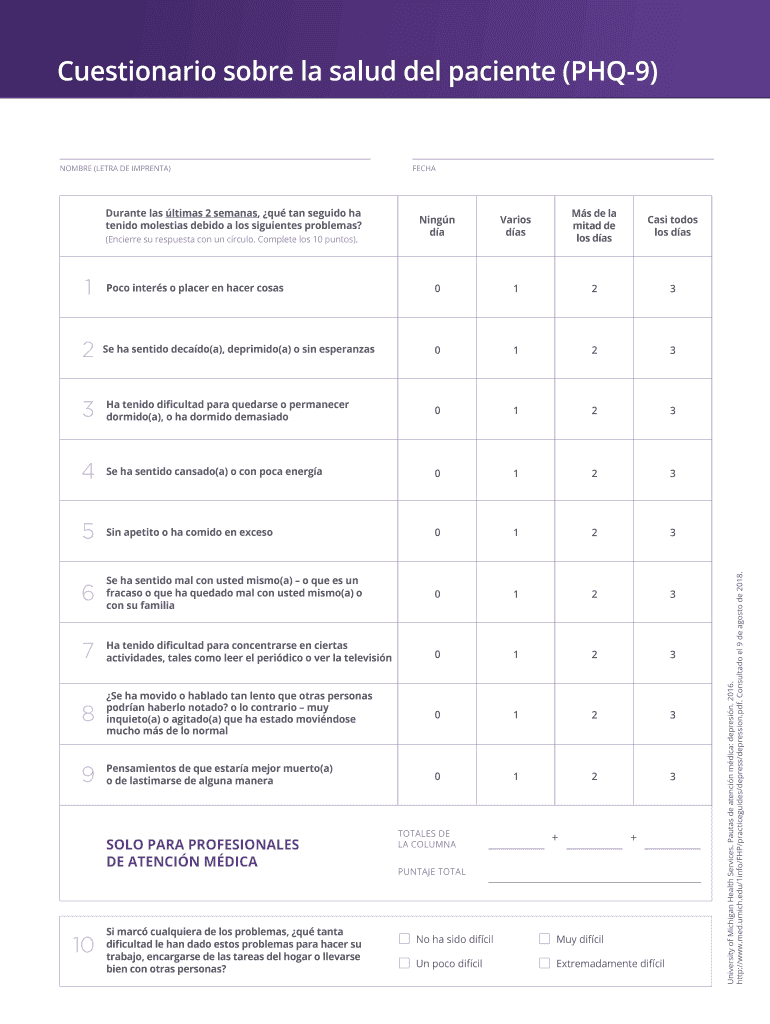







Definition and Importance of the Cuestionario sobre la salud del paciente (PHQ-9 - KnowPPD)
The Cuestionario sobre la salud del paciente (PHQ-9) is a specific screening tool used to evaluate symptoms of depression, particularly relevant in contexts such as post-partum depression. It consists of nine questions that inquire about the emotional and functional status of the individual over the past two weeks. Each question is focused on identifying various symptoms of depression and determining their severity, which aids healthcare professionals in diagnosing and treating mental health conditions.
Utilizing the PHQ-9 is significant because it allows for early detection of depression, leading to prompt intervention. Early diagnosis can greatly enhance the quality of care offered to patients, decreasing the risk of deterioration of mental health conditions and improving overall wellbeing. Furthermore, the PHQ-9 can be easily incorporated into clinical practice with minimal training, thus making it accessible for various healthcare professionals.
A crucial aspect of the PHQ-9 is its capacity to support healthcare systems in complying with mental health screening guidelines. Regular use of such diagnostic tools aligns with best practices recommended by organizations such as the American Psychiatric Association, which emphasizes the necessity of routine mental health evaluations.
How to Use the Cuestionario sobre la salud del paciente (PHQ-9 - KnowPPD)
The process of utilizing the Cuestionario sobre la salud del paciente (PHQ-9) is straightforward, promoting efficient implementation in clinical settings.
-
Administration: The questionnaire can be administered during patient visits, whether in-person or via telehealth platforms. Patients can complete the form independently or with assistance from healthcare staff, allowing flexibility in how information is gathered.
-
Scoring: After completion, each question is rated on a scale from zero to three, with a total possible score ranging from zero to twenty-seven. Higher scores indicate greater severity of depressive symptoms. Detailed instructions for scoring are often included with the questionnaire.
-
Interpreting Results: Based on the total score, healthcare professionals can categorize the severity of depression:
- 0 to 4: Minimal depression
- 5 to 9: Mild depression
- 10 to 14: Moderate depression
- 15 to 19: Moderately severe depression
- 20 to 27: Severe depression Understanding these categories helps in formulating an appropriate treatment plan tailored to the individual’s needs.
-
Follow-up: Regular administration of the PHQ-9 is essential for monitoring changes over time, allowing healthcare providers to adjust treatment strategies as necessary.
Steps to Complete the Cuestionario sobre la salud del paciente (PHQ-9 - KnowPPD)
Completing the Cuestionario sobre la salud del paciente (PHQ-9) entails a series of clear steps that ensure accurate self-reporting and effective assessment of mental health status.
-
Read the Instructions: Familiarize yourself with any introductory details that clarify the purpose of the questionnaire and how to approach answering the questions.
-
Consider the Time Frame: Respond to the questions based on your experiences over the last two weeks, ensuring that your answers reflect your recent emotional and physical state.
-
Respond to Each Item: Carefully read each question and select your responses based on the predefined scales. Take your time to reflect on how you've felt in relation to each symptom mentioned, ranging from 'not at all' to 'nearly every day'.
-
Review Your Answers: Once you have completed the questionnaire, double-check your responses for accuracy. This is essential as the reliability of the scores hinges on honest and thoughtful input.
-
Submit the Questionnaire: Depending on the administrative process in place, submit your completed questionnaire to your healthcare provider or through the designated electronic platform.
Important Terms Related to the Cuestionario sobre la salud del paciente (PHQ-9 - KnowPPD)
Understanding the terminology associated with the Cuestionario sobre la salud del paciente (PHQ-9) is vital for effective communication and comprehension within the mental health sphere.
-
Depression: A frequent mood disorder characterized by persistent feelings of sadness, hopelessness, and loss of interest in activities.
-
Screening Tool: An assessment instrument designed to identify individuals who may have particular health conditions or symptoms, providing critical insight for healthcare professionals.
-
Severity Score: The numerical value derived from the responses to the PHQ-9, used to categorize depression levels, aiding in treatment decisions.
-
Post-Partum Depression (PPD): A type of depression occurring after childbirth that can affect mothers and their families, necessitating thorough screening tools like the PHQ-9 for early detection and intervention.
-
Mental Health Provider: A qualified professional, including psychologists and psychiatrists, who specializes in addressing mental health disorders and providing necessary treatment.
Legal Use of the Cuestionario sobre la salud del paciente (PHQ-9 - KnowPPD)
The Cuestionario sobre la salud del paciente (PHQ-9) is not only a clinical tool but also carries legal implications in healthcare settings, particularly concerning patient rights and confidentiality.
-
HIPAA Compliance: Healthcare providers must adhere to the Health Insurance Portability and Accountability Act regulations when administering the PHQ-9, ensuring patient data remains confidential and secure.
-
Informed Consent: Patients should be informed about the purpose of the PHQ-9, how their data will be used, and their rights to privacy. This transparency builds trust and encourages honest participation.
-
Documentation: Proper documentation of PHQ-9 results is essential for maintaining accurate medical records, supporting treatment plans, and providing evidence of care when needed for legal or insurance purposes.
-
Liability Considerations: Healthcare providers are liable for misdiagnosis if they fail to utilize screening tools like the PHQ-9 appropriately. Ensuring routine use can mitigate risks associated with inadequate mental health assessments.
-
Regulatory Standards: Compliance with state and federal regulations related to mental health screenings underscores the importance of using standardized tools like the PHQ-9 in clinical practice.




