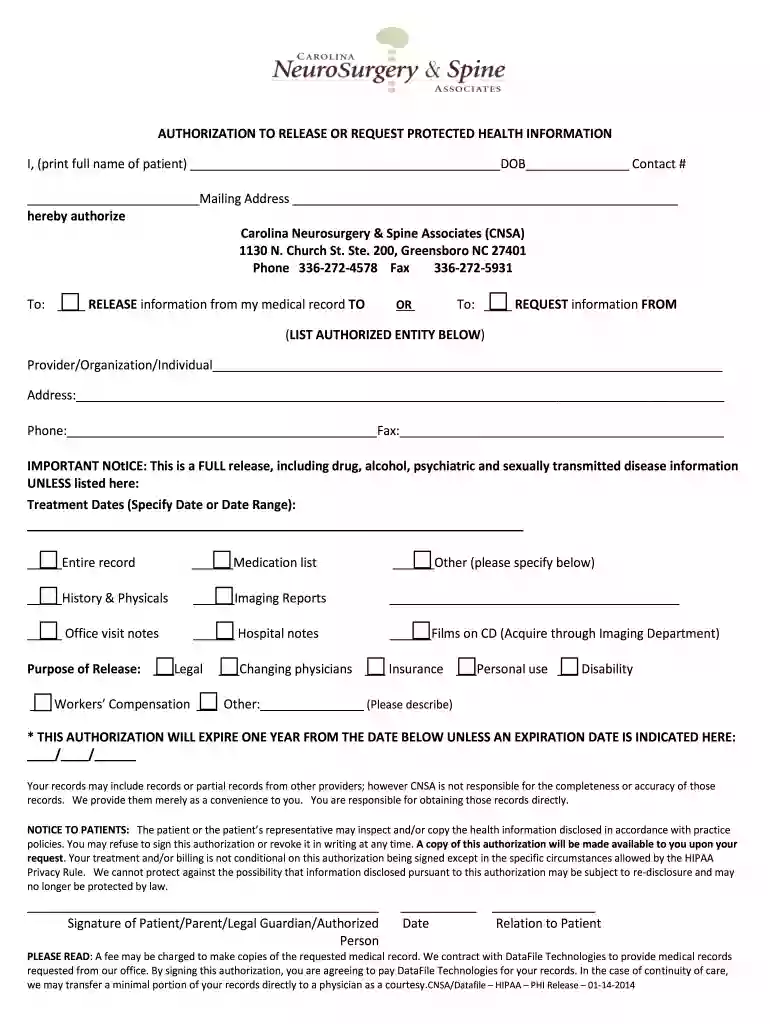
AUTHORIZATION TO RELEASE OR REQUEST PROTECTED HEALTH INFORMATION 2026

Get Form
AUTHORIZATION TO RELEASE OR REQUEST PROTECTED HEALTH INFORMATION Preview on Page 1

Here's how it works

01. Edit your form online
Type text, add images, blackout confidential details, add comments, highlights and more.

02. Sign it in a few clicks
Draw your signature, type it, upload its image, or use your mobile device as a signature pad.

03. Share your form with others
Send it via email, link, or fax. You can also download it, export it or print it out.

Definition and Meaning of the Authorization Form

The "Authorization to Release or Request Protected Health Information" form serves as a legal instrument that allows patients to authorize healthcare providers to release or request their protected health information (PHI). This form is crucial in ensuring compliance with the Health Insurance Portability and Accountability Act (HIPAA) and provides a secure method for managing sensitive medical data.

This authorization form clearly delineates the patient's consent, specifying what information is to be shared, the purpose of the release, and any applicable timeframe. It helps safeguard patient privacy by formalizing the process and ensuring that only authorized entities can access specific health records.

How to Use the Authorization Form

Using the authorization form involves a thorough understanding of its sections and requirements. Patients or their authorized representatives must fill in detailed personal information and clearly articulate the specific records they authorize to be released or requested. This includes identifying the healthcare provider or entity that will be handling the information.

Patients should specify the purpose of the release, be it for continued medical care, legal matters, or insurance claims. Once completed, the form should be submitted to the healthcare provider or institution for processing. It is vital to ensure all required fields are completed to avoid delays in processing.

Steps to Complete the Authorization Form

  1. Personal Information: Fill in your full name, date of birth, and contact details. Ensure accuracy to prevent any data mismatch.
  2. Designation of Entity: Specify the healthcare provider or organization from which the information is to be requested or released.
  3. Description of Information: Clearly detail the type of PHI subject to release. This can include medical history, treatment records, or specific test results.
  4. Purpose of Release: Articulate the reason for the information request or release, whether for personal use, treatment continuation, legal processes, or insurance purposes.
  5. Timeframe: Define a specific period for which the authorization is valid. Some organizations may have restrictions on indefinite authorizations.
  6. Signature and Date: Sign and date the form. If a representative is signing on behalf of the patient, documentation of legal authority may be required.

Who Typically Uses the Authorization Form

Various stakeholders rely on the "Authorization to Release or Request Protected Health Information," primarily including:

  • Patients: To manage their health records and facilitate various personal matters.
  • Healthcare Providers: To transfer information to other medical professionals or institutions for continued patient care.
  • Legal Representatives: In legal proceedings requiring validated medical records.
  • Insurance Companies: To verify claims and coverage details.

This form is critical across various sectors that interact with healthcare data, ensuring compliance and security.


decoration image ratings of Dochub

Key Elements of the Authorization Form

The form comprises several essential components, including:

  • Personal Details: Clearly identifying the patient and other involved parties.
  • Scope of Permission: Outlining exactly what information can be shared.
  • Purpose and Use: Detailing why the PHI is being requested or shared.
  • Expiration: Understanding any expiration or revocation terms tied to the authorization.

Comprehending these elements ensures that the authorization is correctly understood and implemented.

Legal Use of the Authorization Form

Legally, the form complies with HIPAA regulations, ensuring that the patient's PHI is protected and shared with consent. It prevents unauthorized access to sensitive information and specifies the boundaries within which this information can be used.

Understanding the legal ramifications and applications of this form is vital for ensuring compliance with federal and state laws. Non-compliance can lead to penalties and compromise patient confidentiality.

Important Terms Related to the Authorization Form

Familiarize yourself with several key terms to navigate the authorization form effectively:

  • PHI (Protected Health Information): Refers to any medical data that can be connected to an individual.
  • HIPAA: The federal law that mandates privacy and security protections for health information.
  • Consent: The patient’s formal permission to release or request their health information.

Knowledge of these terms enhances comprehension and execution of the authorization process.

How to Obtain the Authorization Form

The authorization form can be obtained through:

  • Healthcare Provider's Office: Directly from the medical institution you are associated with.
  • Official Websites: Many health organizations provide downloadable versions online.
  • Patient Portals: Accessible through online healthcare management systems for registered patients.

Ensure the form you acquire is the correct and most updated version to avoid processing delays.

Examples of Using the Authorization Form

Consider the following scenarios to illustrate the application of the authorization form:

  • Continuing Care: A patient moves to a new city and needs their medical history transferred to a new primary care provider.
  • Legal Proceedings: An individual is involved in a lawsuit where their past medical treatments are pertinent evidence.
  • Insurance Verification: An insurance provider requests specific medical records to process a coverage claim.

Each case demonstrates the form's utility in securely managing and sharing sensitive medical information.

be ready to get more

Complete this form in 5 minutes or less

Get form

Got questions?

We have answers to the most popular questions from our customers. If you can't find an answer to your question, please contact us.
Contact us
Begin by specifying your name, the entity authorized to disclose information, and the individuals or entities you authorize to receive it. Indicate the specific information and purpose for which it will be disclosed, add an expiration date or event, and sign and date the form to confirm your consent.
A HIPAA release form is necessary whenever PHI is used or disclosed for a purpose not specifically required or permitted by the Privacy Rule.
If you do not have sufficient information to make an informed decision, you should always decline a HIPAA authorization request. The HIPAA Privacy Rule stipulates that Protected Health Information (PHI) can only be used or disclosed by covered entities and business associates for required or permitted purposes.
I hereby authorize use or disclosure of protected health information about me as described below. 4. ​ I understand that the information used or disclosed may be subject to re-disclosure by the person or class of persons or facility receiving it, and would then no longer be protected by federal privacy regulations.
I, the undersigned, authorize the release of, or request access to the information specified below from the medical record(s) of the above name patient. I understand that my records are confidential and cannot be disclosed without my written authorization, except when otherwise permitted by law.

Security and compliance

At DocHub, your data security is our priority. We follow HIPAA, SOC2, GDPR, and other standards, so you can work on your documents with confidence.

Learn more
ccpa2
pci-dss
gdpr-compliance
hipaa
soc-compliance
be ready to get more

Complete this form in 5 minutes or less

Get form

People also ask

How do I write a simple letter of authorization? Start with your name and contact information at the top. Include the current date. Write the recipients name and contact information. Clearly state your name and that youre writing to grant authorization to another individual or organization.

Related links