




01. Edit your dump receipt online
Type text, add images, blackout confidential details, add comments, highlights and more.

Type text, add images, blackout confidential details, add comments, highlights and more.

Draw your signature, type it, upload its image, or use your mobile device as a signature pad.

Send dump receipt template via email, link, or fax. You can also download it, export it or print it out.
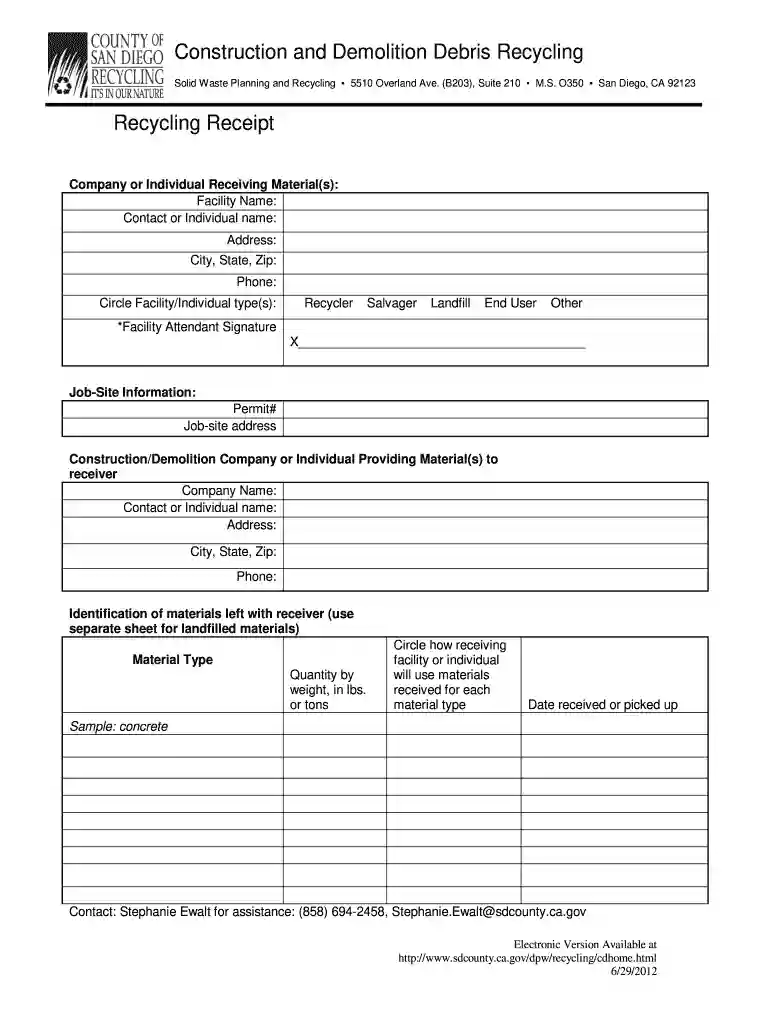
A dump receipt template is a standardized document used to formally record the disposal of waste or materials at a landfill or waste management facility. This template serves as proof of disposal for various types of waste, including construction debris, recyclables, and general refuse. Typically issued by landfill operators, the dump receipt provides essential details, such as the type and weight of the dumped materials, the date of disposal, and the individual or company responsible for the disposal. Proper documentation through a dump receipt is crucial for regulatory compliance and can be vital for businesses needing to track waste management for environmental or financial reasons.
This template usually includes specific fields designated for:
Maintaining accurate records with a dump receipt template helps businesses comply with local regulations and manage waste efficiently.
Understanding the key elements of a dump receipt template is essential for effective waste disposal documentation. Each component serves a specific purpose and contributes to the overall clarity and legality of the disposal process.
Header Information: The template typically begins with the title "Dump Receipt" clearly displayed at the top. This header may also include the logo and name of the landfill or waste management facility.
Receipt Number: Each dump receipt should have a unique identification number to track transactions systematically. This is essential for record-keeping and helps in referencing specific disposals in case of audits.
Customer Details: This section includes:
Details of Waste: This part should clearly specify:
Date of Disposal: Recording the date provides a timeline for when waste was disposed of, which can be relevant for adherence to local and state regulations.
Signature Section: This area is intended for the landfill operator’s or personnel’s signature, confirming the receipt of dumped materials.
Regulatory Compliance Notices: There may also be disclaimers or notes regarding environmental laws associated with waste disposal, reminding users of their responsibilities.
These elements collectively ensure that the dump receipt is both informative and compliant with regulations, making it a reliable document for both the disposal site and the waste generator.
Completing a dump receipt template accurately is vital to ensure compliance and for having the necessary documentation for future reference. The following steps outline how to effectively fill out the template:
Obtain the Template: First, acquire the dump receipt template, which may be available through waste management facilities or online resources.
Enter Header Information: Input the name of the landfill or waste management site along with its contact details and logo if applicable. Include the label "Dump Receipt" prominently.
Assign a Receipt Number: Record a unique receipt number for tracking purposes. This number should correspond to your internal tracking system.
Fill in Customer Details: Enter the name, address, and contact number of the individual or company disposing of the waste. Ensure that this information is accurate to avoid disputes later.
Describe the Waste: Clearly outline the type of materials being disposed of in detail. If applicable, categorize the waste (construction debris, organic waste, recyclables).
Record the Weight: Determine the weight of the disposed materials using a scale operated by the landfill. Input this number into the template.
Input the Date of Disposal: Ensure that the date of disposal is correct as per when the materials were dropped off at the landfill.
Signature Verification: Have the landfill operator or authorized personnel sign the document to authenticate the transaction. This signature adds a layer of legitimacy to the receipt.
Distribute Copies: Provide copies of the completed receipt to the customer for their records and retain a copy for the landfill or waste management site.
By following these steps meticulously, the completed dump receipt template can serve as a reliable document for tracking waste disposal and ensuring compliance with waste management regulations.
The dump receipt template is not merely a form to fill out but serves several important functions throughout the waste disposal process. Understanding how to effectively use this template ensures that all parties involved adhere to legal and environmental regulations.
Proof of Disposal: The primary use of the dump receipt is to provide proof that waste has been legally disposed of at a recognized facility. This is crucial in maintaining compliance with local laws regulating waste management.
Weight Tracking: Businesses can use the weight recorded on the dump receipt for reporting purposes, especially if they operate under regulations mandating waste tracking.
Financial Record Keeping: The receipt is often required for financial audits. Companies may need to provide evidence of their waste disposal expenses for accounting purposes.
Environmental Responsibility: By properly using the dump receipt template, companies conduct themselves responsibly regarding waste management, showcasing their adherence to regulations that protect the environment.
Filing Requirements for Tax Deductions: Certain types of business waste disposal may qualify for tax deductions. Having proper documentation, including dump receipts, is essential to substantiate claims related to deductions or credits associated with waste management.
Submission in Legal Proceedings: In the event of legal disputes concerning waste disposal, the dump receipt serves as a legally binding document that can be referenced in court, ensuring that companies can defend their disposal practices.
Utilizing the dump receipt template efficiently allows businesses to streamline their waste management processes while ensuring compliance and environmental stewardship.
Understanding the terminology associated with the dump receipt template is essential for effective usage and compliance. Below are key terms often encountered in the context of waste disposal.
Landfill: A designated area for waste disposal, where solid waste is buried under layers of soil. These sites are regulated to minimize environmental impact.
Waste Management: The collection, transportation, processing, and disposal of waste materials, often focusing on reducing waste volume and increasing recycling efforts.
Disposal Fee: A charge levied by landfill operators for the acceptance of waste, typically based on weight or volume. This fee is documented on the dump receipt.
Affiliate Operator: A person or company authorized to operate the landfill or waste management facility who will typically sign the dump receipt.
Itemized Receipt: A more detailed receipt that breaks down various charges associated with waste disposal, including weighing charges, administrative fees, and applicable taxes.
Compliance Regulations: Laws governing waste disposal activities that must be adhered to by individuals and companies to avoid fines or legal consequences.
Recyclables: Materials that can be processed and reused. Documents related to the disposal of recyclables may have different requirements compared to general waste.
Understanding these terms enhances the clarity of communications surrounding waste disposal activities and ensures all parties comprehend their responsibilities and the documents needed for compliance.
We've got more versions of the dump receipt form. Select the right dump receipt version from the list and start editing it straight away!
| Versions | Form popularity | Fillable & printable |
|---|---|---|
| 2012 | 4 Satisfied (44 Votes) |
At DocHub, your data security is our priority. We follow HIPAA, SOC2, GDPR, and other standards, so you can work on your documents with confidence.
the operating record by the date of initial receipt of waste at any new MSW landfill unit or lateral expansion of any existing unit [40 C.F.R. 258.60(d)].Read more
Warning: This equipment complies with the requirements in Part 15 of. FCC rules for a Class A computing device. Operation of this equipment in a.Read more


