Technician evaluation form 2026

Get Form
hvac employee evaluation form Preview on Page 1

Here's how it works

01. Edit your hvac employee evaluation form online
Type text, add images, blackout confidential details, add comments, highlights and more.

02. Sign it in a few clicks
Draw your signature, type it, upload its image, or use your mobile device as a signature pad.

03. Share your form with others
Send hvac performance evaluation via email, link, or fax. You can also download it, export it or print it out.

Definition and Purpose of the Technician Evaluation Form

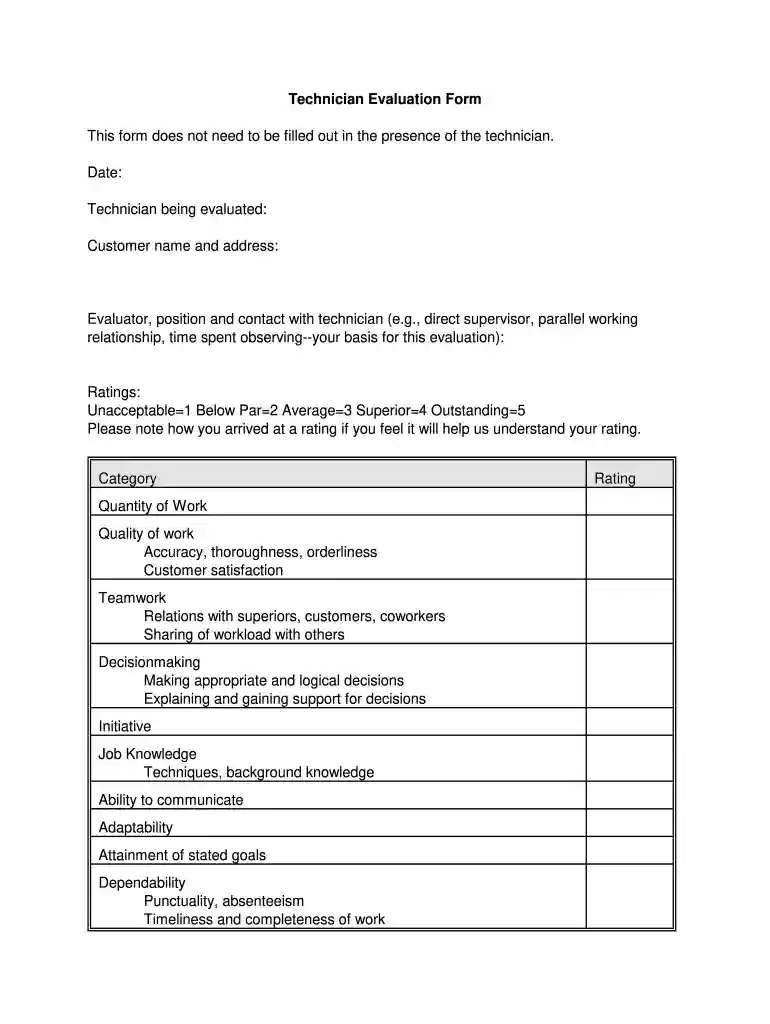
The Technician Evaluation Form serves as a crucial document for assessing the performance of technicians in various fields, including HVAC, automotive, and other service industries. Its primary function is to provide a structured framework for evaluators to rate technicians based on specific performance metrics. These criteria typically cover aspects such as work quality, efficiency, customer satisfaction, adherence to safety protocols, and teamwork. By utilizing this form, organizations aim to promote accountability, enhance training opportunities, and support personal development for technicians.

Core Components of the Evaluation Form

  • Performance Metrics: Criteria include quality of work, timeliness, customer feedback, and compliance with company policies.
  • Feedback Sections: Dedicated areas allow evaluators to comment on strengths and potential areas for improvement.
  • Rating Scale: A numerical system typically ranging from one to five facilitates clear measurement of technician performance.

The feedback collected through the Technician Evaluation Form is instrumental in identifying high performers as well as those who may require additional support or training.

How to Use the Technician Evaluation Form Effectively

Using the Technician Evaluation Form effectively involves a systematic approach to ensure all relevant aspects of technician performance are considered. Begin by distributing the form to evaluators, which may include supervisors, peers, or even clients. Each evaluator should be trained on how to fill out the form, focusing on specific criteria relevant to the technician's role.

Steps for Effective Usage

  1. Distribute the Form: Ensure that all evaluators have the correct version of the form and understand the evaluation process.
  2. Set Evaluation Criteria: Clearly define the performance metrics that will be assessed. This may involve customizing the form to suit particular roles or departments.
  3. Collect Feedback: Allow evaluators adequate time to complete the form and encourage honest and constructive feedback.
  4. Review Results: Compile the feedback and analyze the results to determine the overall performance ratings.
  5. Conduct Follow-Up Meetings: Discuss the evaluations with the technicians to provide insights on their performance and areas needing improvement.

By following these steps, organizations can leverage the Technician Evaluation Form as a tool for performance enhancement.

Key Elements to Consider in the Evaluation Form

The Technician Evaluation Form should be structured to capture essential information while being user-friendly for both evaluators and technicians. Key elements include:

  • Technician Information: Name, employee ID, job title, and evaluation period should be clearly listed at the top.
  • Evaluator Details: Names and roles of the evaluators who complete the form, ensuring accountability and traceability.
  • Performance Ratings: Clearly defined sections for scoring based on various performance metrics, typically with a brief explanation for each score.
  • Comments Section: Spaces for evaluators to provide qualitative feedback that contextualizes the numerical ratings.

Incorporating these elements enhances clarity and ensures that both technicians and evaluators are aligned on performance expectations.

Best Practices for Completing the Technician Evaluation Form

To achieve a comprehensive and fair evaluation, follow these best practices when completing the Technician Evaluation Form:

Structured Approach

  • Be Specific: When providing comments, detail specific examples that illustrate performance. This provides actionable insights for the technician.
  • Focus on Behavior, Not Personality: Evaluators should concentrate on observable actions and outcomes rather than personal attributes.

Consistent Rating

  • Utilize the Rating Scale Effectively: Make full use of the provided scale to differentiate levels of performance.

Collaboration

  • Encourage Peer Evaluations: In team environments, including feedback from colleagues can provide a more rounded perspective on a technician’s performance.

Implementing these best practices ensures that evaluations are fair, effective, and conducive to growth.

Legal and Compliance Considerations

The use of the Technician Evaluation Form may involve important legal considerations, especially with respect to employee rights and anti-discrimination laws. Employers must ensure that evaluations are conducted without bias and based on objectively measurable criteria.

Compliance Elements

  • Equal Opportunity Considerations: Ensure that the evaluation criteria do not inadvertently favor one group over another. The process should be transparent and equitable.
  • Documentation and Record Keeping: Maintain accurate records of evaluations for compliance and future reference. This is particularly important in cases of disputes or if disciplinary action is required.

Adhering to these legal guidelines fosters a fair workplace and minimizes the risk of legal repercussions.

Utilizing Evaluation Data for Improvement

The data collected from the Technician Evaluation Form is not only useful for performance assessment but also serves as a basis for continuous improvement within the organization.

Key Uses of Evaluative Data

  • Training and Development: Identify common areas where technicians may struggle and develop targeted training programs to address these gaps.
  • Performance Management: Use evaluation results to guide promotion and salary discussions, ensuring decisions are based on documented performance.
  • Recognition Programs: Highlight high performers as part of reward and recognition programs to motivate staff and maintain high levels of morale.

By leveraging the data effectively, organizations can cultivate a workforce that is both skilled and motivated.

be ready to get more

Complete this form in 5 minutes or less

Get form

Got questions?

We have answers to the most popular questions from our customers. If you can't find an answer to your question, please contact us.
Contact us
The 5-Step approach Identify the problem. It is essential that you are clear from the start about the problem you are aiming to address. Review the evidence. Draw a logic model of how your service should work. Identify indictors and collect monitoring data. Evaluate logic model
How do you write a performance evaluation? Identify core competencies. Choose a rating scale. Set an evaluation cycle. Prepare a list of questions. Share questions in advance. Have the conversation. Create a goal-setting framework. Be open to feedback.
Pro Tips to Measuring Technician Productivity Track Completed Jobs per Day. Monitor First-Time Fix Rates. Measure Billable Hours. Assess Travel Time. Analyze Customer Feedback. Evaluate Time Spent on Jobs. Monitor Upselling Success. Set Clear Goals and Benchmarks.
What to Include in an Employee Evaluation Form? Employee and reviewer information. The form must have basic information about both parties involved. Review period. An easy-to-understand rating system. Evaluation points. Goals. Extra space for comments. Signatures. Scorecard.
Performance evaluations check how well maintenance technicians do their jobs. These reviews focus on skills, safety and work quality. Key Performance Indicators (KPIs) like safety compliance and work quality help measure a technicians performance clearly.

Security and compliance

At DocHub, your data security is our priority. We follow HIPAA, SOC2, GDPR, and other standards, so you can work on your documents with confidence.

Learn more
be ready to get more

Complete this form in 5 minutes or less

Get form

People also ask

Its always a good idea to start with the positives! Make sure you provide examples and praise to reinforce the actions you want to see more of. In what ways is the technician falling short in any of these areas? Its very important to use examples when providing areas in which youd like to see improvement.

technician evaluation form