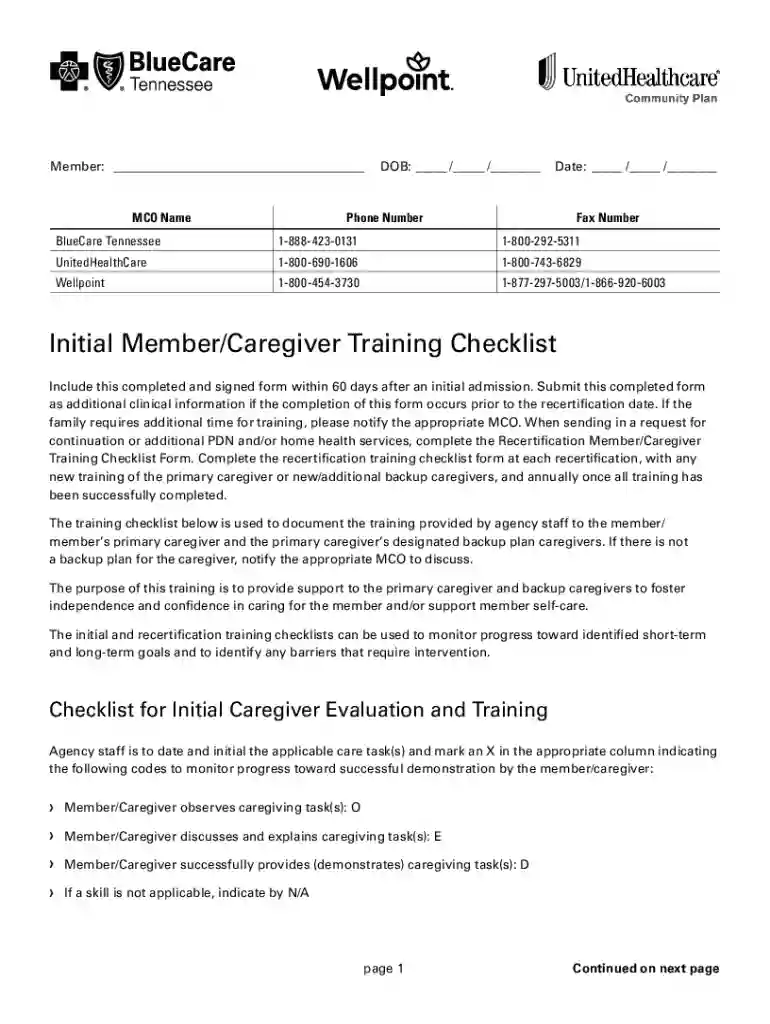
Definition and Purpose of the 508C Initial Member Caregiver Training Checklist
The 508C Initial Member Caregiver Training Checklist is a structured document used to ensure caregivers meet specific training requirements necessary for managing the care of home health services recipients. This checklist serves as a comprehensive guide to the various skills and knowledge areas that caregivers must be proficient in, including vital signs monitoring, hygiene maintenance, ambulation support, and medication administration. By providing a systematic way to track caregiver progress, the checklist plays a critical role in fostering independence and confidence in caregiving.
Key Areas Covered in the Checklist
- Vital Signs Monitoring: Includes measuring and recording blood pressure, heart rate, temperature, and respiratory rate accurately.
- Hygiene and Personal Care: Encompasses bathing, grooming, and oral care procedures to maintain patient cleanliness and comfort.
- Mobility and Ambulation: Involves assisting with transfers, guiding patients in using mobility aids effectively, and encouraging safe ambulation techniques.
- Medication Management: Covers administering medications correctly, understanding dosages and schedules, and recognizing adverse effects.
Steps to Complete the 508C Initial Member Caregiver Training Checklist
- Identify Required Training Areas: Begin by familiarizing yourself with each section of the checklist to understand the competencies needed.
- Participate in Training Sessions: Attend structured training programs that cover the necessary skills and procedures.
- Demonstrate Competence: Show proficiency in each area by performing tasks under supervision until you achieve the required standards.
- Document Progress: Record successful completion of each training component, noting dates and any feedback received.
- Review and Reflect: Regularly review the checklist to self-assess and identify areas needing further practice or improvement.
Ensuring Comprehensive Coverage
- Regular Updates: Stay informed about any updates to the checklist to ensure all training remains current.
- Feedback Mechanism: Engage with supervisors or mentors to receive constructive feedback that aids skill enhancement.
Importance of the 508C Initial Member Caregiver Training Checklist
The checklist ensures caregivers are well-equipped to deliver high-quality care by standardizing the process of skill acquisition and assessment. It supports:
- Safety and Efficiency: Reduces the likelihood of errors in caregiving practices, thereby enhancing patient safety.
- Consistency in Care: Promotes uniformity in the delivery of care services across different caregivers and settings.
- Professional Development: Facilitates the growth of caregiving skills, enabling career advancement and improved job performance.
Key Elements of the 508C Initial Member Caregiver Training Checklist
Core Competencies
- Communication Skills: Ability to effectively communicate with patients, families, and other healthcare professionals.
- Cultural Sensitivity: Awareness and respect for cultural differences and preferences in caregiving situations.
- Problem-Solving Abilities: Quick and effective decision-making skills in emergency and routine scenarios.
Documentation and Reporting
- Accurate Record-Keeping: Importance of maintaining precise and up-to-date records of caregiving activities and patient status.
- Reporting Protocols: Procedures for escalating issues to healthcare providers or supervisors when necessary.
Legal Use and Compliance with the 508C Initial Member Caregiver Training Checklist
Compliance Requirements
Caregivers must adhere to local and federal regulations governing home health services. This includes understanding relevant laws and guidelines that apply to caregiving practices in the United States, ensuring all actions taken are within legal bounds.
Ensuring Adherence
- Training Accreditation: Ensure all training meets accreditation standards and is conducted by certified instructors.
- Regular Audits: Frequent reviews and audits of completed checklists help maintain compliance and identify any gaps in training or documentation.
Examples of Using the 508C Initial Member Caregiver Training Checklist
Caregivers can utilize the checklist in various practical settings, such as assisted living facilities, private home care, and specialized healthcare institutions. Here's how it can be applied effectively:
- Scenario-One: A new caregiver must use the checklist to verify competency before undertaking primary responsibilities with a new client.
- Scenario-Two: During an internal review, management might use completed checklists to assess the overall effectiveness of the current training program and implement improvements.
Software Compatibility and Digital Integration
Digital versions of the 508C checklist can be integrated with document management platforms like DocHub, streamlining updates, sharing, and storage. This integration facilitates:
- Ease of Access: Accessible on both desktop and mobile devices, allowing caregivers to update their progress anytime, anywhere.
- Collaboration Features: Enables trainer and caregiver collaboration through annotation tools and real-time updates.
Advantages of Digital Over Paper Versions
- Environmental Impact: Reduces paper usage and physical storage needs.
- Efficiency: Enhances tracking and updating processes with automated reminders for continued skill development.
State-Specific Rules and Variations in the 508C Initial Member Caregiver Training Checklist
While the checklist provides a general framework, specific state regulations may influence its content and application. Caregivers should familiarize themselves with local requirements, including:
- State Certification Criteria: Differing requirements for caregiver training and certification based on state guidelines.
- Regional Variations: Understanding that scope and focus areas may vary to meet local healthcare needs and regulations.
By grounding these insights within a legally and professionally sound context, the 508C Initial Member Caregiver Training Checklist ensures a robust framework for enhancing caregiver competency across different care environments.