Wood Destroying Organism Inspection Reports 2026

Get Form
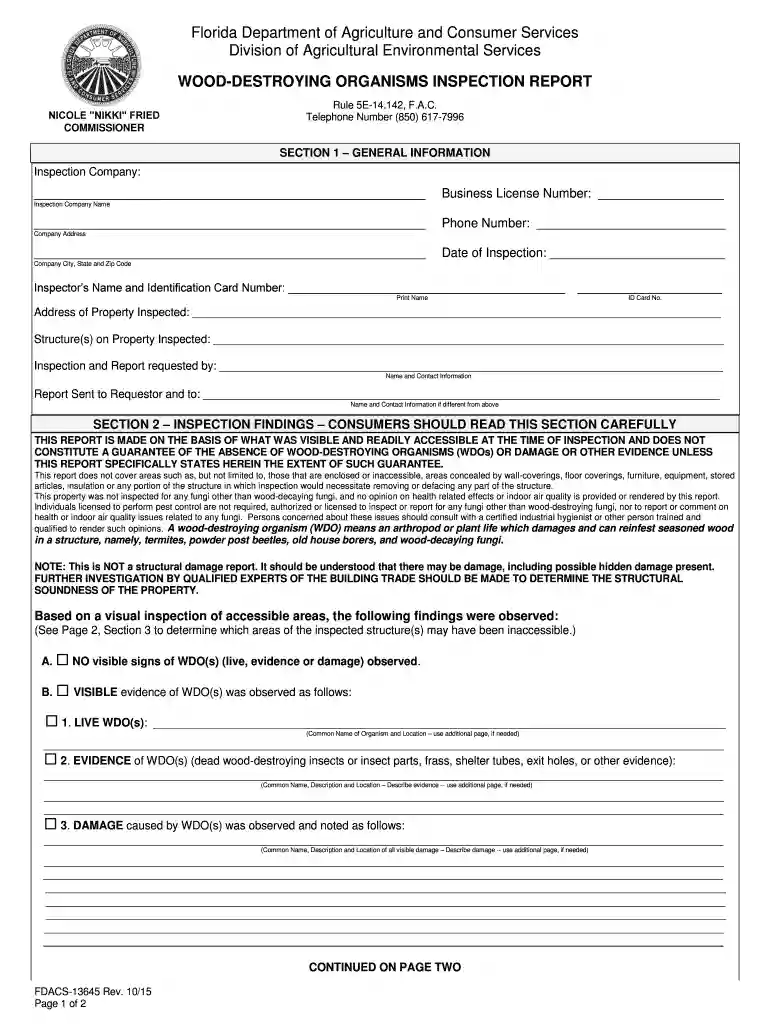
Wood Destroying Organism Inspection Reports Preview on Page 1

Here's how it works

01. Edit your form online
Type text, add images, blackout confidential details, add comments, highlights and more.

02. Sign it in a few clicks
Draw your signature, type it, upload its image, or use your mobile device as a signature pad.

03. Share your form with others
Send it via email, link, or fax. You can also download it, export it or print it out.

Definition and Purpose of Wood Destroying Organism Inspection Reports

The Wood Destroying Organism Inspection Report is a formal document used to record the condition of a property concerning wood-destroying organisms (WDOs). These organisms commonly include termites and fungi. The report is designed to document the inspection's findings based on visible and accessible areas. It serves as a valuable record for consumers, helping to inform them about potential pest issues that could compromise the structural integrity of a property. This documentation is particularly crucial when buying or selling a property, as it provides an assurance regarding the property's pest condition at the time of inspection.

How to Use the Wood Destroying Organism Inspection Reports

These reports are typically used by prospective property buyers, sellers, and real estate agents to assess a property's condition. The report informs decision-making by detailing current or past infestations and any resulting damages. After receiving the report, users can:

  • Analyze the report: Check for any findings of WDOs or structural damages.
  • Discuss with a pest control expert: Seek expert advice for treatment options if infestations are noted.
  • Negotiate property value: Use the report to negotiate property pricing or request repairs.
  • Retain for records: Keep the document for future reference or legal purposes if issues arise later.

Steps to Complete the Wood Destroying Organism Inspection Reports

Filling out a Wood Destroying Organism Inspection Report requires careful attention to details provided by the pest inspector. Here’s a step-by-step process:

  1. Hire a licensed pest inspector: Ensure that the inspector is recognized by relevant state authorities.
  2. Conduct the inspection: The inspector will examine all accessible areas of the property, looking for signs of WDOs.
  3. Document findings: The inspector notes any signs of infestation, damages, and inaccessible areas.
  4. Include historical data: Add information on previous treatments or past infestations.
  5. Review and certify: Ensure the report is complete and accurate, with the inspector’s signature for validation.

Who Typically Uses the Wood Destroying Organism Inspection Reports

These reports are essential for several parties involved in property transactions:

  • Homebuyers: To ensure they are aware of any pest issues before purchase.
  • Home sellers: To show potential buyers the property's condition.
  • Real estate agents: To assist in providing comprehensive property details to clients.
  • Mortgage lenders: Often require such reports to assess risks before approving loans.
  • Pest control companies: To offer treatment solutions and verify the need for pest services.
decoration image ratings of Dochub

Key Elements of the Wood Destroying Organism Inspection Reports

A comprehensive Wood Destroying Organism Inspection Report typically includes:

  • Inspector's credentials: Confirmation that the inspection was conducted by a qualified professional.
  • Property details: Address and description of inspected property.
  • Inspection results: Evidence of WDOs, including their locations and the extent of damage.
  • Accessible and inaccessible areas: Documentation of areas that could not be inspected.
  • Recommendations: Expert suggestions on remediation and further steps.
  • Historical data: Records of previous treatments or infestations, if applicable.

Legal Use and Importance of Wood Destroying Organism Inspection Reports

These reports are legally significant, especially in real estate transactions. They:

  • Provide legal documentation of the property's condition at the point of sale.
  • Offer protection for buyers and sellers against future disputes.
  • Ensure compliance with state regulations that may require disclosure of pest conditions.
  • Help prevent legal liability by documenting due diligence in property inspections.

State-Specific Rules for the Wood Destroying Organism Inspection Reports

Surveying pest-related damages is subject to state-specific guidelines which can vary. Key differences may include:

  • Licensing requirements: States may have distinct requirements for pest inspectors.
  • Report formats: Specific states may mandate particular report structures or contents.
  • Disclosure laws: Varying obligations regarding what must be revealed to potential buyers.

Business Types Benefiting Most from Wood Destroying Organism Inspection Reports

Several business categories find value in these reports:

  • Real estate agencies: Utilize them for reliable property listings.
  • Property management companies: Use reports for managing and maintaining rental properties.
  • Home inspection services: Offer comprehensive evaluations including pest conditions.
  • Legal firms: Rely on these documents in property dispute cases or negotiations.

By covering these blocks comprehensively, users will gain thorough insights into the critical aspects of Wood Destroying Organism Inspection Reports.

be ready to get more

Complete this form in 5 minutes or less

Get form

Got questions?

We have answers to the most popular questions from our customers. If you can't find an answer to your question, please contact us.
Contact us
Wood Destroying Insect Inspections During a Wood Destroying Insect (WDI) inspection the inspector will look at the interior and exterior areas of your home, checking for visible signs of a wood destroying insect infestations. Signs a home has termites include; droppings, broken wings, mud tubes, and damaged wood.
During a wood destroying insect inspection, a professional inspector will examine the inside and outside of your property, including the attic, basement, and crawlspace. The inspector will look for signs of infestation, such as tiny holes in the wood, tunnels, damaged wood, and feces.
Actually, if youre taking out a mortgage, theres a good chance the lender will require that you have a termite inspection (as well as a general home inspection) before the sale is finalized. A termite inspection is typically an expense borne by the buyer, but its worth the price.
A complete WDO inspection involves going through a structure, around the property, and thoroughly examining all accessible areas. The inspector looks at all visible wood surfaces, between rafters and joists, and they can point a flashlight into every hidden cavity.
Most homeowners spend between $50 and $325 on a termite inspection, but this range is just an average. The final cost depends on various factors, including the size of your home, its location, and the severity of any existing termite infestation.

Security and compliance

At DocHub, your data security is our priority. We follow HIPAA, SOC2, GDPR, and other standards, so you can work on your documents with confidence.

Learn more
ccpa2
pci-dss
gdpr-compliance
hipaa
soc-compliance

People also ask

Because of the legal documentation involved, they tend to cost more, with an average of $62 to $277, but they may vary depending on the type of your home loan (VA or FHA) and the type of termite inspection report you need, such as: NPMA-33 (or WDI) CL-100.
Who Can Perform WDO Inspections in California. In California, inspectors must carry proper state identification and licensing. Standard home inspectors typically cannot provide official WDO reports unless they hold separate pest control licensing.

Related links