




01. Edit your lactose intolerance self care online
Type text, add images, blackout confidential details, add comments, highlights and more.

Type text, add images, blackout confidential details, add comments, highlights and more.

Draw your signature, type it, upload its image, or use your mobile device as a signature pad.

Send it via email, link, or fax. You can also download it, export it or print it out.
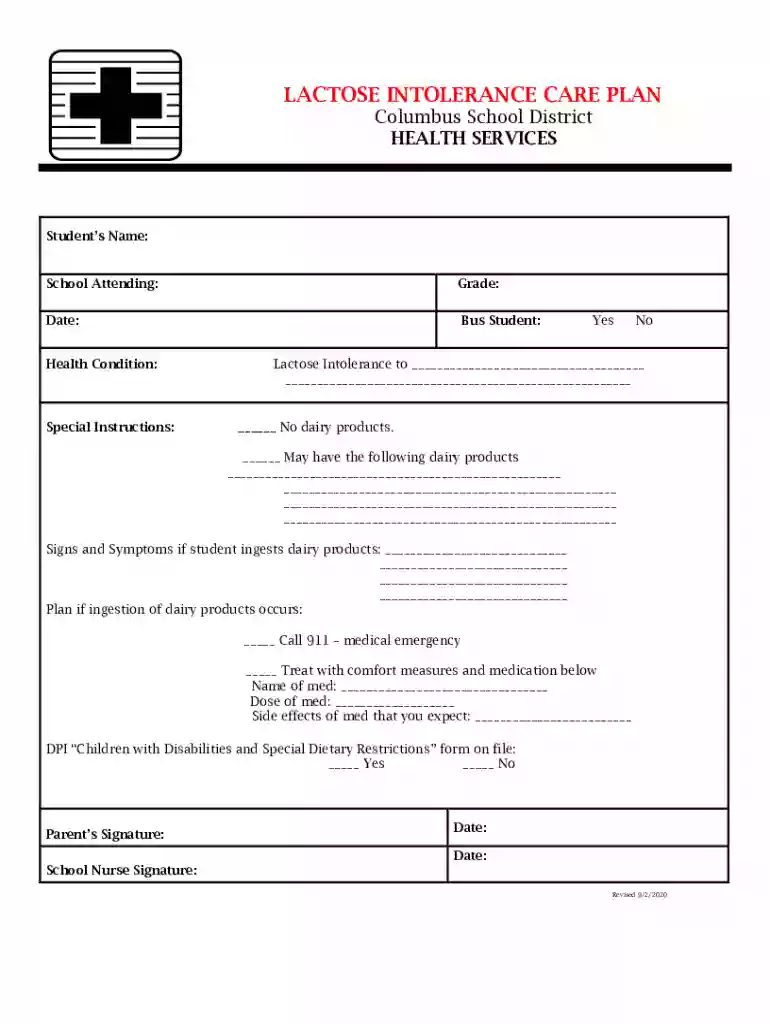
Understanding the structure of the Lactose Intolerance Care Plan is crucial for ensuring it effectively supports students' needs. This plan for Columbus School District students includes various sections that provide essential information about the student's condition and the accommodations required.
Student Details: A crucial element, this section captures personal information such as name, age, grade, and contact information. This ensures that school staff can easily identify the student and access pertinent details quickly.
Dietary Restrictions: This part outlines the specific dairy products the student must avoid. Knowing which items can trigger a reaction helps cafeteria staff, teachers, and other personnel manage the student's diet effectively.
Signs and Symptoms of Dairy Ingestion: Listing potential symptoms of lactose intolerance ensures that school staff can quickly identify when a student has ingested dairy. Common symptoms include stomach cramps, diarrhea, and bloating.
Emergency Plans: In cases where a student accidentally consumes dairy, the care plan provides a step-by-step action plan for handling the situation. This might include administering medication and notifying parents or guardians immediately.
Required Signatures: This section must capture signatures from parents and school nurses, affirming their understanding and agreement with the outlined plan. It formalizes the care arrangements and ensures all parties are aligned.
Completing the Lactose Intolerance Care Plan involves several detailed steps to ensure all necessary information is accurately captured.
Gather Student Information: Begin by collecting the student's personal details and any relevant medical history that may affect their dietary needs.
Identify Dietary Restrictions: Parents or guardians should clearly list all prohibited dairy products and any exceptions, if applicable.
Describe Symptoms: Note the signs and symptoms that typically occur when the student ingests dairy. Providing specific details aids in prompt identification and response.
Develop Emergency Procedures: Create a clear action plan for responding to dairy ingestion, detailing the roles of school staff and any required medication administration.
Finalize and Obtain Signatures: Review the completed form for accuracy, then gather signatures from the responsible parties to confirm their understanding and consent of the plan.
The Lactose Intolerance Care Plan is used by various individuals and teams within the school environment to provide comprehensive support to students.
School Nurses: They monitor the health and well-being of students with dietary restrictions and are pivotal in implementing the care plan during a dairy-related incident.
Teachers and Cafeteria Staff: These professionals play a key role in preventing dairy consumption by adhering to the restrictions laid out in the plan.
Parents and Guardians: They provide essential information concerning their child's condition and collaborate with the school to ensure the plan is effective.
Administrators: They ensure the care plan is in place and followed, addressing any policy or procedural adjustments necessary to support the student's needs.


Obtaining the Lactose Intolerance Care Plan typically involves coordination between parents, medical professionals, and the school.
Contact the School's Administrative Office: Request the form from the school, often available through the health or counseling office.
Consult with a Healthcare Provider: Ensure the student's lactose intolerance is formally diagnosed by a medical professional, and obtain any relevant documentation to support this.
Communicate with School Officials: Schedule a meeting to discuss the student's needs and establish the care plan process. This ensures the plan aligns with school procedures and individual student requirements.
Prepare the Necessary Documentation: Gather all forms, including any medical advice or dietary recommendations, to support the care plan's development.
The Lactose Intolerance Care Plan is a structured document designed to manage and accommodate the dietary needs of students with lactose intolerance within the school setting. It ensures all stakeholders have a clear understanding of the student's condition and provides guidance for managing dietary restrictions, identifying symptoms, and executing an emergency response plan in case of involuntary dairy consumption.
While the care plan is specific to the Columbus School District, similar documents may vary across states due to differing policies and regulations.
State Education Regulations: Each state may have its own set of guidelines governing dietary accommodation plans for students, which schools must adhere to.
Health Department Policies: These may influence how care plans are implemented, particularly regarding emergency medical procedures and required documentation.
Local School District Requirements: Variations at the district level might include specific protocols for developing care plans or obtaining parental consent.
Understanding key terms within the Lactose Intolerance Care Plan can aid in full comprehension and effective execution.
Lactose Intolerance: A digestive disorder due to the inability to digest lactose, a sugar found in milk and dairy products.
Allergen: A typically harmless substance that can cause allergic reactions in certain individuals, in this case, dairy products.
Emergency Response: A series of predetermined actions taken in the event of an allergen exposure to reduce symptoms and prevent further complications.
Dietary Modifications: Adjustments made to a student's diet to accommodate specific dietary restrictions and prevent adverse reactions.
Applying the Lactose Intolerance Care Plan effectively within a school environment involves real-world examples that illustrate its practical use.
Preventive Measures: Cafeteria staff using color-coded meal trays to identify students with dietary restrictions effectively reduces accidental dairy consumption.
Symptom Monitoring: Teachers are trained to recognize signs of lactose intolerance during class, allowing for immediate response when symptoms manifest.
Simulation Drills: Regular emergency simulations by school nurses ensure all staff understands their roles in executing the emergency plan when a student exhibits signs of dairy ingestion.
Legal aspects of the Lactose Intolerance Care Plan pertain to compliance with health and education laws ensuring student safety and rights.
Compliance with Disabilities Laws: The plan ensures adherence to laws like the Americans with Disabilities Act (ADA), providing equal opportunities and accommodations for affected students.
Privacy Regulations: Maintaining confidentiality of medical information as per the Family Educational Rights and Privacy Act (FERPA) is crucial when implementing the care plan.
Liability Considerations: Schools must ensure the plan is executed correctly to avoid potential legal issues related to negligence or failure to provide adequate care.
For managing and creating the Lactose Intolerance Care Plan, it's crucial to understand software compatibility for accessing and modifying the document.
Cloud Services: DocHub's integration with Google Workspace ensures seamless importing and exporting of forms directly from Google Drive, enhancing accessibility and ease of use.
File Formats: While primarily shared in PDF format for consistency across platforms, it can also be managed using various file types supported by DocHub.
Edit and Annotate: The document can be edited for adding or updating information using tools available within document management platforms like DocHub.
At DocHub, your data security is our priority. We follow HIPAA, SOC2, GDPR, and other standards, so you can work on your documents with confidence.
Lactose intolerance is one of the most common digestive challenges in infant formula. diarrhea, abdominal pain, bloating, and frequent crying
Talk with your doctor or a dietitian about changing your diet to manage lactose intolerance symptoms while making sure you get enough nutrients.Read more
Jul 26, 2023 The most successful approach to coping with lactose intolerance is to first avoid all dairy products. yogurt, cheese, and sour cream may be


